Best Lawn Mowers for Lawn Mowing Business: Charges, Decks and Warranty Gaps
As an Amazon Associate we earn from qualifying purchases. Details
Updated 20 October 2026 | Author: Ken
The person typing best lawn mowers for lawn mowing business is choosing a machine for paid work, where a battery that runs out mid-lawn means a stop, a swap and a longer day. The listings in this group give coverage per charge, deck width, bag size and warranty terms. They do not state a duty cycle, a commercial rating or a service plan. This post uses the figures that are stated, works out how many charges a property needs, and marks the gaps a business owner should confirm with the maker before buying.
Quick answer
- Coverage claims in this group run from about 1,200 to 1,500 square feet per charge for the cordless walk-behinds, up to 0.5 acre for the MOVA robot. A business sizes its fleet by charges per property, so start there.
- One acre is 43,560 square feet. On the Litheli figure of 1,300 square feet per charge, that is 43,560 / 1,300 = 33.5 full charges. On the 5,380-square-foot figure in the Casince listing, it is 43,560 / 5,380 = 8.1 charges.
- No listing in this group states a commercial duty rating, a business-use warranty or a service plan. Ask the maker about each one before you plan a route around it.
- The robot mowers can reduce the number of trips a crew makes to a property, but their coverage and setup claims need checking on each lot.
Count the charges per property
A route is a list of properties, so the figure that matters is how many full charges each one takes. Divide the lot size by the coverage the listing states. The table below does that for every listing in this group that gives a coverage figure, and it marks the rest as not stated.
| Listing | Type | Coverage the listing states | Full charges or rating ratio on one acre | Battery in the box |
|---|---|---|---|---|
| Casince-branded 17-inch (brand field reads Home) | Cordless walk-behind | Up to 5,380 square feet per charge | 8.1 charges | Yes, two 4.0Ah batteries (item highlight) |
| Litheli 13-inch | Cordless walk-behind | Up to 1,300 square feet per charge | 33.5 charges | Yes, one 4.0Ah battery |
| HEINPRO 14-inch | Cordless walk-behind | About 1,200 to 1,500 square feet from one 20V battery | 29.0 to 36.3 charges | No, battery and charger not included |
| worksky 18-inch | Cordless walk-behind | Not stated | Not stated | No; two DeWalt 20V MAX batteries required |
| ECOVACS GOAT O1000 RTK | Wire-free robot | Up to 1/4 acre (10,890 square feet) | One acre is 4.0 times the rating | Not stated |
| MOVA LiDAX Ultra 2000 | Wire-free robot | 0.5 acre (21,780 square feet) | One acre is 2.0 times the rating | Not stated |
| DORTALA 13-inch | Corded walk-behind | Not stated | Not stated | Corded |
| WORX 12-inch 3-in-1 | Trimmer, edger and mini mower | Not stated | Not stated | No, battery and charger not included |
Two things stand out. The Casince figure is the highest coverage claim among the cordless walk-behinds, and the HEINPRO and Litheli figures sit at the bottom of that range. The gap is coverage first and runtime second. The Casince bullets describe up to 40 minutes of runtime, while the Litheli text gives 15 minutes. Divide the two and you get 40 / 15 = 2.7, so the Casince listing claims about 2.7 times the runtime of the Litheli. That comparison is only as good as the two listings, and the Litheli battery text is unclear, as the next section explains.
The robot figures use a different calculation. A robot’s rating is an area, not a charge count, so the right comparison is the rating ratio. One acre is four times the ECOVACS rating (43,560 / 10,890 = 4.0) and two times the MOVA rating (43,560 / 21,780 = 2.0). Neither listing says whether its rating is per charge or per mowing cycle, so do not turn these into charge counts without asking the maker.
The Casince bullet attaches its 5,380-square-foot figure to test conditions that it does not describe. Ask the maker for them. Until then, treat the figure as a claim about one set of conditions, not a guarantee for a crew’s typical lawn.
The battery numbers a route depends on
A route is only as good as the battery count in the truck. For the battery trade-offs in general, see our pros and cons of battery powered lawn mowers guide. Three of the cordless walk-behinds in this group come with a battery set or a battery requirement, and the rest do not. The Casince listing highlights two 4.0Ah batteries in the item description. The Litheli listing includes one 4.0Ah battery and a charging cable. The worksky listing includes no battery, and it asks for two DeWalt 20V MAX batteries, which the listing says you can use from your existing set. The HEINPRO listing includes no battery or charger and points to DeWalt 20V MAX batteries.
The Litheli battery text needs a closer read. Its bullets describe a battery of 20,000mAh that can work continuously for 15 minutes, while its title names a 4.0Ah battery. Those two descriptions do not agree. For a crew that plans around runtime, that disagreement is the first thing to clear up with the maker.
The Litheli listing also warns that only the original charger should be used, because improper charging may cause a fire hazard. The Environmental Protection Agency page we opened says that used lithium-ion batteries should go to separate recycling or household hazardous waste collection points, not to trash or recycling bins. To prevent fires, it says to tape the battery terminals and place each battery in a separate plastic bag. It also says that even used batteries can have enough energy to injure or start fires. A fleet that rotates batteries will eventually retire some, so that disposal step is part of the cost of ownership, and it applies whatever the mower brand.
Deck width and bag size as labor
Cutting width sets the number of passes a property needs, and bag size sets how often the crew stops to empty it. The worksky spec table gives an 18-inch cutting width, the Casince bullets give a 17-inch deck, the HEINPRO and Litheli listings give 14 and 13 inches, and the DORTALA gives 13 inches. Assuming the same overlap between passes, a 13-inch deck needs about 18 / 13 = 1.38 times the passes of the 18-inch worksky deck for the same ground, and about 17 / 13 = 1.31 times the passes of the 17-inch Casince deck.
The WORX tool is a different case. Its listing gives a 12-inch cutting width, but the tool is a trimmer, edger and mini mower in one, so the 12-inch figure is a mini-mower width, not a route deck. Against the worksky’s 18-inch deck, 12 / 18 = 0.67, so the WORX covers about two-thirds of the width per pass, and that is before you count how it is used.
Bag size works the same way. The Casince item description gives a 50-liter grass bag, the worksky bullets give a 40-liter bag and say it means fewer trips to empty it, the HEINPRO listing gives a 35-liter bag (9.25 gallons), and the DORTALA listing gives a 30-liter bag (about 8 gallons). The Casince bag is 50 / 40 = 1.25 times the worksky bag, so for the same clippings it needs about 20 percent fewer emptying stops. That is an estimate from the listing sizes, not a measured number of stops.
Neither robot listing mentions a grass bag, so the labor question for them is setup and supervision rather than emptying.
Robot mowers on a route
The MOVA LiDAX Ultra 2000 is the largest coverage claim in this group. The title and color field give 0.5 acre, and the bullets describe automatic mapping with 3D LiDAR and AI vision, no perimeter wire, a movable disc that the listing says helps it cut within 2 inches of walls and raised edges, and up to 150 managed zones across two maps. Its anti-theft feature needs a link module for real-time tracking, which is a setup step the listing describes. The listing also says the mower returns to its charging station when the battery is low and resumes where it stopped.
The ECOVACS GOAT O1000 RTK is rated for lawns up to a quarter acre, which is 10,890 square feet. Its bullets say it uses RTK and vision navigation with no boundary wire, that setup takes about five minutes, that the app can set multiple zones and no-go areas, and that it climbs slopes up to 45 percent (24 degrees). The listing says it can navigate passages as narrow as 2.3 feet. Its spec table gives an 8.66-inch cutting width and a battery average life of 65 minutes.
For a route, the zone and schedule features are the useful part. For a broader look at robotic trade-offs, see our pros and cons of robotic lawn mower guide and our robot lawn mower for small lawn guide. A crew with many small properties will care about how fast each lot is set up, and the listings describe setup times and app features but do not give field data for a crew. Keep that in mind when you read the five-minute figure. It is the maker’s figure for setup, not a measured time on a working route.
Warranty and support: what the listings state
Warranty terms are where a business owner should spend the most time. The lines we used run as follows. The worksky listing gives a full one-year warranty against manufacturing defects. The Casince spec table gives a one-year manufacturer warranty. The HEINPRO spec table gives a one-year manufacturer warranty. The Litheli bullets give three years on the whole machine and two years on the battery, and say the maker will reply within 24 hours. The MOVA spec table gives a three-year manufacturer warranty, and its bullets add a 24/7 after-sales service statement.
The ECOVACS, DORTALA and WORX listings do not give a warranty term in the data we used. None of the listings says whether a warranty covers business use, and none gives a service plan for a fleet. For a crew, that is the most important gap. Ask the maker in writing whether a mower used on paid jobs is covered, and what the warranty does and does not exclude.
When a trimmer is part of the fleet
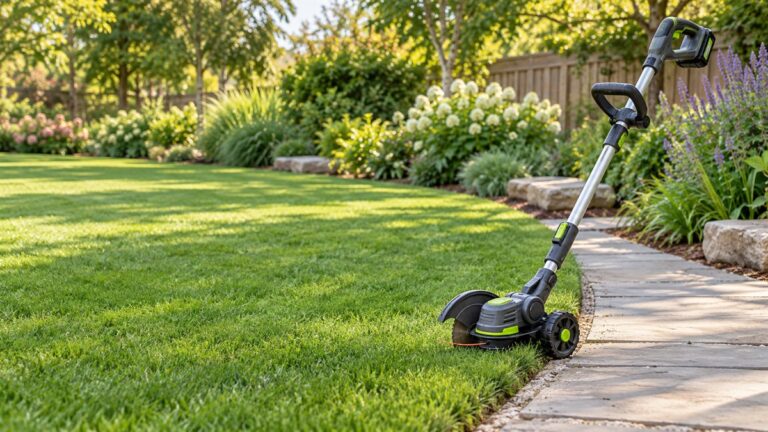
The WORX 12-inch tool is the one item in this group that is not a mower first. Its listing describes it as a precision string trimmer, an in-line wheeled edger and a nimble mini mower in one unit. It runs at 7,600 rpm, it has an automatic line feed that lets you add more line with a button, and it comes with three 10-foot spools. The listing names edging, mowing and trimming as its recommended uses. The spec table gives a 4.6-pound weight, and the listing says the battery and charger are sold separately.
On a paid route, a tool like this is useful for the edge work that a walk-behind leaves behind. It is not a substitute for a deck on a large lot. We include it because the listing does cover mowing among its uses, and because a business that does edging will want to see it next to the walk-behinds. It is listed as a fit only for a crew that needs one tool for trimming and edging with a light mowing task.
How we chose
We began with every mower, robot and multi-job tool the catalog matched to this question. Battery chargers and adapters that came back in the same search were left out, because they do not mow. Eight products remained, grouped into four cordless walk-behinds with a battery or coverage figure, two robot mowers with area ratings, one corded walk-behind, and one 3-in-1 trimmer, edger and mini mower.
Each pick stays because its own listing gives a fact a business owner needs to weigh: a coverage figure, a deck width, a bag size, a warranty term, a battery count or a setup claim. The order is not a ranking, and the listing text we used contains no star or sales information, so none of the picks is ordered by those. Read the picks as options for different route shapes and different battery plans.
What we could not verify
- No listing states a duty cycle, a commercial rating or whether a warranty covers business use. These are the most important gaps for a paid route.
- The coverage figures are manufacturer claims. The Casince listing attaches its figure to conditions that the bullets we used do not describe.
- The runtime figures come from listings. The HEINPRO figure is attributed to one fully charged 20V battery and varies with grass density and terrain. The Casince figure is up to 40 minutes. The Litheli text gives 15 minutes and a 20,000mAh battery that does not match its title.
- The worksky listing does not give a runtime or coverage figure, and it needs two DeWalt 20V MAX batteries that are not in the box.
- The Home and Casince names conflict. The brand field reads Home, while the spec table names Casince. Confirm the maker before you buy.
- The MOVA claim of lawn-friendly operation and the ECOVACS claim of neatly trimmed lawns are not measured in the listings.
- The worksky spec table lists its operation mode as manual. This post does not describe it as self-propelled.
- The listing data gives no setup time for the MOVA robot, and the five-minute figure for the ECOVACS is the maker’s claim.
- The pages we opened do not address commercial mowing, so the business questions here are open ones, not answers.
1. 40V 18″ Cordless Lawn Mower Compatible with Dewalt 2 * 20V Max Battery (Cordless 18-inch, no battery in the box)
Pros
- The spec table lists an 18-inch cutting width, the widest cordless walk-behind deck in this group.
- The bullets give six height settings from 1 to 3 inches and a 40-liter bag that the listing says means fewer trips to empty it.
Cons
- The listing says the battery and charger are not included and that two DeWalt 20V MAX batteries are required.
- The listing gives no coverage or runtime figure, so a route cannot be planned from it alone.
Best for: An owner who already has DeWalt 20V MAX batteries and wants the widest cordless deck in this group.
Skip if: You need a stated runtime or coverage figure, or you do not own two compatible batteries.
View on Amazon (affiliate link)
2. MOVA LiDAX Ultra 2000 Robot Lawn Mower with 4G for 0.5 Acre, No Wire No RTK+360° 3D LiDAR+AI Vision (Wire-free robot rated for half an acre)
Pros
- The title and color field give a 0.5-acre rating, the largest coverage claim in this group.
- The bullets describe two independent maps, up to 150 managed zones and a three-year manufacturer warranty.
Cons
- The spec table gives an 8-inch cutting width and a 60-minute battery average life.
- The anti-theft tracking needs a link module, which the listing describes as a separate step.
Best for: A larger property with separate zones that the app can manage on its own schedule.
Skip if: You need a wide cut or a longer battery average life than the spec table gives, or you cannot place a charging tower.
View on Amazon (affiliate link)
3. Worx 20V 12″ 3-in-1 Cordless String Trimmer/Lawn Edger/Mini Mower, WG170.9 (12-inch 3-in-1 trimmer, edger and mini mower)
Pros
- The listing names edging, mowing and trimming as recommended uses for one tool.
- The spec table gives a 4.6-pound weight, which is light for a tool that does three jobs.
Cons
- The battery and charger are not included, so the crew must supply a compatible battery.
- The listing describes the mower function as a nimble mini mower at 12 inches, not a route mower.
Best for: An owner who needs one tool for trimming and edging, with only an occasional mowing job.
Skip if: Mowing is the main job, because the listing's mower function is a 12-inch mini mower.
View on Amazon (affiliate link)
4. ECOVACS Goat O1000 RTK Robot Lawn Mower, Wire-Free Robotic Lawnmower for Up to 1/4 Acre, RTK + (Wire-free RTK robot rated up to a quarter acre)
Pros
- The listing says it covers lawns up to 1/4 acre and needs no boundary wire, with about five minutes of setup.
- The app features described in the bullets include multiple zones, no-go areas and schedules, and the bullets give a 45 percent slope rating.
Cons
- The spec table gives an 8.66-inch cutting width and a 65-minute battery average life.
- The listing does not give a warranty term.
Best for: A quarter-acre property with several zones and a slope that stays within 45 percent.
Skip if: You need a warranty term or a cutting width close to 14 inches.
View on Amazon (affiliate link)
5. DORTALA 13-Inch 12 Amp Corded Electric Lawn Mower, 1400W (Green) (Corded 13-inch with a 30-liter bag)
Pros
- The listing gives a 1400W, 12-amp motor at 3700 RPM and a 30-liter bag with a mulching option.
- The spec table gives an 18.5-pound weight, and the bullets describe a folding handle for storage.
Cons
- The listing gives three cutting heights from 0.99 to 2.56 inches and no coverage figure.
- The listing does not describe a cord length or say whether a cord is included.
Best for: A small or medium residential lot where a corded plug-in is easy to run.
Skip if: You need a cordless mower or a coverage figure for a route.
View on Amazon (affiliate link)
6. Cordless Lawn Mower, 17-Inch Walk Behind Lawn Mower for Garden (Cordless 17-inch with two batteries in the box)
Pros
- The item highlight says two 4.0Ah batteries are included, and the bullets give up to 40 minutes of runtime.
- The listing gives a 5,380-square-foot figure per charge and a 50-liter grass bag.
Cons
- The brand field reads Home while the spec table names Casince, so confirm the maker before buying.
- The spec table gives a 30-pound weight and the listing gives a one-year warranty.
Best for: An owner who wants two batteries in the box and a large bag for a 17-inch cordless walk-behind.
Skip if: You need a brand you can confirm from the listing alone, or you need a warranty longer than one year.
View on Amazon (affiliate link)
7. Litheli Electric Lawn Mower Cordless,Grass Cutter Machine for 1300 Sq. Ft. Lawnmower with 13 (Cordless 13-inch with one battery in the box)
Pros
- The listing says one 4.0Ah battery and a charging cable come in the kit.
- The listing gives three years of warranty on the machine and two years on the battery.
Cons
- The listing's 1,300 square feet per charge means about 33.5 charges on a one-acre lot.
- The battery text gives a 15-minute run and a 20,000mAh battery that do not match the 4.0Ah battery in the title.
Best for: A small lot or a single-property job where one battery is enough.
Skip if: You mow an acre or more per visit, or you need a runtime figure you can confirm.
View on Amazon (affiliate link)
8. HEINPRO Cordless Lawn Mower Compatible with Dewalt 20V MAX Battery (Cordless 14-inch, bare tool for DeWalt 20V batteries)
Pros
- The listing says it works with DeWalt 20V MAX batteries and gives a list of compatible model numbers.
- The listing gives a 35-liter bag (9.25 gallons) and a one-year manufacturer warranty.
Cons
- The battery and charger are not included, so each extra battery in the fleet is a separate purchase.
- The listing gives 15 to 20 minutes of runtime and about 1,200 to 1,500 square feet from one battery, a range it says varies with lawn density and terrain.
Best for: An owner who already runs DeWalt 20V MAX batteries and wants a 14-inch deck on a shared battery set.
Skip if: You do not own compatible batteries, or you need a warranty that covers business use.
View on Amazon (affiliate link)
FAQ
How many charges does a one-acre lot take with a cordless walk-behind in this group?
On the listing figures, one acre takes 8.1 charges on the Casince figure of 5,380 square feet, 33.5 charges on the Litheli figure of 1,300 square feet, and 29.0 to 36.3 charges on the HEINPRO range. Those numbers use the listing claims as written. Confirm the figure with the maker before you plan a route around it.
Do the robot mowers in this group fit a paid route?
The MOVA is rated for 0.5 acre and the ECOVACS for up to a quarter acre, so one acre is two times and four times those ratings. Both listings describe app-based zones and scheduling. Neither gives a duty cycle or a field setup time for a route, so the owner has to verify the fit on the actual properties.
Does any listing state a commercial rating or a business-use warranty?
No. The warranty lines we read run from one year on the worksky, Casince and HEINPRO listings to three years on the MOVA, and three years for the machine on the Litheli. None says whether business use is covered, and none gives a fleet service plan.
Is the WORX 3-in-1 tool a mower for paid work?
It is a trimmer and edger first. The listing names mowing among its recommended uses and calls the mower function a mini mower at 12 inches wide. For paid work on larger lawns, the walk-behinds and robots in this group are the better fit on the listing data.
What should I do with a worn or damaged battery from a fleet?
The EPA page we opened says lithium-ion batteries should go to separate recycling or household hazardous waste collection points, not to trash or recycling bins. Tape the terminals and bag each battery separately to prevent fires. If a battery is damaged, the EPA page says to contact the battery or device manufacturer for specific handling information.
Does the federal mower standard settle how commercial mowers are treated?
The Consumer Product Safety Commission standard we opened covers walk-behind power lawn mowers with a minimum cutting width of 12 inches, and it is aimed at contact with the rotating blade. Its scope is defined around consumer products, so the text does not settle how a commercial mower is treated. None of the listings says it complies with the standard.
Bottom line
Count the charges per property before you count anything else, then ask the maker in writing for the duty cycle, the warranty terms for business use and the battery package. The listings in this group give coverage, deck width and warranty lines. They do not give a duty cycle, so a business owner has to ask for it.
Sources
- U.S. EPA, Used Lithium-Ion Batteries: lithium-ion batteries should go to separate recycling or household hazardous waste collection points; tape the terminals and bag each battery separately to prevent fires; even used batteries can have enough energy to injure or start fires.
- U.S. Consumer Product Safety Commission, 16 CFR 1205.1 (text via Cornell Legal Information Institute): the standard addresses contact with the rotating blade, primarily of the foot and hand, and defines walk-behind power lawn mowers with a minimum cutting width of 12 inches.
- University of Texas at Austin Environmental Health and Safety, Factsheet: Extension Cords: cords must handle the amperage rating of the equipment; do not use an indoor cord outside; do not use frayed or damaged cords.
- UF/IFAS Gardening Solutions, Lawn Mower Care and Safety: eye and ear protection; clear debris the mower could throw; shut off the mower before adjusting or cleaning the blade; keep children out of the yard.