Bump-Feed vs Fixed-Line Trimmer Heads
As an Amazon Associate we earn from qualifying purchases.
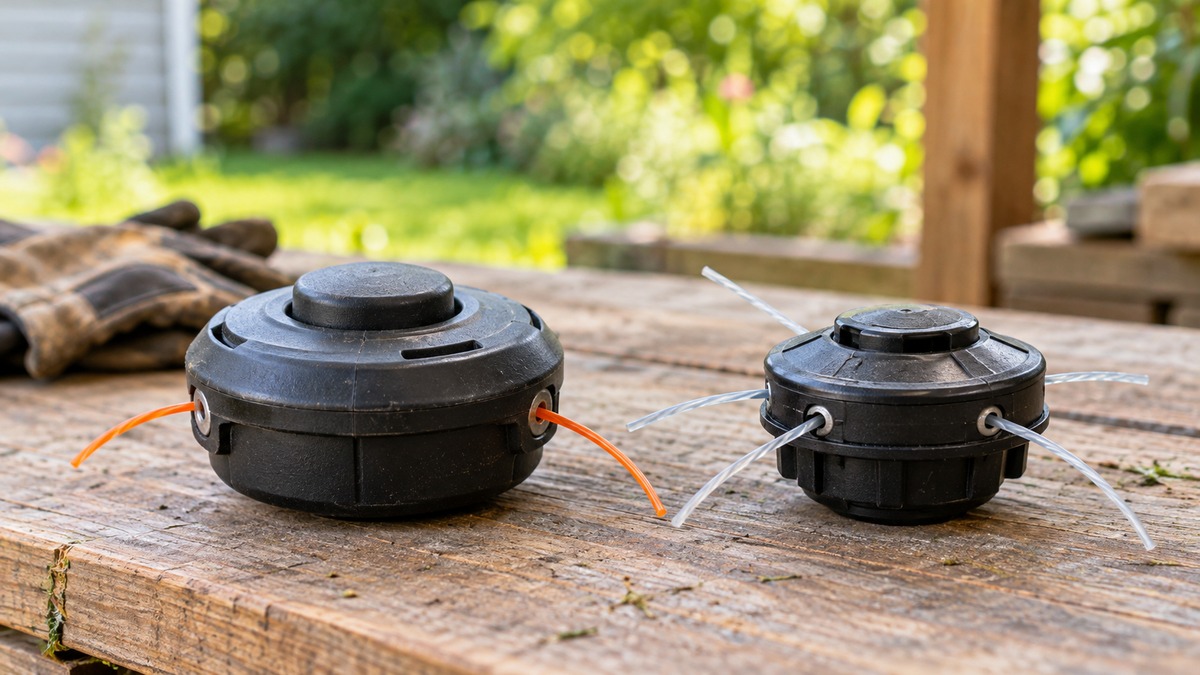
A bump feed vs fixed line trimmer head choice comes down to how the line leaves the head. A bump-feed head advances more line when you push it into the ground, while a fixed-line head works from pre-cut strips that you load and replace. The manufacturer pages below describe both designs and a third, auto-feed design. They do not rank the three for any yard or grass type, so this page explains how each works, where the designs overlap, and what to check before you buy a replacement head.
Quick answer
- A bump-feed head advances line when it is pushed into the ground. Husqvarna describes its Rapid Replace head as a semi-automatic bump feed head.
- A fixed-line head holds pre-cut strips. ECHO’s heavy-duty model comes pre-loaded with two 16 in. strips, and the page says it eliminates accidental line advancement.
- EGO’s Line IQ head is listed as autofeed and no-bump, so the manufacturer does not describe it as a bump-feed design.
- Check fit first. The listings name specific models or shaft types, and the sources do not rank the heads against each other.
Bump-feed heads: how the line advances
A bump-feed head is the design most trimmer owners picture first. Husqvarna’s US product page calls its Rapid Replace a semi-automatic bump feed head. The page says the head takes seconds to restring and can hold up to 22 ft of .095 line. Because this is a product page, those figures are the manufacturer’s stated capacity for that head.
The feed action itself is described in a Husqvarna buying guide from Australia. That guide says Husqvarna brushcutters have a Tap-&-Go feed system, which means the trimmer line is fed automatically when the head is pushed into the ground. The guide is about brushcutters, so read it as a description of Husqvarna’s Tap-&-Go system rather than of every bump head on the market.
Milwaukee’s Easy Load head is also listed with a bump feed mechanism. Its product page says the head can be loaded with 25 ft of .080 or 20 ft of .095 trimmer line. The same page makes a wear claim, describing extreme wear resistance that delivers longer life. The page gives no figures for that claim, so this article does not repeat it as a fact.
Two points stand out across these bump-feed listings. First, the line capacity is stated per head and per diameter, so a head listed for .080 line is a different listing from one listed for .095. Second, the feed action is described as happening when the head meets the ground, which is why the Tap-&-Go wording matters when you compare heads.
Fixed-line heads: pre-cut strips and no accidental advance
A fixed-line head does not use a spool that feeds on demand. It works from pre-cut pieces of line. ECHO’s Heavy-Duty Fixed Line Head is pre-loaded with two 16 in. strips of .130 in. round line, and the page says the design eliminates accidental line advancement and reduces line consumption. The same page describes it as an easy to reload head with 2 or 4-line configurations based on cutting need, conditions and obstacles.
ECHO also positions the head for hard work. Its page says it is designed for tough cutting environments where standard trimmer line and heads won’t cut it. That statement is about ECHO’s own head. The page does not compare a fixed-line head with a bump head on durability or cutting speed, so a reader cannot take that comparison from this page.
Ryobi’s 18V ONE+ HP 15-inch kit page shows a fixed-line head used alongside other heads. It describes the fixed line head as one for fast and simple reloads, and it describes a bladed head as ideal for heavy weeds and thick grass. Those are the manufacturer’s descriptions of the parts in that kit. They tell you what each head is meant to do, but they are not measurements.
ECHO’s page lists benefits for its fixed-line design and no drawbacks. It also gives one line diameter for this head, and says to use only .130 in. line, so the strips are not interchangeable with the lighter line used on the bump-feed listings above. The page does not say how long a strip lasts, so this article states no wear figure for it.
Auto-feed and kit heads: where the categories overlap
EGO’s Line IQ replacement head is listed with the features “autofeed, no-bump, high-performance trimming.” Its page says LINE IQ auto-sensing technology monitors and feeds the length of the trimmer line for a continuous 16-inch cutting swath. The listing presents the head as a no-bump design, and it does not describe the head as a fixed-line head. That places it outside the bump-versus-fixed choice.
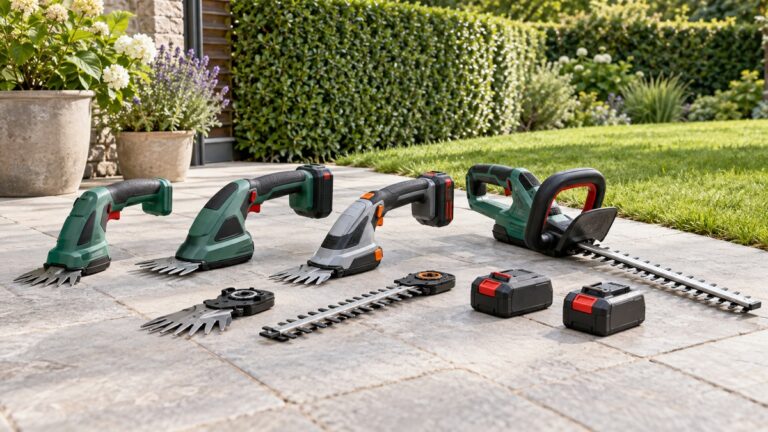
The Ryobi kit is the clearest sign that the categories overlap in practice. A single kit can include a bump feed head, a fixed line head and a bladed head, so the choice is not always one design or the other. When you compare, check which heads a kit includes and which of them you can buy again later as a replacement.
Bump feed vs fixed line at a glance
The table lists only what the opened pages state. “Not stated” means the page does not give that point. Every entry comes from the page named in the Source column.
| Source | Head or kit | Design as stated | Line loaded as stated |
|---|---|---|---|
| Husqvarna US product page | Rapid Replace trimmer head | Semi-automatic bump feed head | Up to 22 ft of .095 |
| Milwaukee Tool product page | Easy Load trimmer head | Bump feed mechanism | 25 ft of .080, or 20 ft of .095 |
| EGO product page | Line IQ replacement head (AH1620) | Autofeed, no-bump | Not stated |
| ECHO product page | Heavy-Duty Fixed Line Head | Pre-cut strips; eliminates accidental line advancement | Two 16 in. strips of .130 in. line |
| Ryobi product page | 18V ONE+ HP 15-inch string trimmer kit | Kit includes a bump feed head, a fixed line head and a bladed head | Not stated |
Line loads, worked out from the listings
Three of the listings give line lengths in feet, and the fixed-line listing gives strip lengths in inches. Converting every figure to inches with the formula inches = feet × 12 puts them on one scale, so the totals can be compared as numbers. The sources do not say how long any load lasts in use, so the totals describe the stated loads only.
- Husqvarna Rapid Replace, bump feed, .095 line: 22 ft × 12 = 264 inches as listed.
- Milwaukee Easy Load, bump feed, .080 line: 25 ft × 12 = 300 inches as listed.
- Milwaukee Easy Load, bump feed, .095 line: 20 ft × 12 = 240 inches as listed.
- ECHO Heavy-Duty Fixed Line Head: 2 strips × 16 in. = 32 inches as listed, in .130 in. line.
The fixed-line total is much smaller than the bump-feed totals. The comparison is not like for like, though. The ECHO figure is for pre-cut strips of a heavier diameter, and the bump-feed figures are spool capacities at lighter diameters. A reader should not use these totals as a count of cuts or minutes, because the sources give no basis for either.
How to choose: fit first, then the job
Check fit before you compare designs
Fit comes first. Husqvarna’s US page says its Rapid Replace head will fit Husqvarna curved and straight shaft trimmers, excluding dual direction battery trimmers, as well as most leading competitor products. The EGO listing describes its Line IQ replacement head as a replacement string trimmer head for one named EGO model. Read the model and shaft type on your trimmer, then compare them with the head’s listing before you look at the feed design.
The listings name the models they cover. Check that list first, and only then compare feed designs, because a feed design that suits your job is no use on a head that does not match your trimmer.
Match the head to the cutting job
The sources speak to job type in a few places. ECHO describes its fixed-line head for tough cutting environments. Ryobi describes its bladed head as ideal for heavy weeds and thick grass. Husqvarna’s Australian guide advises checking how easy it is to change the line and whether the feed mechanism is practical, which matters if you expect to reload often. None of these pages gives a yard size or a grass type that a given head is built for.
If your work mixes light edging with heavier growth, the Ryobi kit is the only listing here that puts a bump head, a fixed line head and a bladed head in one package. The kit page does not say how often you would switch heads, and this article does not give that number.
For a broader look at electric models, the best electric string trimmers page covers the trimmers these heads fit. If you use a Ryobi One Plus trimmer, the Ryobi One Plus weed eater string post is a related read.
Safety notes for trimmer heads
Oklahoma State University Extension says the major hazard with string trimmers and edgers is two-fold. Objects can get launched outward by the trimmer string or edger blade, and the trimmer string or edger blade itself can break and fly out. The same fact sheet advises wearing long pants and long sleeves to protect yourself from injury.
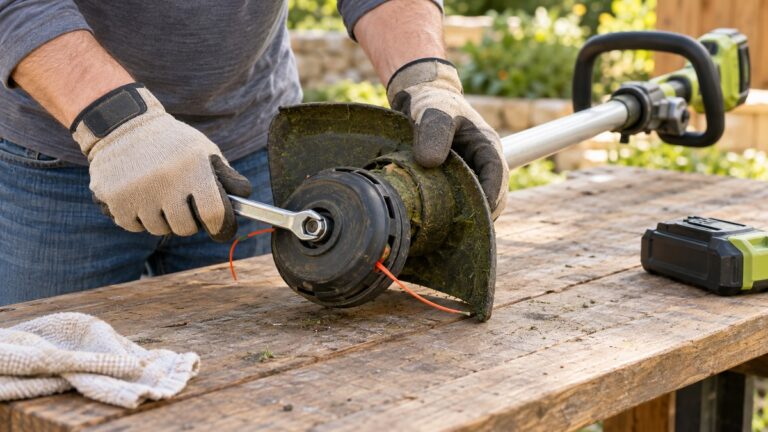
The fact sheet also says to make sure children and pets are not in the area before you begin. Before beginning any maintenance of the trimmer, it says to read the owner’s or operator’s manual, and to remove the battery or electrical cord to prevent any accidental starts. Those rules come from the fact sheet, and they apply whenever you work on the head, not only when you change the line.
Check that the head’s listing names your trimmer before you buy. The Husqvarna and EGO listings both name the trimmers they fit, so a head that is not named for your model is not the part those listings describe.
How we chose
We chose pages from the manufacturers that cover the head types in question, which were Husqvarna, EGO, ECHO, Ryobi and Milwaukee. We opened seven pages on 2026-10-22. Five are US manufacturer product pages. One is a Husqvarna Australian buying guide, used only for the Tap-&-Go description, because none of the US pages we opened explains how a bump head is operated. One is an Oklahoma State University Extension fact sheet, used for the safety points. Retail listings, blogs and review sites were not used for any claim here. The product pages give the manufacturers’ stated capacities, fits and descriptions. This article ranks no heads and does not compare them on performance.
What we could not verify
- How a fixed-line head is built inside, or how its line is advanced when you want more. None of the pages we opened describes the internal design of the fixed-line head.
- Whether one feed design lasts longer or cuts faster than the other. The pages make no such comparison, and the Milwaukee wear wording is a manufacturer claim with no figures.
- Line capacities for models that the listings we opened do not name.
- Whether the EGO Line IQ head works on trimmers outside the model its listing names.
- How many cuts or minutes a load of line gives. The sources state loads, not runtime.
What the sources do not say
The sources do not say how often a fixed-line head needs new strips, how often a bump head needs more line, or which head works best on a given grass or weed type beyond the descriptions above. The ECHO page gives no cutting width for its fixed-line head. The sources also do not give a price, and this article does not discuss one.
FAQ
What is the main difference between a bump feed and a fixed line head?
A bump-feed head advances line when you push it into the ground, which is how Husqvarna’s Australian guide describes its Tap-&-Go system. A fixed-line head holds pre-cut strips, and ECHO says its design eliminates accidental line advancement. This page does not cover reloading steps for either head.
Is a fixed-line head better for heavy weeds?
The sources do not rank the designs for heavy weeds. ECHO says its fixed-line head is designed for tough cutting environments, and Ryobi says its bladed head is ideal for heavy weeds and thick grass. Neither page compares a fixed-line head with a bump head on durability or speed.
Does an auto-feed head count as a bump head?
No, according to the EGO listing. The Line IQ head is described as autofeed and no-bump, and its page explains that auto-sensing technology feeds the length of the trimmer line. The listing does not treat it as a bump-feed head.
Will a Husqvarna Rapid Replace head fit my trimmer?
Check the listing against your model. Husqvarna says the head fits curved and straight shaft trimmers, with dual direction battery trimmers excluded, and it adds that the head fits most leading competitor products. If your trimmer is a dual direction battery model, the listing already rules it out.
How many feet of line does a bump head hold?
The listings give figures by model. Husqvarna’s Rapid Replace is listed as holding up to 22 ft of .095 line, and Milwaukee’s Easy Load is listed as holding 25 ft of .080 or 20 ft of .095. The sources do not say whether those figures apply to every trimmer that takes the head.
Which head suits a small lawn?
The sources do not say which head suits a small lawn, so this page makes no yard-size recommendation. Start with fit, then the cutting job the listing describes, and the line diameter the listing states for that head.
Bottom line
Decision rule: confirm that the head is listed for your trimmer model and shaft type before you compare feed designs, because the feed design only matters once the fit is right.
Sources
- Husqvarna US: Husqvarna Rapid Replace Trimmer Head (opened 2026-10-22)
- EGO Power+: 16″ Line IQ String Trimmer Replacement Head (AH1620) (opened 2026-10-22)
- ECHO: Heavy-Duty Fixed Line Head (opened 2026-10-22)
- Ryobi: 18V ONE+ HP Brushless 15″ Attachment Capable String Trimmer Kit (opened 2026-10-22)
- Milwaukee Tool: Easy Load Trimmer Head (opened 2026-10-22)
- Husqvarna AU: Buying guide for brushcutters (opened 2026-10-22)
- Oklahoma State University Extension: Lawn Care Safety and Basic Maintenance Tips for Teens (opened 2026-10-22)