Best Lawn Mowers for Yards with Roots: Cut Height, Obstacles and Cords
As an Amazon Associate we earn from qualifying purchases. Details
Updated 20 October 2026 | Author: Ken
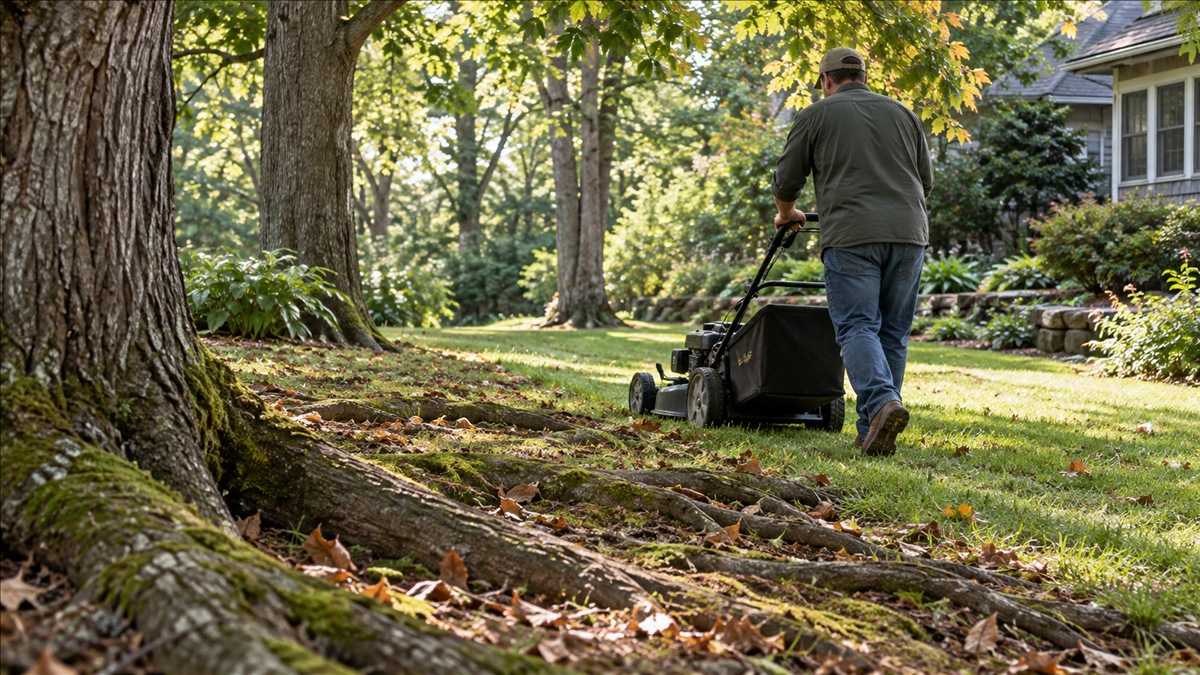
The person typing best lawn mowers for yards with roots has a lawn where tree roots lift the surface, so the mower bounces, scalps high spots or hits something it cannot see. The listings in this group do not mention roots. They give cut height ranges, obstacle claims, deck widths and power setups, and those are the facts that decide how a mower handles a rough surface. This post compares three picks on those facts and says plainly where the listings are silent.
Quick answer
- No listing in this group says it is built for roots. Use the cut height range, the obstacle claims and the power setup to decide, and confirm the root question on your own lawn.
- The MOVA robot has the widest cut height range, 1.2 to 3.9 inches, and the only numeric obstacle claim in the group, 1.6 inches.
- The DORTALA 13-inch corded push mower gives three heights from 0.99 to 2.56 inches. Its listing does not describe a cord length.
- The HEINPRO 14-inch cordless push mower gives five heights from 1 to 2.6 inches, and its battery and charger are not included.
Roots change the height question
A root that rises through the turf gives the blade a hard edge to meet and a bump the deck can ride over. The first number to read is the cut height range. A higher setting keeps the blade farther from a raised root, but it leaves more grass standing. The listings give ranges, not a rule for roots, so use the top of the range as a starting point and adjust from there.
Blade condition matters on a rough yard as well. The UF/IFAS page we opened says that when the cutting edge is dull, the mower tears the grass instead of slicing it. It says torn grass blades make the plants more vulnerable to disease, sun damage and insects, and that a mower blade should be sharpened at least twice a year. The page does not say how roots affect blade wear, so treat sharpening as routine maintenance and check the edge whenever the mower has struck something.
The UF/IFAS page also says rotary mower blades should be sharpened and balanced to prevent damage to the mower. A blade that has been struck by a root or a stone should be inspected before the mower goes back to work. That is a general maintenance point, not a claim about any one listing.
Three height ranges compared
The table below puts the three picks side by side on the facts their listings state. The height ranges come from the spec tables and bullets, and the robot’s cutting width comes from the spec table.
| Pick | Type | Cutting width | Cut height range (listing) | Top setting compared with the DORTALA top |
|---|---|---|---|---|
| DORTALA 13-inch | Corded push mower | 13 inches | 0.99 to 2.56 inches, three positions | 0 |
| HEINPRO 14-inch | Cordless push mower | 14 inches | 1 to 2.6 inches, five positions | 0.04 higher (2.6 – 2.56 = 0.04) |
| MOVA LiDAX Ultra 2000 | Wire-free robot | 8 inches | 1.2 to 3.9 inches, five positions | 1.34 higher (3.9 – 2.56 = 1.34) |
The DORTALA spec table gives its height range in metric units, 6.5 centimeters at the top and 25 millimeters at the bottom. Those figures match the bullets’ 2.56 and 0.98 inches to within a hundredth of an inch, so the spec table and the bullets agree on the range. The bullets round the bottom setting to 0.99 inches.
The MOVA’s top setting sits 1.34 inches above the DORTALA’s top. A higher top setting gives the robot more room over a raised root, but the listing does not say how much room is needed for a particular root. The three picks differ most in their power setups, and the next sections take them one at a time.
The MOVA robot and its obstacle claim
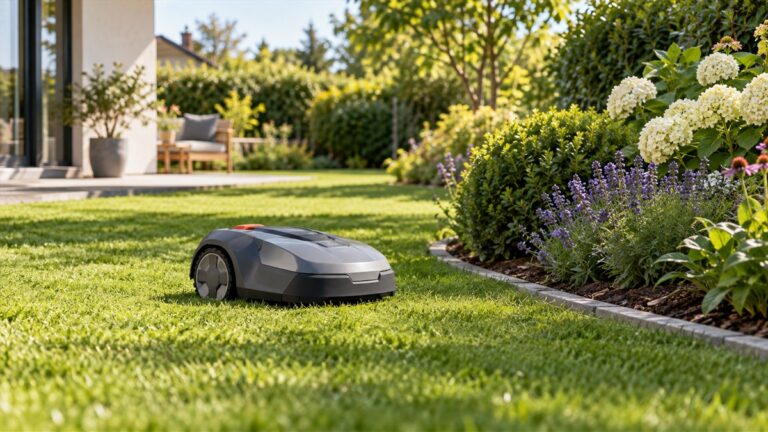
The MOVA LiDAX Ultra 2000 is the only robot in this group that gives a numeric obstacle figure. Its bullets say it can overcome obstacles up to 1.6 inches high and pits, with a rear-wheel drive system and off-road wheels. The same bullets say it handles uneven terrain and challenging weather, and that its cutting edge reaches within 2 inches of walls, hedges and raised edges. Those raised-edge claims matter for a yard where roots make a lip along a bed or a path.
The listing does not say whether the 1.6-inch figure applies to roots, rocks or curbs, and it does not give a test condition for it. A root that rises above 1.6 inches is a question for the yard, not the spec sheet. The listing’s other claims, such as lawn-friendly operation and the handling of uneven terrain, are not measured in the listing text we used.
The robot’s power and maintenance package is clear. The spec table gives a battery average life of 60 minutes. The bullets say the mower returns to its charging station when the battery is low and resumes where it stopped. They also describe up to 150 managed zones across two maps, a three-year manufacturer warranty and 24/7 after-sales service. The anti-theft feature needs a link module for real-time tracking. For the broader trade-offs of robotic mowing, see our pros and cons of robotic lawn mower guide.
The cutting width is the robot’s main limit on a rough yard. At 8 inches, the MOVA deck is narrower than the HEINPRO deck, and 14 / 8 = 1.75 means the HEINPRO covers about 1.75 times the width per pass. A robot runs on its own schedule, so the mowing time is a scheduling question. The listing does not say how long a root-heavy yard takes to mow in full.
The DORTALA corded push mower and the cord
The DORTALA 13-inch is a corded electric push mower with a 12-amp, 1400W motor and a 3700 RPM rating, according to its bullets. It has three cutting heights, a folding handle and a 30-liter bag with a mulching option. The bullets say a safety lockout requires the safety button to be pressed before the mower runs. The spec table gives an 18.5-pound weight, and the listing says the mower needs no battery charging.
The listing does not describe a cord length, and it does not say whether a cord is included. For a yard with roots, the cord is the part of the setup most likely to suffer. The University of Texas at Austin factsheet we opened says an extension cord may be damaged by door or window edges, by staples and fastenings, by abrasion from adjacent materials, or simply by aging. Roots and rough ground can drag a cord over hard edges, so keep the cord clear of the mowing path and check it before each session.
The factsheet also says an extension cord must be able to handle the amperage rating of the equipment it powers. It says not to use an indoor extension cord for outside use and not to use a frayed or damaged cord. The DORTALA bullets give the motor’s amp rating, but the listing does not give a cord rating or gauge, so the check against the cord label is yours to make. For more on cords for these mowers, see our extension cord for electric lawn mower guide.
The HEINPRO cordless push mower and its battery
The HEINPRO 14-inch is a cordless push mower with five cutting heights from 1 to 2.6 inches, a 14-inch deck and a mulching and bagging system with a 35-liter bag, which is 9.25 gallons. Its spec table gives a 17.8-pound weight and a one-year manufacturer warranty. The bullets say it is designed for DeWalt 20V MAX batteries, and they list compatible model numbers.
The battery and charger are not included. The listing attributes a runtime of 15 to 20 minutes to a single fully charged 20V 4.0Ah battery, and it says the coverage of about 1,200 to 1,500 square feet varies with lawn density, terrain and cutting height. That caveat matters on a rough yard, because the listing names terrain as one of the factors that change coverage. The listing does not mention roots, so the runtime on a root-heavy lawn is not something it can settle.
A cordless push mower removes the cord from the root question, but it adds a battery. If you already own DeWalt 20V MAX batteries, the HEINPRO fits your existing set. If you do not, the battery is an extra purchase that the listing does not include. The UF/IFAS page says to shut off the mower before adjusting or cleaning the blade, which applies to any push mower whatever its power type, so disconnect the battery or unplug the mower before you work on the blade.
Measure the roots before you choose
The cut height ranges become useful once you know how high your roots stand. Measure the tallest root in the mowing path, from the soil to its top. Then compare that height with each top setting, because a blade set higher than the root clears it by the difference.
A root that stands 2 inches above the soil clears a blade set at 2.56 inches by 0.56 inches (2.56 – 2 = 0.56). The HEINPRO’s top setting of 2.6 inches clears the same root by 0.6 inches (2.6 – 2 = 0.6). The MOVA’s top setting of 3.9 inches clears it by 1.9 inches (3.9 – 2 = 1.9). These are geometry, not measured results, and the listings do not say how the deck behaves when a root tilts it.
The MOVA’s 1.6-inch obstacle figure sits below that 2-inch root, so the robot’s obstacle claim would not cover it. That is the most useful number in this group for roots that stand taller than 1.6 inches, though the listing does not say whether the figure applies to roots at all.
A root that stands taller than a mower’s top setting cannot be cleared by that setting, and the listings give no guidance for that case. Mark the tall roots before you mow, and check the blade afterward. For a rough lawn, the UF/IFAS page’s blade and debris advice applies to every pick.
How we chose
We began with the mowers and robots that the catalog matched to this question. Battery chargers and adapters that came back in the same search were left out, because they do not mow. Three products remained: a corded push mower, a cordless push mower and a robot mower. Each one stays because its listing gives a fact that bears on a rough surface, such as the height range, the obstacle claim or the power setup. The order is not a ranking. The listing text we used contains no star or sales information, so none of the picks is ordered by those.
The set is small because the catalog returned only these three electric and robot mowers for this question. A longer list would add mowers whose listings say nothing about it. The three picks cover the three power setups in the set: corded, cordless and robotic.
What we could not verify
- No listing mentions roots, root-specific cutting, or the clearance between the deck and the ground. The height ranges are not the same thing as clearance over a raised root.
- The MOVA obstacle figure of 1.6 inches does not say whether it applies to roots, rocks or curbs.
- The MOVA claims of lawn-friendly operation and of handling uneven terrain are not measured in the listing text.
- The MOVA bullet describing its path width is unclear in the text we used, so this post does not describe it.
- The HEINPRO runtime is attributed to one battery and varies with terrain, and the listing does not say how that applies to roots.
- The DORTALA listing gives no cord length and no cord rating.
- The DORTALA safety and comfort claims are the maker’s descriptions and are not measured in the listing.
- The pages we opened do not cover roots, so the root question is answered only as far as the listing facts and the general blade and cord guidance allow.
1. DORTALA 13-Inch 12 Amp Corded Electric Lawn Mower, 1400W (Green) (Corded 13-inch with three cutting heights)
Pros
- The listing gives three cutting heights from 0.99 to 2.56 inches, with the spec table giving the same range in metric units.
- The bullets describe a folding handle and a safety button that must be pressed before the mower runs.
Cons
- The listing does not describe a cord length or say whether a cord is included.
- The listing gives three height settings only, the fewest of the three picks.
Best for: A small yard with a fairly stable surface, where a cord reaches and three height settings are enough.
Skip if: Your roots lift the surface enough that you need more height settings or a cordless setup.
View on Amazon (affiliate link)
2. HEINPRO Cordless Lawn Mower Compatible with Dewalt 20V MAX Battery (Cordless 14-inch with five cutting heights)
Pros
- The listing gives five cutting heights from 1 to 2.6 inches on a 14-inch deck.
- The listing says it works with DeWalt 20V MAX batteries from a list of model numbers.
Cons
- The battery and charger are not included, so you must already own or buy a compatible battery.
- The listing does not mention roots, and its runtime figure of 15 to 20 minutes is attributed to a single battery.
Best for: An owner who already has DeWalt 20V MAX batteries and wants five cutting heights on a push mower.
Skip if: You need an obstacle claim or a clearance figure for roots, which the listing does not give.
View on Amazon (affiliate link)
3. MOVA LiDAX Ultra 2000 Robot Lawn Mower with 4G for 0.5 Acre, No Wire No RTK+360° 3D LiDAR+AI Vision (Wire-free robot with a 1.6-inch obstacle claim)
Pros
- The bullets give a 1.2 to 3.9-inch cutting height range, the widest of the three picks, with five positions.
- The listing claims it can overcome obstacles up to 1.6 inches high and cut within 2 inches of raised edges.
Cons
- The spec table gives an 8-inch cutting width, so a root field means many more passes.
- The obstacle and uneven-terrain claims are not measured in the listing and do not say whether they cover roots.
Best for: A yard with raised edges and uneven ground that you can map and leave to run on its own schedule.
Skip if: You need a wide cut, or your roots rise above the listing's 1.6-inch obstacle claim.
View on Amazon (affiliate link)
FAQ
Will a higher cutting height protect the mower from roots?
The listings give height ranges only. They do not say how a height setting affects roots, deck clearance or obstacle strikes, and the pages we opened do not address roots. A higher setting leaves more grass standing, so choose the height for the lawn you have. The UF/IFAS page says a dull blade tears grass instead of slicing it, so keep the blade sharp, with sharpening at least twice a year.
Can a robot mower handle roots?
The MOVA listing claims it can overcome obstacles up to 1.6 inches high, handle uneven terrain and cut close to raised edges. The listing does not measure those claims or say that they cover roots. Look at the yard before you rely on the robot, and confirm the obstacle claim with the maker if your roots rise higher.
What should I do after the mower hits a root or a stone?
The UF/IFAS page we opened says to shut off the mower before adjusting or cleaning the blade, and to clear debris the mower could throw, such as sticks and pine cones. It also says to keep children out of the yard while you mow. For a battery mower, disconnect the battery before blade work, and follow the manual. Inspect the blade for damage before you start the mower again.
Do corded mowers need a particular cord on rough ground?
The DORTALA listing gives the motor’s amp rating but no cord length or gauge. The University of Texas factsheet says a cord must handle the amperage rating of the equipment, must be a three-wire type so it can be grounded, must not be an indoor cord used outdoors, and must not be frayed or damaged. Check the cord label before you buy, and keep the cord clear of roots and edges.
Which of the three picks has the widest cut height range?
The MOVA, at 1.2 to 3.9 inches. Its top setting is 1.34 inches above the DORTALA’s top setting of 2.56 inches. The HEINPRO range is 1 to 2.6 inches, and the DORTALA range is 0.99 to 2.56 inches. A wider range gives you more choice, but the listings do not say which setting protects a mower from a particular root.
Bottom line
Choose by how you will handle the roots. A robot with a higher top setting and a stated obstacle figure suits a yard you can map and leave to run on its own schedule. A corded or cordless push mower suits a yard you work by hand, with a cord or a battery you have already sorted out. No listing in this group answers the root question directly, so check the height, the surface and the blade on your own lawn before you buy.
Sources
- UF/IFAS Gardening Solutions, Lawn Mower Care and Safety: when the cutting edge is dull, it tears the grass instead of slicing it; sharpen the blade at least twice a year; clear debris the mower could throw; shut off the mower before adjusting or cleaning the blade; keep children out of the yard.
- University of Texas at Austin Environmental Health and Safety, Factsheet: Extension Cords: cords must handle the amperage rating of the equipment; an extension cord may be damaged by abrasion from adjacent materials; do not use an indoor cord outside; do not use frayed or damaged cords.
- U.S. Consumer Product Safety Commission, 16 CFR 1205.1 (text via Cornell Legal Information Institute): the standard addresses contact with the rotating blade, primarily of the foot and hand, and defines walk-behind power lawn mowers with a minimum cutting width of 12 inches.
- U.S. Environmental Protection Agency, Used Lithium-Ion Batteries: even used batteries can have enough energy to injure or start fires; contact the battery or device manufacturer for handling information on a damaged battery.