Battery Self Propelled Lawn Mower Reviews: Listings Compared
As an Amazon Associate we earn from qualifying purchases. Details
If you are looking for battery self propelled lawn mower reviews, this guide sets out what the listings in this set actually state. Two battery self-propelled mowers appear here, and both come from the same brand, so this is a comparison of two listings rather than a cross-brand roundup. Check the listing before you buy, because both listings show a height or runtime figure that conflicts with another figure on the same page. Use the sections below to judge drive style, cutting width, weight and battery package, and to decide whether a self-propelled battery mower suits your lawn.
At a glance: the 2 picks, by their own spec fields
| Pick | Cutting width | Weight | Coverage / speed | Flag |
|---|---|---|---|---|
| Greenworks 60V 21in Self-Propelled | 20.28 inches | 65 lbs | Up to 3/4 acre per charge (seller claim) | Operation field reads “Manual,” conflicting with the self-propelled description — confirm drive mode in the manual |
| Greenworks 60V 25in Self-Propelled | 23.96 inches | 67.2 lbs — heaviest of the pair | Variable speed 3.5 to 4.5 MPH | Height fields conflict (max 3.5cm, min 4cm); runtime figures differ between specs and bullets |
Specs are from each product’s Amazon listing (full citations in this guide’s sources section). Both come with two 4.0Ah batteries and a 4-year warranty. Each listing has at least one internal conflict — this guide flags them rather than picking a figure silently; confirm drive mode, height range, and runtime on the current listing before buying.
Quick answer
Choose a self-propelled battery mower when a push mower’s effort is the real problem, such as a slope, a long lawn or a heavy grass load. Both listings in this set describe rear-wheel drive and a battery pack of two 4.0Ah batteries. The 21-inch listing is the lighter and narrower of the two, and it lists a 4-year warranty. The 25-inch listing has the wider deck and a stated speed range of 3.5 to 4.5 MPH, but its height and runtime figures conflict. Neither listing gives a slope rating, so check the manual before you use either mower on a steep yard.
What matters in a battery self-propelled mower
Drive style is the first measure. A self-propelled mower moves on its own power, and both listings describe rear-wheel drive. The listings also describe variable speed control or an on-the-go pace adjustment. The drive helps you keep a steady pace across a long lawn, but you still steer and control the mower. Read the drive description as the seller’s claim, and confirm the drive direction and controls in the manual.
A self-propelled mower changes how much effort the walk takes, but it does not change the cut itself. The blade height, the deck width and the battery decide the cut and the run time. Keep that separation in mind when you compare the two listings, so that a drive claim does not make a weak cutting figure look stronger.
Cutting width is the second measure. The first listing states a 20.28-inch deck, and the second states a 23.96-inch deck. A wider deck covers more ground in each pass, but it also adds weight and width when you store or move the mower. Compare the deck width with the path you mow and the gates or side paths you need to pass.
Weight is the third measure. The first listing states 65 pounds, and the second states 67.2 pounds. Both are heavy, so a self-propelled drive is easier to push on the lawn, but you still have to lift or move the mower onto a shelf or into a vehicle. Plan for that when you buy.
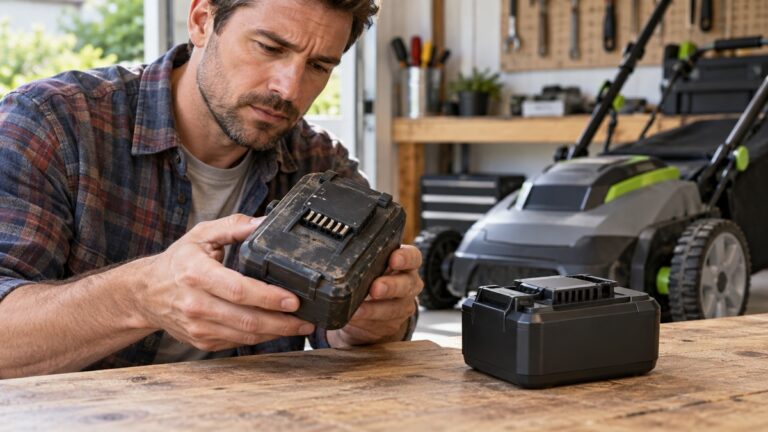
Battery package is the fourth measure. Both listings name a 60V battery kit with two 4.0Ah batteries included. The Wikipedia lithium-ion article notes that lithium-ion cells typically have a nominal voltage of 3.6 or 3.7 volts, and that battery sizes are not standardized. Do not assume a battery from another tool fits either mower, and check the manual before you use any other pack.
Runtime and coverage are the fifth measure, and they are the figures most likely to conflict. The first listing states up to 3/4 acre per charge, with performance that varies by terrain and technique. The second lists an 80-minute battery life in its specs, while its highlights and bullet points state 70 minutes. Treat both as seller figures, and plan your mowing with a margin.
Height range and warranty are the last measures. The first listing states a height range from 1 to 4 inches with seven positions. The second lists a maximum of 3.5 centimeters and a minimum of 4 centimeters, which conflicts with itself. The first listing states a 4-year tool and battery warranty, and the second also describes a 4-year limited warranty in its bullets.
How to choose a self-propelled battery mower
Start with the slope and the distance. Walk the lawn and note any slopes, long runs or areas with heavy grass. A self-propelled drive helps most on those stretches. If your lawn is flat and small, a push mower may be enough, and you can save weight and cost.
Next, check the deck width. A 23.96-inch deck covers more ground per pass than a 20.28-inch deck. If your path includes narrow gates, side paths or tight corners, the narrower deck can be easier to manage. Choose by the paths you use, not by the largest number on the page.
Then compare the height information. The first listing gives a clear range from 1 to 4 inches. The second gives a maximum and minimum that conflict. If the height range matters for your grass, confirm the correct figures with the seller before you buy, and do not rely on either one until you do.
After that, look at the runtime figure and plan around the lower one. The second listing has two runtime figures, and the first gives a coverage claim rather than minutes. Use the lower figure for setup, and expect real use to vary with grass height and the ground you cover.
Check the warranty text as well. Both listings mention a four-year period, but the wording differs: one names a tool and battery warranty directly, and the other names a limited tool and battery warranty in its bullet points. Read the warranty terms on the seller’s page, and keep the proof of purchase with the mower.
Finally, weigh the lifting and storage. Both mowers are heavy. If you have to lift the mower into a car, onto a porch or into a shed, the 65-pound model is the lighter of the two. Measure your storage space before you choose the wider deck.
A simple rule works here. Choose the 21-inch listing if the lighter weight and the 4-year warranty matter most to you. Choose the 25-inch listing if the wider deck matters more, and you can confirm its height and runtime figures first.
1. Greenworks 60V 21in Self-Propelled Lawn Mower, (2) 4.0 Ah Battery Kit (21-inch self-propelled with a 4-year warranty)
Specs from the listing (checked 2026-10-11):
- Cutting width: 20.28 inches
- Item Weight: 65 pounds
- Maximum Adjustable Cutting Height: 4 inches
- Number of Positions: 7
- Manufacturer Warranty Description: 4 Year
- Operation Mode: Manual
Pros
- Listed 60V brushless motor with two 4.0Ah batteries
- Rear-wheel drive with on-the-go pace control listed
- Listed 4-year tool and battery warranty
- Mulch, bag, side discharge and turbo leaf pickup listed
Cons
- At 65 pounds it is heavy to lift into a vehicle or onto a shelf
- The operation field reads Manual, which conflicts with the self-propelled description
- The listed 20.28-inch deck is narrower than the other choice, so it makes more passes
Best for: Buyers with a larger lot who want a self-propelled drive and a 4-year warranty
Skip if: Skip it if you need a lighter mower or the wider deck of the other choice
View on Amazon (affiliate link)
2. Greenworks 60V 25in Self-Propelled Lawn Mower, (2) 4.0 Ah Battery Kit (25-inch self-propelled with variable speed)
Specs from the listing (checked 2026-10-11):
- Cutting width: 23.96 inches
- Item Weight: 67.2 pounds
- Battery Average Life: 80 minutes
- Maximum Adjustable Cutting Height: 3.5 centimeters
- Minimum Adjustable Cutting Height: 4 centimeters
- Operation Mode: Automatic
Pros
- Listed 23.96-inch cutting width, the wider deck of the pair
- Variable speed control listed at 3.5 to 4.5 MPH
- Listed 4-year limited tool and battery warranty
Cons
- The maximum and minimum height fields conflict: 3.5 centimeters maximum and 4 centimeters minimum
- Runtime is listed as 80 minutes in the specs but 70 minutes in the highlights
- At 67.2 pounds it is the heaviest model in this pair
Best for: Buyers with a large lot who want a wider deck and variable self-propelled speed
Skip if: Skip it if the height figures or the runtime matter to you, since the listing disagrees on both
View on Amazon (affiliate link)
The two self-propelled listings, in plain terms
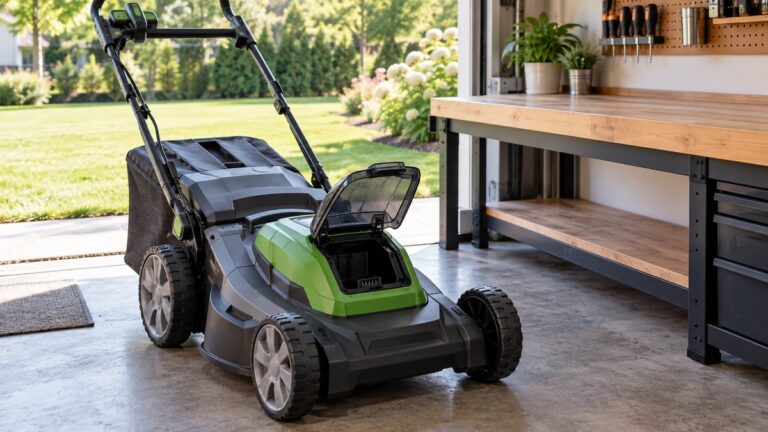
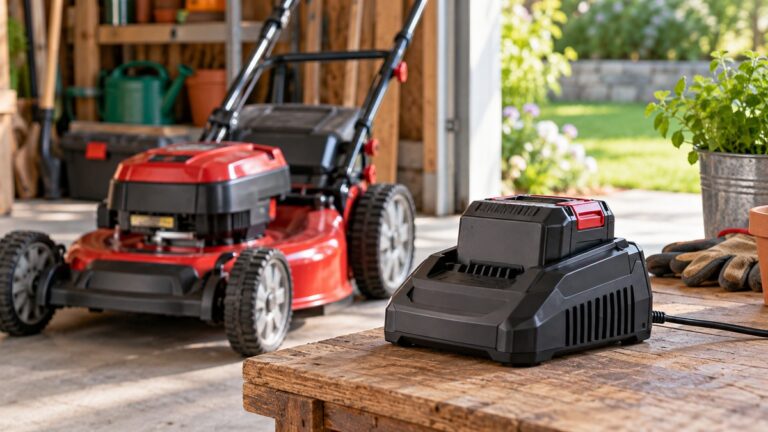
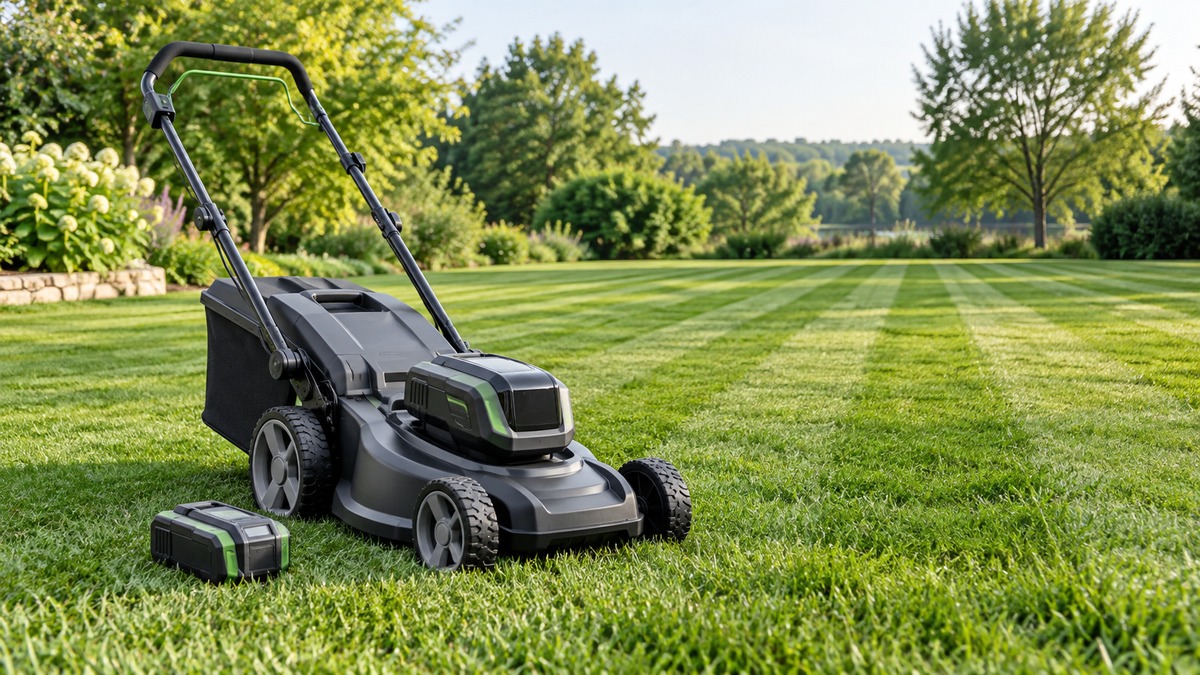
The top choice is a 21-inch-class self-propelled kit with a 60V brushless motor and two 4.0Ah batteries. Its listing describes a self-propelled drive that handles up to 3/4 acre per charge, with mulch, bag, side discharge and turbo leaf pickup. It states 65 pounds, a 20.28-inch cutting width and a 4-year warranty. The operation field reads Manual, which conflicts with the self-propelled description, so confirm the drive mode in the manual before you buy.
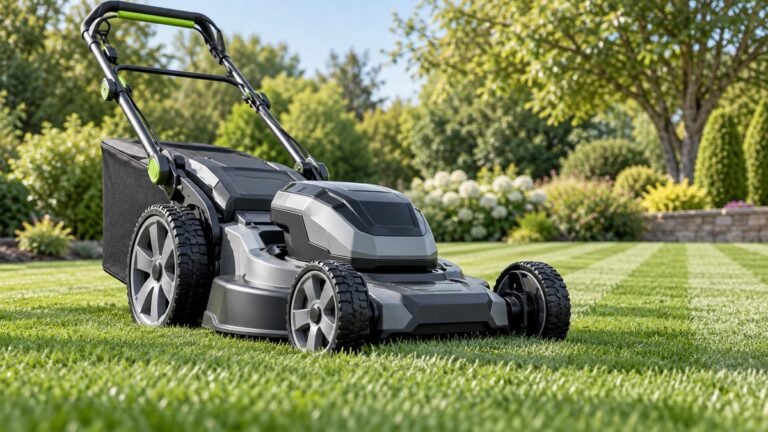
The second choice is a 25-inch-class self-propelled kit with two 4.0Ah batteries and a fast charger named in the listing. Its listing describes a variable speed range of 3.5 to 4.5 MPH, a 23.96-inch cutting width and a 4-year warranty. It weighs 67.2 pounds, the heaviest in this pair. Its height figures conflict, with a maximum of 3.5 centimeters and a minimum of 4 centimeters, and its runtime figures differ between the specs and the bullet points.
Worked example: how much margin a 1/2-acre lawn leaves
Your lawn is 1/2 acre. 0.75 acre divided by 0.5 acre is 1.5, so the claim is about one and a half times your lawn. That margin is only a seller claim, so plan with a larger buffer than the arithmetic suggests. Real coverage depends on grass height, slopes and how often you stop to empty a bag or clear a path.
Mistakes to avoid when you compare these mowers
Treating self-propelled as hands-free is the first mistake. The drive moves the mower, but you still steer and manage the pace, and you still need to keep feet clear of the blade.
Ignoring conflicting figures is the second mistake. The second listing gives two runtime figures and conflicting height limits. Write down each figure and confirm the correct one before you rely on any of them.
Comparing centimeters with inches without converting is the third mistake. One height field is in centimeters, and the others are in inches. Convert before you compare the ranges.
Choosing the widest deck without a path check is another mistake. A wider deck covers more ground in each pass, but it can be awkward on narrow paths and near gates. Walk the path before you decide, and compare the width with the tightest spot you mow.
Assuming a lighter mower is easy to move is the last mistake. Both listings are heavy. Plan how you will lift and store the mower before you buy. If a battery will not take a charge, the battery will not charge guide lists the general checks to run first.
FAQ
Are these mowers self-propelled?
Both listings describe self-propelled or rear-wheel drive, and the title on each names the drive. The first listing’s operation field reads Manual, so confirm the drive mode in the manual before you rely on it.
How much does a self-propelled drive help on a slope?
The listings describe rear-wheel drive and variable speed, but neither gives a slope rating. Check the manufacturer’s manual for slope limits, and do not mow a steep area that the manual does not allow.
What runtime should I plan for?
The second listing states 80 minutes in its specs and 70 minutes in its highlights, while the first gives a coverage claim of up to 3/4 acre per charge. Plan with the lower figure, and expect real results to vary with grass, terrain and technique.
Can I mulch and bag with these mowers?
Yes, the first listing states mulch, bag, side discharge and turbo leaf pickup. The second describes a mulching and bagging choice in its highlights. Check the manual for the bag setup before you use either mower.
Is a 60V battery kit interchangeable with other tools?
Do not assume so. Battery sizes are not standardized, according to the lithium-ion battery article, and each listing names its own battery system. Check the manual before you use any other battery.
How heavy are these mowers to lift and store?
The listings state 65 pounds and 67.2 pounds. Plan for two people or a sturdy cart when you lift one into a vehicle or onto a shelf, and measure your storage space first.
What safety features should I check?
Neither listing describes a start lock in its bullets, so check the manual for start and blade controls. The federal rule aims to reduce injuries from contact with the rotating blade, mainly to the foot and hand, so follow the maker’s manual for blade service.
Which listing suits a first self-propelled mower?
If you have never used a self-propelled mower, the lighter and narrower listing is easier to learn with, and its warranty wording is the more specific of the two. Start with the mower’s controls in the manual, mow a small area first, and then decide whether the wider deck is worth the extra weight.
Bottom line
If a slope or a long lawn makes a push mower hard to use, a self-propelled battery mower is worth a closer look. Choose the 21-inch listing if you want the lighter weight and the 4-year warranty, and choose the 25-inch listing if the wider deck matters more and you can confirm its height and runtime figures. Whichever you choose, check the drive mode, the height range and the runtime on the page before you order, and plan your mowing with a margin. For related reading, the best self-propelled corded electric lawn mower guide covers a corded alternative, and the Greenworks 60V pro guide covers another 60V choice.
Sources
- Lithium-ion battery (Wikipedia): lithium-ion cells have a nominal voltage of 3.6 or 3.7 volts, and battery sizes are not standardized.
- 16 CFR 1205.1 (Cornell LII): the rule aims to reduce injury from contact with the rotating blade, mainly to the foot and hand.