Weed Wacker with Battery and Charger: Two Listings Compared
As an Amazon Associate we earn from qualifying purchases. Details
If you want a weed wacker with battery and charger, the first question is whether the battery and charger come in the box. This guide compares the two cordless string trimmer listings in this set that state a battery and charger are included. Check the listing before you buy, because both listings name one battery in the title but describe two batteries elsewhere on the page. Use the sections below to compare battery count, battery capacity, head design and weight, so you can judge a battery trimmer for your own edges and beds.
At a glance: the 2 picks, by their own spec fields
| Pick | Voltage/battery | Weight | Notable feature |
|---|---|---|---|
| 21V Cordless Trimmer & Edger | 21V, 2x 2.5Ah batteries, fast charger | 6.2 lbs — lighter of the two | 9500 rpm motor, 12″ cutting width, head rotates for edging and tilts through a wide range; no comparable run time given |
| 20V Electric String Trimmer | 20V, 2x 2.0Ah batteries, 1 charger | 7 lbs — heavier of the two | 30-minute average battery life (test conditions not stated); shaft folds at 180°, head adjusts through 90° |
Specs are from each product’s Amazon listing (full citations in this guide’s sources section). The 21V pick’s title names one battery — confirm the actual battery count/set before ordering. Choose the 20V pick if the folding shaft matters more than the higher-capacity battery pack.
Quick answer
Choose a battery trimmer only after you confirm that the battery and charger are included, and that the battery count matches across the title, specs and bullet points. In this group, one listing states two 2.5 Ah batteries with a fast charger, which is the larger listed capacity. The other lists two 2.0 Ah lithium-ion batteries and one charger, with a listed battery life of 30 minutes. Both listings describe a 12-inch cutting width, so the difference comes down to battery capacity, weight and head design. Choose the 2.5 Ah listing if capacity matters most, and confirm the battery count on the page before you order.
What matters for a battery weed wacker with a charger
The first point is what comes in the box. Both listings state that the batteries are included. Read that statement carefully, because the same listing also names a single battery in its title. Confirm the number of batteries and the charger before you order, since a missing battery changes what you can use on the first day, and you should not have to guess.
The second point is battery capacity. The two listings give capacities of 2.5 Ah and 2.0 Ah. A larger amp-hour figure usually means more stored energy, which is a common rule of thumb, but neither listing shows the run time that capacity produces in your grass. Treat the capacity as a comparison point, not a promise of how long the trimmer will run.
The third point is battery count, because it is the figure most likely to be wrong on a listing. The first listing says two batteries in its bullet points, yet its title names one 2.5Ah battery. The second listing names two 2.0Ah batteries in a bullet, yet its title names one 2.0Ah battery. Write down the count you expect, and check it against the box contents on the seller’s page before you buy.
The fourth point is the battery type and the charger. One listing states lithium-ion batteries, and the other calls its batteries nonstandard. The Wikipedia lithium-ion article explains that a lithium-ion cell typically has a nominal voltage of 3.6 or 3.7 volts, and that battery sizes are not standardized. That is why you should not assume a battery from one trimmer fits the other. Check the manufacturer’s manual before you swap any battery or charger between tools. For the voltage basics behind these battery labels, see the lawn mower battery voltage and amps guide.
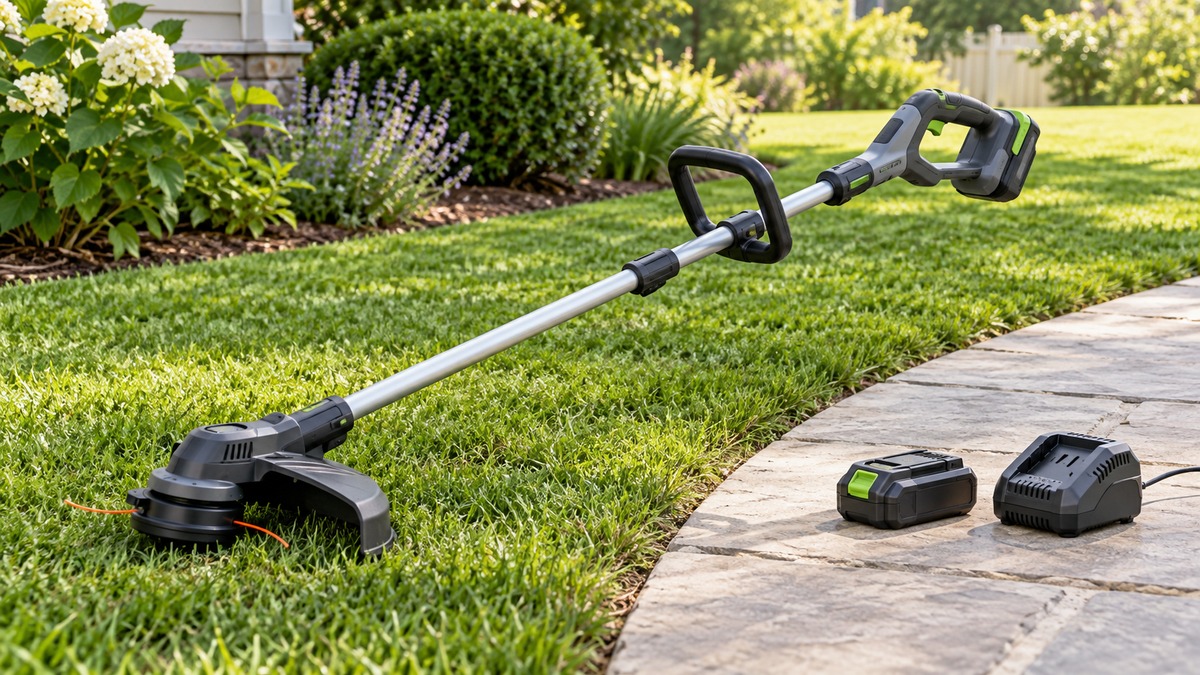
The fifth point is the head and edger design. Both listings describe a two-in-one trimmer and edger. The first head rotates to edge and tilts through a 0 to 90 degree range. The second has a 90 degree adjustable cutting head and a shaft that folds at 180 degrees. Choose the design that matches the work you do most often, whether that is a fence line, a bed edge or a wide strip of lawn.
The sixth point is weight. The first listing states 6.2 pounds, and the second states 7 pounds. A difference of less than a pound may seem small, but it adds up over a long edging session, especially if you hold the trimmer at arm’s length for long periods.
How to choose between the two battery trimmers
Start with the battery count. If the listing you like names one battery in the title but two in the bullets, confirm the box contents with the seller before you order. Do not rely on the title alone, because the title is the easiest figure to get wrong.
Next, compare the capacity figures. The first listing states 2.5 Ah and the second states 2.0 Ah. If you cut a large area and want fewer battery stops, the higher capacity figure is the stronger starting point. If you mainly trim small beds and edges, the lower capacity may be enough, and the lighter tool may be the better choice.
Then check the head and shaft. If you need to edge along a sidewalk, a head that rotates and tilts gives you more angles. If you need to store the trimmer in a small space, a shaft that folds at 180 degrees can help. Match these features to where you use the tool, not to the word edger in the title.
After that, look at the charger and warranty details. The Wikipedia battery charger article notes that charging depends on the size and type of battery, and that some battery types cannot withstand overcharging and can be damaged, lose capacity or overheat. Neither listing gives a warranty length in its specs, so check the seller’s page or the manual before you rely on coverage.
Finally, decide what the listed battery life means to you. The second listing states a 30-minute average battery life, but it does not state the test condition. Treat that as the seller’s claim. Real run time depends on the grass, the cutting height and the terrain, so you will learn more from one afternoon of use than from any single listing figure.
If you want to compare more battery trimmers before you decide, the top battery powered weed eaters roundup covers a wider range of models. For a battery and charger hedge trimmer instead, the Worx hedge trimmer battery and charger guide shows a different tool type.
A simple rule works here. Choose the first listing if you want the higher listed capacity and the lighter weight, and you can confirm the battery count. Choose the second if you prefer the folding shaft and the stated battery life, and you can accept an unclear count and a claim without a test condition.
1. 21V Cordless String Trimmer & Edger with 2.5Ah Battery &Fast Charger (Larger listed capacity with a rotating edger)
Specs from the listing (checked 2026-10-11):
- Power Source: Battery Powered
- Cutting Width: 12 inches
- Item Weight: 6.2 pounds
- Number of Batteries: 2 Nonstandard Battery batteries required. (included)
- Speed: 9500 rpm
Pros
- Listed 2.5 Ah batteries, the larger capacity in this group
- Head rotates 90 degrees for edging and tilts through a wide range
- Listed 6.2 pounds, the lighter of the two weights
Cons
- The title names one battery while the bullets and the battery count name two
- The listing calls the batteries nonstandard, so check replacement options first
- The listing gives no run time, so charge life cannot be compared with the other pick
Best for: Buyers who want the larger listed capacity and a lighter trimmer for edging
Skip if: Skip it if you cannot confirm the two-battery count, or if you need a battery that another tool can share
View on Amazon (affiliate link)
2. Electric String Trimmer Cordless with 2.0Ah Battery & Charger 20V Lawn Tool (Folding shaft and a stated battery life)
Specs from the listing (checked 2026-10-11):
- Power Source: Battery Powered
- Cutting Width: 12 inches
- Item Weight: 7 pounds
- Number of Batteries: 2 Lithium Ion batteries required. (included)
- Battery Average Life: 30 minutes
Pros
- Battery and charger listed as included
- Shaft folds at 180 degrees, with an adjustable 90 degree head
- Lists an additional 8 spindles for line replacement
Cons
- The title names one 2.0Ah battery while a bullet says two
- The 30 minute battery life has no test condition in the listing
- At 7 pounds it is the heavier of the two listed weights
Best for: Buyers who want a folding shaft for storage and an included charger
Skip if: Skip it if you need the higher listed capacity or the lighter weight
View on Amazon (affiliate link)
The two battery trimmers, in plain terms
The first listing is the 21-volt one with two 2.5 Ah batteries and a fast charger. Its head rotates for edging and tilts through a wide range. The listing states a 9500 rpm motor speed and a 12-inch cutting width. It lists 6.2 pounds, the lighter of the two weights. The title names one battery, so confirm the set before you order, and note that the listing does not give a run time you can compare directly.
The second listing is the 20-volt one with two 2.0 Ah lithium-ion batteries and one charger. It lists a 30-minute average battery life, but the listing does not give the test conditions behind that figure. Its shaft folds at 180 degrees, and its head adjusts through 90 degrees. At 7 pounds, it is the heavier of the two listed weights. Choose it if the folding shaft matters more to you than the higher capacity.
How many battery swaps for a two-hour session
For a two-hour session, use the second listing’s 30-minute average battery life as the working figure, even though it is a seller claim. 120 minutes divided by 30 minutes is 4, so you would need about four full battery cycles across the session. Two batteries let you swap while one charges. Real results depend on grass height, edge work and the battery’s age, so use this estimate to plan your charging, not to promise a result.
Some details are missing from both listings. Neither one states a cutting line diameter, and neither gives a motor type in plain words. The first listing’s highlights mention spool lines, and the second’s bullets mention spare spindles, but neither listing explains how the line feed compares in real use. If line size or motor type matters for your edges, ask the seller or read the manual before you buy.
Mistakes to avoid with battery trimmers
Trusting the title’s battery count is the first mistake. Both listings name one battery in the title and two elsewhere. Check the box contents on the page before you order, and ask the seller if the page does not make the count clear.
Treating the battery life figure as a guarantee is the second mistake. The 30-minute figure in one listing has no test condition. Read it as a seller claim, and plan with a margin.
Assuming one battery fits the other trimmer is the third mistake. The listings name different battery types and voltages. Do not swap batteries or chargers between the tools unless the manual names that tool.
Ignoring the head angle is the last mistake. Edging along a fence or a bed edge needs a head that reaches the angle you need. Check the head range before you order, and compare it with the work you do most.
FAQ
Do both listings include a battery and charger?
Yes, both specs state that the batteries are included. Confirm the battery count and the charger in the listing before you order, because each title names only one battery.
Which battery capacity is better?
The listed capacities are 2.5 Ah and 2.0 Ah. A larger amp-hour figure usually means more stored energy, but neither listing shows the run time that capacity produces in your grass, so use the figures for comparison only.
How long will a battery last on one charge?
One listing states a 30-minute average battery life without a test condition, and the other gives no run time. Real run time varies with grass, cutting height and terrain, so check the listing and the manual before you plan a session.
Can I use a battery from one listing in the other trimmer?
No, do not assume that. Each listing names its own battery and charger. Battery sizes are not standardized, according to the lithium-ion battery article, so check the manufacturer’s manual before you swap any battery or charger.
Is the edger head useful for a bed edge?
Both listings describe an edger head. The first listing’s head rotates to edge and tilts through a wide range, and the second listing has a 90 degree adjustable head. Choose the one whose angle range matches the bed edge you plan to cut.
How should I charge the battery safely?
Use the charger in the box or the one the manual names. The battery charger article notes that charging depends on the battery’s size and type, and that some types can be damaged by overcharging. Follow the manual’s charging steps and do not leave the battery on the charger longer than the manual allows.
What if the title and the bullets disagree on the battery count?
Write down both figures, then confirm the box contents with the seller before you pay. Do not use the higher count to justify a purchase until you have confirmation from the listing or the seller.
Does either trimmer come with spare line?
The first listing’s highlights say it includes 10 lines, and the second lists 8 spindles of additional line in its bullets. The wording differs, so check the count on the page before you order, and keep a spare spool on hand for the first few sessions.
How much does the weight difference matter?
A gap of less than a pound is small in a single pass, but it adds up through a long edging session. Hold the trimmer at a height that keeps your wrists relaxed, and take breaks on long jobs.
Bottom line
Choose the first listing if you want the larger listed capacity, a rotating edging head and the lighter weight, and you can confirm the battery count before you order. Choose the second listing if the folding shaft matters more to you, and you can accept an unclear battery count and a listed battery life without a test condition. Either way, check the battery and charger on the page before ordering, and plan your charging with a margin rather than the listed figure.
Sources
- Lithium-ion battery (Wikipedia): lithium-ion cells have a nominal voltage of 3.6 or 3.7 volts, and battery sizes are not standardized.
- Battery charger (Wikipedia): charging depends on battery size and type, and some types can be damaged by overcharging.