Do Robot Lawn Mowers Need Boundary Wire?
As an Amazon Associate we earn from qualifying purchases.
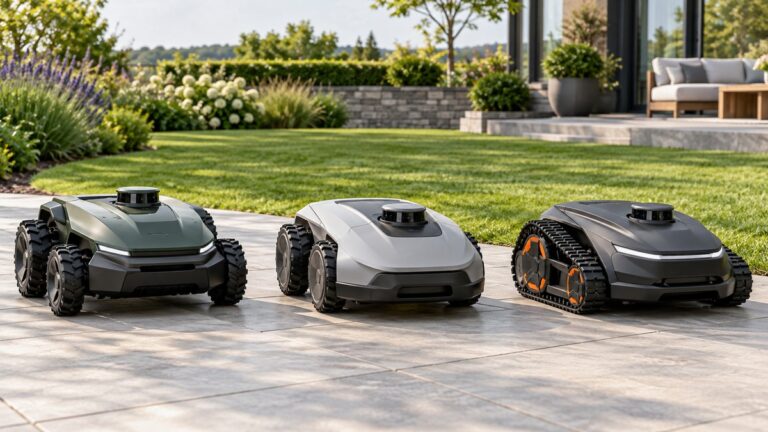
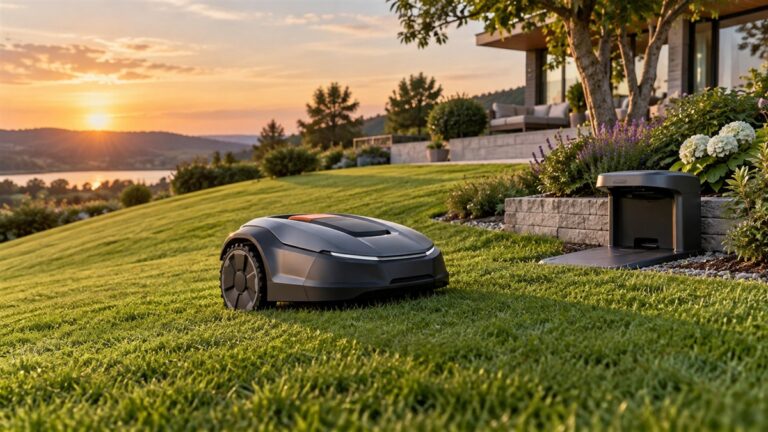
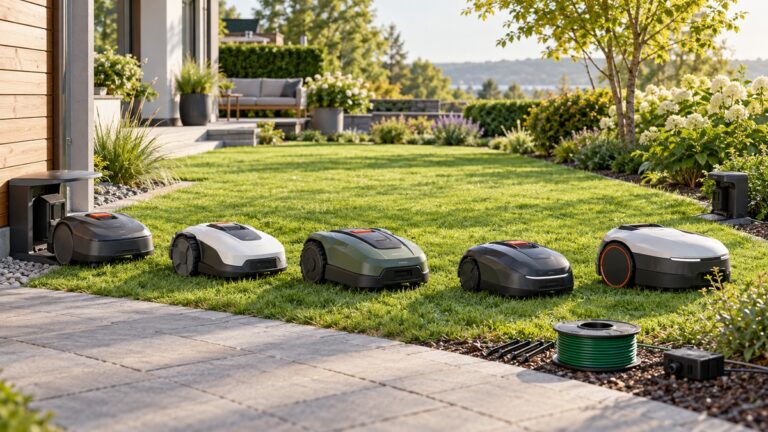
The short answer to “do robot lawn mowers need boundary wire” is: not always. A traditional robot mower follows a wire that is placed or buried around the lawn and around any obstacles it should avoid. Some newer models use satellite positioning and a virtual boundary set in an app instead. Whether a particular model needs wire depends on that model, so the manual or the product listing is the place to confirm it.
This post covers what the wire does, how Husqvarna and STIHL describe wire-free operation, and what the sources do not say. Setup order belongs in a separate post, so this one stays with the wire itself.
Quick answer
- A traditional robot mower uses a boundary wire placed or buried around the lawn. Husqvarna says the mower can return to its charging station by following the wires.
- Husqvarna’s wire-free option, EPOS, uses satellite positioning and virtual boundaries instead of a physical wire.
- Husqvarna says EPOS models can still use some boundary wire in heavy shade, but the wire is not required.
- The STIHL pages we opened describe boundary wire and do not describe a wire-free model.
What the boundary wire does
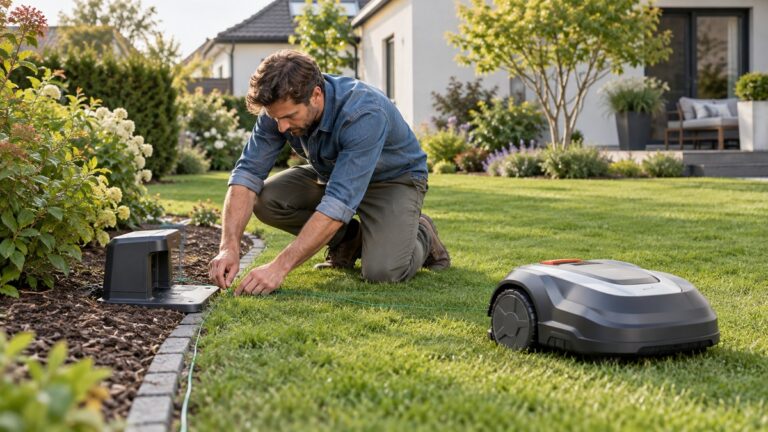
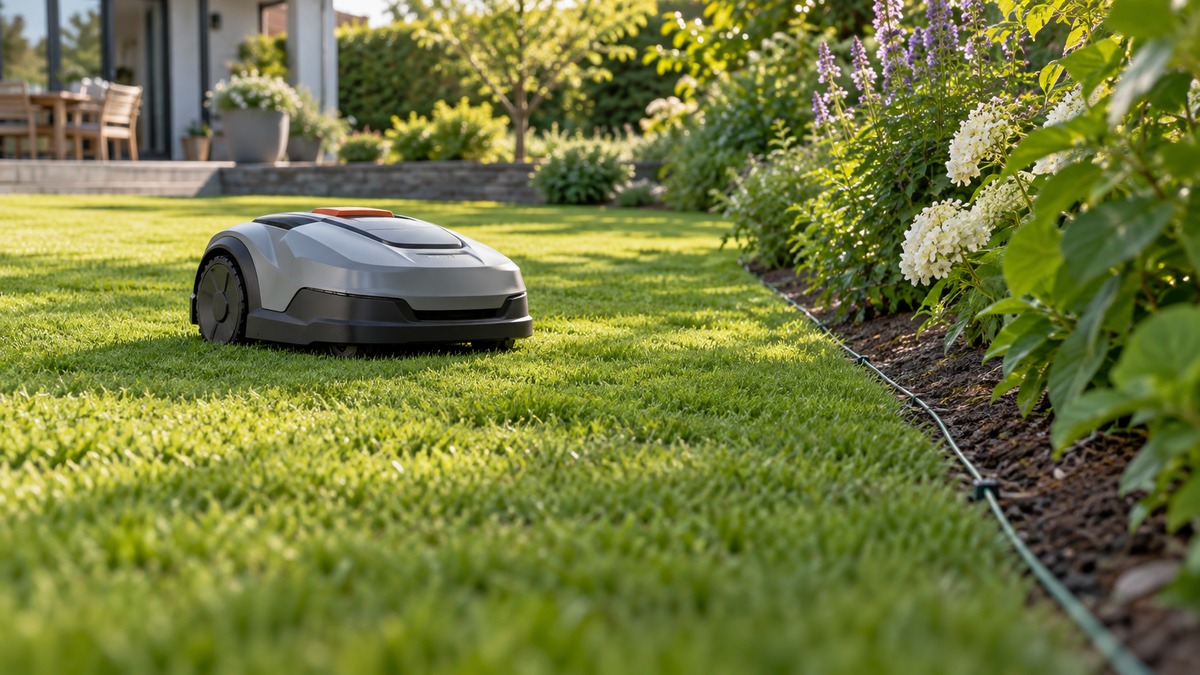
The boundary wire marks the edge of the area the mower is allowed to cut. Husqvarna’s how-it-works page describes it as a wire placed or buried around the edge of the lawn and any obstacles the mower should avoid. The same page says the wire is fully customizable, so the mower reaches only the area it is meant to cover and leaves the rest. Husqvarna also states that traditional models require a physical boundary wire buried or stapled to the ground.
Defining the cutting area
STIHL’s iMOW page says that bushes, beds, trees and other solid objects in the garden can be marked with boundary wire from the start. The same page describes what happens when the mower meets something the wire did not mark. It says that if the iMOW encounters an unexpected obstacle, such as a garden chair, it will detect this by means of sensors under its hood, slow down, and gently bump into the obstacle. The wire sets the planned area. The sensors are how the mower reacts to an object the wire did not mark.
Returning to the charging station
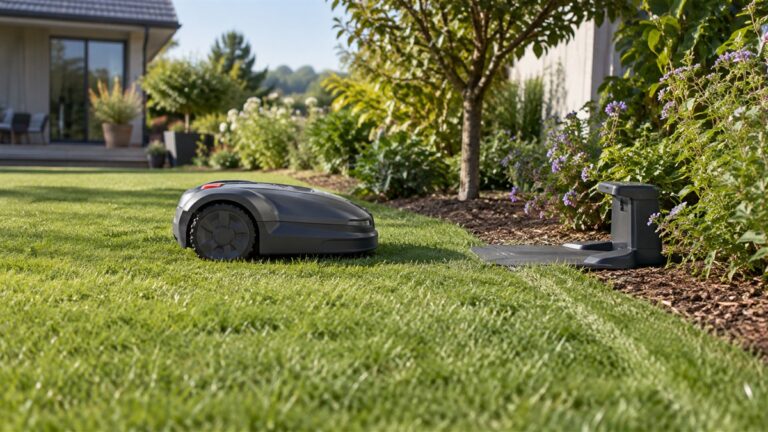
Husqvarna says the mower goes back to its charging station either via a signal or by following the wires. The Husqvarna FAQ also describes a guide wire. Its purpose is to help the mower navigate back to the charging station when it is in a remote corner of the lawn. The FAQ lists the boundary wire and the guide wire as separate items.
The how-it-works page lists three ways the mower can head home. It says the mower can follow a guide wire, track the boundary wire back to the dock, or use onboard GPS to find the most efficient path. GPS is listed as a separate feature. The page says that select models “use GPS to help navigate your lawn,” and it treats GPS apart from both the boundary wire and the EPOS option. Only EPOS is described as wire-free.
The FAQ also covers a guide wire routed through a passage such as a fence door. It says the mower is following a guide wire when it passes through, and that the mower does not follow the guide wire in exactly the same way every time. That can lead to a collision with the fence door. The FAQ adds that if the guide wires are properly installed, the mower will self-correct and pass through the door.
What wire-free (EPOS) means
Husqvarna calls its wire-free option EPOS. The EPOS page says that the satellite-based technology enables the mower to work within virtual boundaries. Positioning uses RTK, which the page describes as a satellite navigation technique that provides centimeter-level accuracy in seconds. The page also says the lack of a physical wire means no wire breaks and more flexible area management. The page says all you need is your smartphone and the Automower Connect app.
EPOS needs a source of satellite correction data, and the page describes two options. The first is the Husqvarna Cloud network. The EPOS page says the mower in that setup requires a constant internet connection, either through a mobile network or Wi-Fi. The second is a reference station, which the page says must have a clear 135-degree view of sky in all upper directions. The reference station option is described separately from the cloud option on the page, and the page does not say whether it needs an internet link.
Husqvarna’s steep-slope guide describes installation as “whether wire free or with a boundary wire,” so both approaches are covered on the same support pages. For a wider set of models and trade-offs, see robot mowers that run without a perimeter wire.
Where some wire is still used
A wire-free install is not always wire-free from end to end. The EPOS page says customers can use some boundary wire in areas of heavy shade, and that the wire is not required. The how-it-works page gives a related case: in areas with poor satellite coverage, you can install and bury a physical boundary wire so the mower can operate in those areas. The steep-slope guide also says that areas too steep for the mower can be closed off with boundary wire islands or, where the model supports it, AIM stay-out zones.
Which models need wire
The Husqvarna EPOS page lists the models it describes as having EPOS wire-free capability. The list on the page as opened includes the 410 iQ, 420 iQ, 440 iQ, 435 iQ AWD, 535 EPOS AWD, 560 EPOS, 580 EPOS, and 580L EPOS. A model that is not on that list is not described as wire-free on the page. The sources we opened do not say that an unlisted model works without wire, so treat it as a wire model until its manual says otherwise.
The STIHL service page describes its iMOW robotic mowers with boundary wire. It says that you will need boundary wire and fixing nails for installation. The pages opened for this post describe no wire-free STIHL model. For the general trade-offs of robot mowers, see the pros and cons of robotic lawn mowers. For smaller yards, see robot mowers for a small lawn.
Safety around the wire and the charging station
The sources give three safety-related instructions that touch the wire system. None of them covers repairing, splicing or burying wire, and this post does not give those steps.
- Thunderstorms: the Husqvarna FAQ recommends disconnecting all connections to the charging station, including the power supply, boundary wire and guide wire, when a thunderstorm is possible. The page gives the reason as lessening the risk of damage to electrical components in the mower and the station.
- Cleaning: the Husqvarna cleaning guide says to disconnect the power supply unit before the charging station is cleaned.
- Storage: the Husqvarna winter guide says to disconnect the power supply and store it in a dry, frost-free location.
Wire or wire-free at a glance
The table compares the two designs using only what the pages we opened state. Where a page is silent, the cell says “not stated.”
| Question | Traditional boundary wire | Wire-free EPOS (Husqvarna) | Source |
|---|---|---|---|
| How the cutting area is set | Wire placed or buried around the edge and any obstacles | Satellite-based virtual boundaries, set with a smartphone | Husqvarna how-it-works page; Husqvarna EPOS page |
| Physical wire required | Yes, for traditional models as the page describes them | Not required; some wire may be used in heavy shade | Husqvarna how-it-works page; Husqvarna EPOS page |
| Positioning accuracy | Not stated | RTK positioning with centimeter-level accuracy in seconds | Husqvarna EPOS page |
| Internet connection | Not stated | Required for the cloud option; not stated for the reference station option | Husqvarna EPOS page |
| Wire breaks | Not stated | Avoided, because there is no physical wire (per the page) | Husqvarna EPOS page |
| Guide wire to the charging station | Described; helps the mower return from a remote corner | Not stated | Husqvarna FAQ; Husqvarna EPOS page |
| Models named on the page | Not stated for each model | Eight models listed as EPOS-capable | Husqvarna EPOS page |
How we chose
We searched for robot mower manufacturer and support pages that address the wire question. We opened each candidate with a fetch tool on 2026-10-22, and kept a page only when its saved text states the point we cite. Husqvarna is the main source because its US pages cover both a boundary-wire description and the wire-free EPOS option. STIHL pages were added to show how another brand describes boundary wire. This post does not rank products, and no product is recommended here.
What we could not verify
- Whether the model you own uses wire. The EPOS list is the one on the US page as it was opened on 2026-10-22, and the list may change.
- Whether a given address falls inside the Husqvarna Cloud coverage area. The page says to check the coverage map, and the sources we opened do not state coverage for any address.
- Wire gauge, burial depth and spacing. The pages opened do not state them.
- Whether STIHL offers a wire-free model. The STIHL pages we opened describe boundary wire and do not describe a wire-free option.
What the sources do not say
- How a traditional mower behaves when its boundary wire breaks. The EPOS page says wire-free operation avoids wire breaks, but the pages do not describe a break in a traditional wire.
- Whether the reference station option needs an internet link. The cloud option is described as needing a constant connection, and the reference station option is described without that requirement.
- How much wire a lawn needs. No length, per square foot or per lawn size, is stated on the pages we opened.
- How accurate a traditional wire-guided mower is, in numbers. The traditional pages give no accuracy figure.
FAQ
Do robot lawn mowers need boundary wire?
Not always. Traditional models use a buried or placed wire to set the cutting area. Husqvarna’s EPOS option uses satellite positioning and virtual boundaries instead, and the EPOS page says the mower works without a physical boundary wire. Check the manual or listing for the model you are considering.
Can a robot mower work with no boundary wire at all?
Husqvarna describes EPOS models as working inside virtual boundaries. The page also says the cloud option needs a constant internet connection, and that the reference station needs a clear view of the sky in all upper directions. The EPOS page presents those two requirements as conditions of its satellite setup.
Why would a wire-free mower still need some wire?
The EPOS page says some boundary wire can be used in areas of heavy shade. The how-it-works page says a physical wire can be buried in areas with poor satellite coverage. Both pages present the wire as an option for those spots, and the EPOS page says it is not required.
What does a guide wire do?
The Husqvarna FAQ says a guide wire helps the mower navigate back to its charging station when the mower is in a remote corner of the lawn. The EPOS page we opened does not mention a guide wire, so check the manual for the model before you assume it has one.
What should I do with the wire during a thunderstorm?
The Husqvarna FAQ recommends disconnecting all connections to the charging station when a thunderstorm is possible. That list includes the power supply, the boundary wire and the guide wire. The page gives the reason as reducing the risk of damage to the electrical parts of the mower and the station.
Does the boundary wire stay in the ground over winter?
The Husqvarna FAQ says the boundary wire and guide wire can stay in the ground. The Husqvarna winter guide says the same for boundary and guide wires. The FAQ also recommends storing the mower, the charging station and the power supply indoors over winter, which is a separate step from the wire.
Bottom line
Treat any robot mower as needing boundary wire unless its manual or listing says it works wire-free. If it does, check the cloud internet requirement or the reference station sky-view requirement before you buy, because the EPOS page lists them as conditions for the satellite setup.
Sources
- Husqvarna US: Virtual boundaries. Endless possibilities. (opened 2026-10-22)
- Husqvarna US: How Does a Robotic Lawn Mower Work? (opened 2026-10-22)
- Husqvarna US Support: Optimising an Automower installation for steep slopes (opened 2026-10-22)
- STIHL: iMOW robotic mowers mow smart (opened 2026-10-22)
- Husqvarna US: Frequently asked questions (FAQs) about Automower (opened 2026-10-22)
- Husqvarna US Support: How to clean your Husqvarna Automower and Husqvarna CEORA robotic lawn mower (opened 2026-10-22)
- Husqvarna US Support: Complete winter storage guide for your Automower robotic lawn mower (opened 2026-10-22)