Best Battery Powered Self Propelled Mower: A Checklist and Two Models
As an Amazon Associate we earn from qualifying purchases. Details
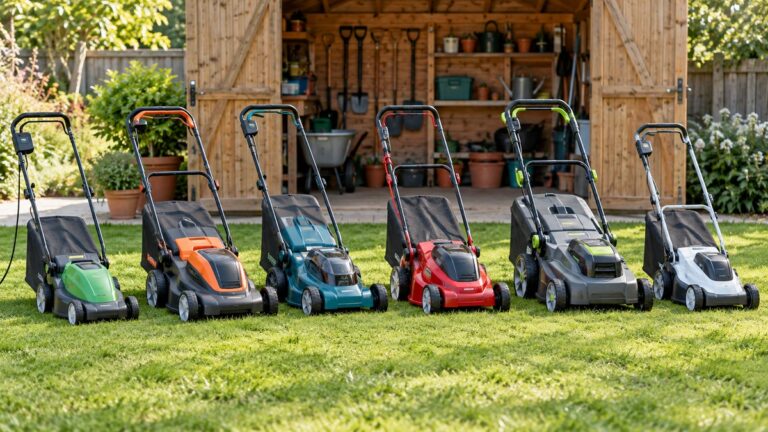
A battery powered self propelled mower uses a battery to drive the wheels, so you guide the mower instead of pushing it. This guide is built as a checklist for the two self-propelled battery listings in this set, so you can check the drive, deck, weight, battery and height details in the same order each time. Both listings come from one brand, so you are comparing two models rather than a wider market. Check the listing before you buy, because the runtime and height fields on one listing disagree with each other.
At a glance: the 2 picks, by their own spec fields
| Pick | Cutting width | Weight | Coverage / speed | Flag |
|---|---|---|---|---|
| Greenworks 60V 21in Self-Propelled | 20.28 inches, 7 height positions | 65 lbs | Up to 3/4 acre per charge (seller claim) | Operation field reads “Manual,” conflicting with the self-propelled description — confirm drive mode before buying |
| Greenworks 60V 25in Self-Propelled | 23.96 inches | 67.2 lbs — heavier of the two | Variable speed 3.5 to 4.5 MPH | Height fields conflict; runtime figures differ between specs and highlights |
Specs are from each product’s Amazon listing (full citations in this guide’s sources section). Both ship with two 4.0Ah batteries. Confirm the drive mode on the first pick and the height/runtime figures on the second before buying either.
Quick answer
Buy a battery powered self propelled mower only if the drive saves you real effort on your lawn. The two self-propelled listings here both use a 60V battery kit with two 4.0Ah batteries included. Start with the drive mode, because one listing’s operation field reads Manual. Then compare the deck width, the weight and the battery package. The 21-inch listing is lighter, at 65 pounds, while the 25-inch listing has the wider deck at 23.96 inches and a stated speed range of 3.5 to 4.5 MPH. Confirm the runtime and height figures before you order either model.
What a self-propelled battery mower changes
Self-propelled drive moves the mower forward through its rear wheels, which reduces the push you need on a long or sloped lawn. It does not change the cut. The blade height, the deck width and the battery decide the cut and the run time. Keep that split in mind when you compare the listings, so a drive claim does not make a weaker cutting figure look better.
Checklist: confirm the drive mode
Start with the drive. Both listings describe rear-wheel drive or self-propelled control, but the first listing’s operation field reads Manual. Check the manual for how the drive engages, how you change speed and whether a drive release is fitted. If the operation field and the description disagree, treat the drive as unconfirmed until the seller or the manual says otherwise.
Next, look at the speed. The second listing states a variable speed range of 3.5 to 4.5 MPH, which is the seller’s figure for the drive. A variable range lets you slow down on a slope or on a tight section. Neither listing gives a slope rating, so check the manual for slope limits before you use the mower on a steep yard.
Checklist: match the deck to your path
Measure the widest open strip you mow, and the narrowest gate or side path you pass through. The first listing states a 20.28-inch cutting width, and the second states 23.96 inches. A wider deck covers more ground in each pass, but it also makes the mower wider to steer around beds, posts and fences.
The pass count below shows how deck width changes the number of passes across a fixed strip. The difference is large enough to matter on a long lawn, but a wider deck is not automatically better on a narrow path.
Checklist: weight and storage
Weigh the lift before you buy. The first listing states 65 pounds, and the second states 67.2 pounds. Both are heavy for one person to lift into a car or onto a shelf. A self-propelled drive helps on the lawn, not on the stairs or the step into a truck bed, so plan a way to move the mower before you commit.
Measure your storage space as well. The listings do not give a folded size in a way you can compare, so check the listed dimensions against the shed, garage or corner where the mower will live. A mower that fits your path on the lawn may still be awkward to store.
Checklist: battery package and platform
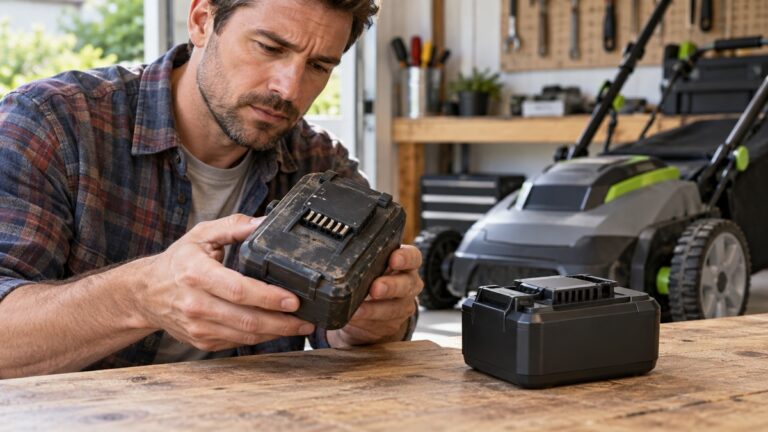
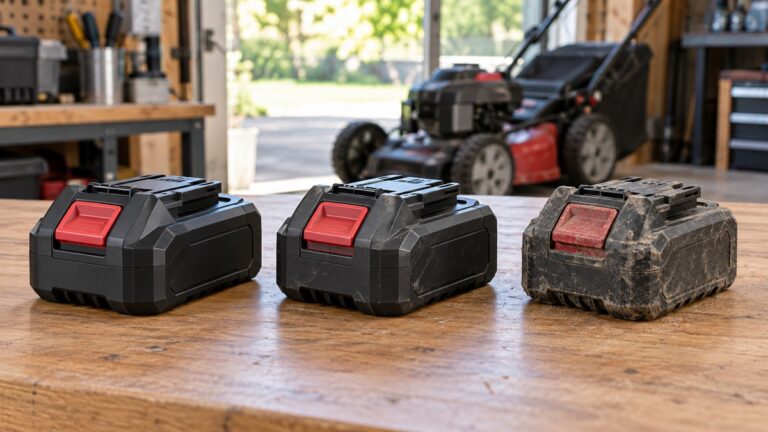
Both listings state a 60V battery kit with two 4.0Ah batteries. Confirm that the battery and charger are part of the box for the model you choose. The second listing names an 80-minute fast charger in one of its bullet points, and the first is described by its title as a battery kit, so confirm whether a charger is in the box before you order.
Battery platform matters if you already own cordless tools. The Wikipedia lithium-ion battery article notes that lithium-ion cells typically have a nominal voltage of 3.6 or 3.7 volts, and that battery sizes are not standardized. A battery from another brand is not a substitute here, so check the manual before you use any other pack. For a related battery voltage guide, the lawn mower battery guide for older voltage types covers those batteries.
Checklist: runtime and coverage
Runtime figures are seller claims, and they vary with grass, height and terrain. The first listing states up to 3/4 acre per charge, with performance that varies by terrain and technique. The second lists an 80-minute battery life in its specs and 70 minutes in its highlights, so the two figures conflict.
Plan with the lower figure, and build in a margin. If you mow a large lawn, a second battery in the kit helps, but the listings do not describe a second charge cycle in detail. Check the charging time in the manual, and plan breaks around it.
Checklist: height range
The first listing gives a range from 1 to 4 inches with seven positions. The second lists a maximum of 3.5 centimeters and a minimum of 4 centimeters, which conflicts with itself because the minimum is higher than the maximum. Rely on neither figure for the second model until the seller confirms the range.
The Wikipedia lawn-mower article explains that cutting height is often adjusted by a single master lever or by a mechanism on each wheel. Check how the height adjustment works on the model you choose, and make sure it reaches the height your grass needs.
Checklist: safety and warranty
Look for a start method you can use confidently, and check the manual for the start and blade controls. The federal rule for walk-behind mowers aims to reduce injury from contact with the rotating blade, mainly to the foot and hand. Follow the maker’s manual for blade service and for any battery disconnection before blade work.
Both listings describe a 4-year warranty, and the wording differs slightly. Read the terms on the seller’s page, and keep the proof of purchase with the mower. A warranty does not change the cut or the drive, but it does tell you what support you have if something fails.
How to choose a battery self-propelled mower
Use this rule. Choose the lighter 21-inch listing if weight and the 4-year warranty matter most, and if your path is narrow. Choose the 25-inch listing if the wider deck and the speed range matter more, and only after you confirm its height and runtime figures and check the drive mode in the manual.
If you are not sure self-propelled drive is worth the extra weight, compare the 65-pound and 67.2-pound figures with how far you carry the mower and how much of your lawn is sloped. This is a sensible way to use the checklist without buying on the listing alone.
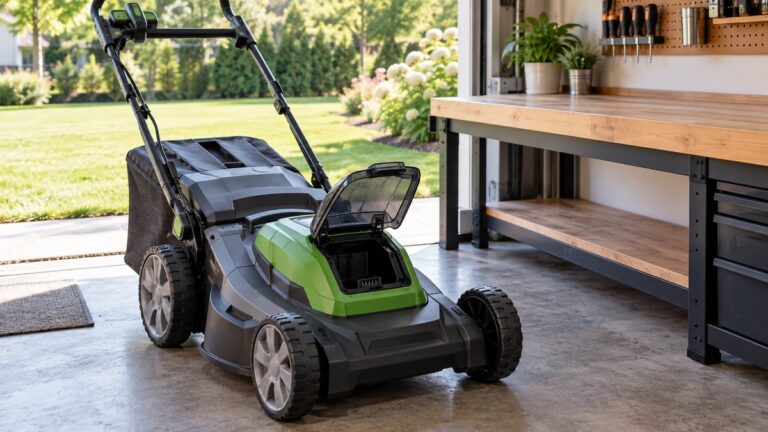
1. Greenworks 60V 21in Self-Propelled Lawn Mower, (2) 4.0 Ah Battery Kit (21-inch self-propelled, lighter of the pair)
Specs from the listing (checked 2026-10-11):
- Cutting width: 20.28 inches
- Item Weight: 65 pounds
- Maximum Adjustable Cutting Height: 4 inches
- Number of Positions: 7
- Manufacturer Warranty Description: 4 Year
- Operation Mode: Manual
Pros
- Listed 60V brushless motor with two 4.0Ah batteries
- Rear-wheel drive traction listed for slopes and thick grass
- Listed mulch, bag, side discharge and turbo leaf pickup
Cons
- The operation field reads Manual, which conflicts with the self-propelled description
- At 65 pounds it is heavy to lift into a vehicle or onto a shelf
- The listed 20.28-inch deck is narrower than the other listing, so it makes more passes
Best for: Buyers with a larger lot who want rear-wheel drive and a 4-year warranty
Skip if: Skip it if you need a lighter mower or the wider deck of the other listing
View on Amazon (affiliate link)
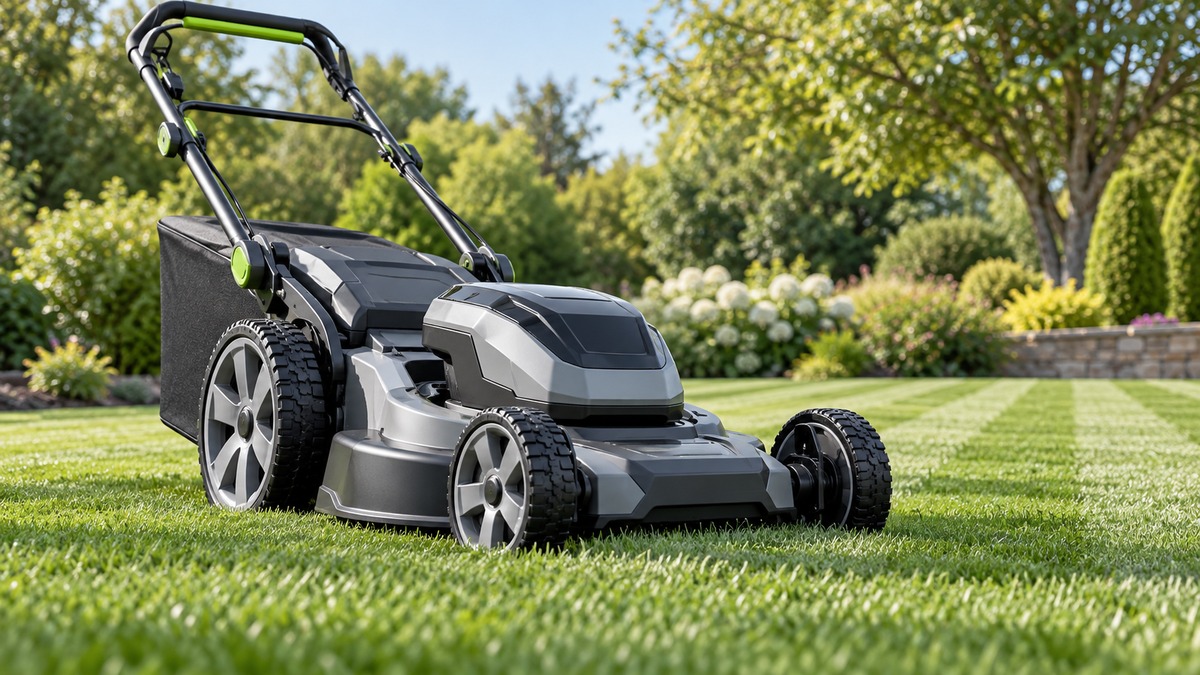
2. Greenworks 60V 25in Self-Propelled Lawn Mower, (2) 4.0 Ah Battery Kit (25-inch self-propelled with variable speed)
Specs from the listing (checked 2026-10-11):
- Cutting width: 23.96 inches
- Item Weight: 67.2 pounds
- Battery Average Life: 80 minutes
- Maximum Adjustable Cutting Height: 3.5 centimeters
- Minimum Adjustable Cutting Height: 4 centimeters
- Operation Mode: Automatic
Pros
- Listed 23.96-inch cutting width, the wider deck of the pair
- Variable speed control listed at 3.5 to 4.5 MPH
- Listed 4-year limited tool and battery warranty
Cons
- The maximum and minimum height fields conflict: 3.5 centimeters maximum and 4 centimeters minimum
- Runtime is listed as 80 minutes in the specs but 70 minutes in the highlights
- At 67.2 pounds it is the heaviest model in this pair
Best for: Buyers with a large lot who want a wider deck and variable self-propelled speed
Skip if: Skip it if the height figures or the runtime matter to you, since the listing disagrees on both
View on Amazon (affiliate link)
The two self-propelled listings, in plain terms
The first listing is a self-propelled kit with a 60V brushless motor and two 4.0Ah batteries. The listing describes coverage of up to 3/4 acre per charge, and it lists mulching, bagging, side discharge and turbo leaf pickup. It states 65 pounds, a 20.28-inch cutting width and seven height positions. Its operation field reads Manual, so confirm the drive mode before you buy.
The second listing is a self-propelled kit with two 4.0Ah batteries and a fast charger named in its bullet points. The listing describes variable speed control from 3.5 to 4.5 MPH and a 23.96-inch cutting width. It states 67.2 pounds, which is the heavier of the two. Its height fields conflict, and its runtime figures differ between the specs and the highlights, so check both before you rely on them.
Passes across a 60-foot lawn
Convert first: 60 feet times 12 inches equals 720 inches. With the 23.96-inch deck, 720 inches divided by 23.96 inches is about 30.1 passes. With the 20.28-inch deck, 720 inches divided by 20.28 inches is about 35.5 passes. The wider deck saves about five passes on this lawn. Overlap adds passes, so use these figures to compare decks, not to plan an exact mowing time.
Mistakes to avoid with a battery self-propelled mower
Assuming the drive is confirmed when the operation field says Manual is the first mistake. Check the drive mode in the manual before you buy, and ask the seller if the page does not make it clear.
Treating the runtime figure as a promise is the second mistake. The second listing gives two runtime figures, and the first gives a coverage claim. Plan with the lower figure and a margin.
Choosing the wider deck without checking the path is the third mistake. A 23.96-inch deck can be awkward near gates, beds and posts, so walk the path before you decide.
Forgetting the lift is the last mistake. Both mowers are heavy, so plan how you will get the mower onto the lawn and back into storage.
FAQ
Is a self-propelled battery mower worth it on a flat, small lawn?
Often not. The drive helps most on long runs, slopes and heavy grass. On a flat, small lawn, a lighter push mower may be easier to store and move, and you will not need the drive.
What speed should I expect from the drive?
The second listing states a variable speed range of 3.5 to 4.5 MPH. The first listing does not state a speed range. Use the figure as the seller’s statement, and adjust the pace with the speed control on the model you choose.
How long will one charge last?
The second listing gives 80 minutes in its specs and 70 minutes in its highlights. The first listing gives a coverage claim of up to 3/4 acre per charge. Real use depends on grass, height and terrain, so plan with the lower figure.
Can I mulch and bag with these mowers?
The first listing states mulch, bag, side discharge and turbo leaf pickup. The second describes improved mulching in one of its bullet points. Check the manual for how to set up the bag or mulch option on the model you choose.
Can I use a battery from another tool?
Do not assume it. Each listing names its own battery kit, and battery sizes are not standardized, according to the lithium-ion battery article. Check the manufacturer’s manual before you use any other pack.
Does either mower have a slope rating?
Neither listing states a slope rating. Check the manual for the slope limit, and do not use the mower on a steeper area than the manual allows.
What should I do if the listing contradicts itself?
Write down both figures, check the listing and the manual, and contact the seller before you rely on either one. Do not rank the models using a figure that conflicts with another field on the same page.
Bottom line
A battery powered self propelled mower makes sense when the drive saves real effort on your lawn. Choose the lighter 21-inch listing if weight and the 4-year warranty matter most, and choose the 25-inch listing if the wider deck and the speed range matter more. Before you order, confirm the drive mode, the height range and the runtime figure, and plan your mowing with a margin. If you want a corded alternative, the best self propelled corded electric lawn mower guide covers that option, and the battery pros and cons guide lays out the trade-offs of battery mowers in general.
Sources
- Lithium-ion battery (Wikipedia): lithium-ion cells have a nominal voltage of 3.6 or 3.7 volts, and battery sizes are not standardized.
- Lawn mower (Wikipedia): cutting height is often adjusted by a single master lever or a wheel mechanism.
- 16 CFR 1205.1 (Cornell LII): the rule aims to reduce injury from contact with the rotating blade, mainly to the foot and hand.