Best Electric Mowers With Bag: When a Grass Bag Is Worth Using
As an Amazon Associate we earn from qualifying purchases. Details
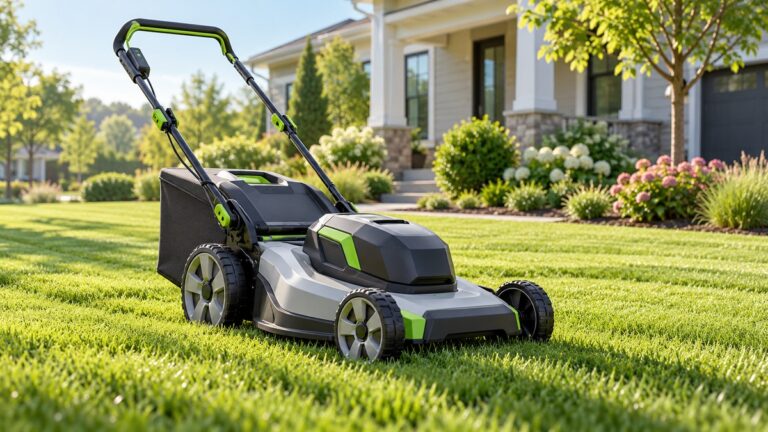
If you are looking for the best electric mowers with bag, the first question is whether you need a bag at all. The extension sources we opened generally favor leaving clippings on the lawn, and they name the conditions in which removing them makes sense: unusually heavy clippings, diseased turf, and weeds that are setting seed. This guide sets out those conditions, how cutting height and blade style change the clippings, and the cord and safety rules that apply to an electric mower whether or not it has a bag. It does not rank models.
Quick answer
- Leave clippings on the lawn by default. Oregon State University Extension advises: “Instead of bagging up clippings, consider leaving them where they fall.”
- Bag or remove clippings in three cases. The University of Arizona publication AZ1681 says clippings should be removed when they are unusually excessive, when the turf is diseased, or when weeds are setting seed.
- A mulching blade makes leaving clippings easier. Oregon State says mulching mowers chop grass into finer pieces, though they are typically more expensive.
- Keep the cord rated for outdoor use. The University of Texas at Austin safety factsheet says “Do not use an indoor extension cord for outside use.”
- Mow at a height that keeps clippings light. New Mexico State University’s guide H-505 gives a one-third rule for how much grass to remove in one pass.
Why the sources favor leaving clippings
The main reason to leave clippings is the lawn itself. Oregon State says that clippings “break down quickly and resupply much-needed nitrogen.” New Mexico State University’s guide H-505 states that when the proper mowing frequency is followed, “clippings can be left on lawns.” Arizona’s publication adds the thatch point: “When mowing at the proper mowing height and frequency, clippings left on the turf generally do not cause thatch build up.”
Those statements all depend on mowing often enough. Oregon State puts the condition directly: “any mower can leave clippings behind effectively if the lawn is mowed frequently and kept at the proper height.” It also notes that “The more often you mow, the easier this is to do.” A bag is therefore not the first tool for a healthy lawn. Frequent mowing at the right height is the first tool, and the bag is for the cases where that routine does not keep the clippings light.
The sources also make a warning about overload. Arizona says that “Excess clumps of clippings left on the lawn will shade and weaken the lawn.” Heavy clumps are the failure case the bag is meant to prevent, and that is why the removal conditions matter more than a general preference for or against bagging.
When removing clippings makes sense
Arizona gives the clearest list of removal conditions. Its words are: “Clippings should be collected and removed when 1) unusually excessive, 2) the turfgrass is diseased, or 3) weeds are setting flower heads or seeds.” Each condition is about what the clippings carry or how much of them there are, not about the mower.
New Mexico State adds a related case in its figure about clippings after mowing, which says that “Excessive amounts of clippings” should be removed. The figure caption and Arizona’s list describe the same thing from two directions: a thick mat of clippings is a problem to clear, while a light scatter is normal to leave.
The table below gives the removal conditions and the advice that goes with each one. It uses only the sources named in the table.
| Condition | Advice from the sources | Source |
|---|---|---|
| Unusually heavy clippings | Collect and remove | AZ1681 |
| Turf that is diseased | Collect and remove | AZ1681 |
| Weeds setting flower heads or seeds | Collect and remove | AZ1681 |
| Routine mowing at the proper height and frequency | Clippings can be left on the lawn | NMSU H-505 and AZ1681 |
Cutting height and blade style change the clippings
The height at which you mow changes how much grass each pass removes. New Mexico State’s one-third rule is the basic check: mow before the grass grows so far above the target height that a single pass removes too much. Its Table 2 gives two examples. For a desired turf height of 1 inch, the table says to mow when the grass reaches 1.5 inches, which removes 0.5 inch. For a desired turf height of 2 inches, the table says to mow at 3 inches, which removes 1 inch.
The pattern is simple. The height at which to mow equals the desired height times 1.5, and the amount removed is half of the desired height. Mowing before the grass gets tall keeps each pass light, which is the same logic the sources give for frequent mowing at the right height.
Here is a worked example using the same table. Suppose the target is a 2 inch lawn and the grass has grown to 4 inches before the next cut. One pass has to bring the grass down to 2 inches, which removes 2 inches. The share of the grass height removed is 2 divided by 4, which is 0.5, or half of the height. NMSU says that removing more than 40% of the turf in one mowing can cause scalping, so that pass is past the threshold. The clippings from a pass like that fall into the “unusually excessive” case in Arizona’s list, which is the case for removing them. At 3 inches, the same lawn loses only 1 inch per pass, and the clippings are light enough to leave where they fall.
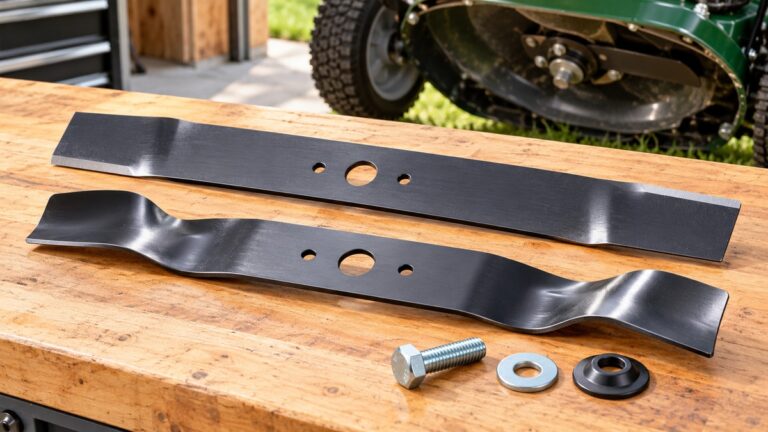
Blade style matters too. Oregon State says that mulching mowers are “another option. Though typically more expensive, they chop grass into finer pieces, making it easier to leave clippings on the lawn.” Arizona defines a mulching mower as “an improved rotary mower that cuts smaller sized clippings that may decompose faster.” A bagging setup and a mulching setup are not the same thing, and the sources do not compare the two on the same mower. The sources treat the blade as one factor among several, not as a replacement for the removal rules.
The cut itself also matters. Arizona warns that “Using a mower with dull blades can cause scalping, torn or shredded leaves, and a damaged appearance to the turf.” Torn and shredded leaves are the damage Arizona describes, and a sharp blade is the sources’ remedy. New Mexico State says that “Removing more than 40% of the turf” in one mowing “can cause scalping,” which is another reason to keep each pass light.
The cord and the electric power
An electric mower with a bag is still an electric mower, and the cord rules are the same whatever is attached to the back. The University of Texas at Austin factsheet, which is adapted from an OSHA eTool, says that “Do not use an indoor extension cord for outside use.” The reason is insulation: indoor cords “do not have the same insulation and have a lower amperage rating,” according to the same page.
The factsheet also gives three other rules that apply to mower cords. The first is grounding: “Extension cords must be 3-wire type so they may be grounded.” The second is condition: “Do not use frayed or damaged cords,” and the page adds that “Electrical tape is not a solution.” The third is moisture: the page advises “Limit exposure of connectors and tools to excessive moisture by using watertight or sealable connectors.” It also says that cords must be able to handle the amperage rating of the equipment in use, which is why the mower’s own manual should set the cord size.
The factsheet also says to “Secure extension cords to the ground to prevent tripping hazard.” It does not discuss grass bags, so the cord advice here applies to the mower’s power supply and not to the bag itself.
The rotating blade is still the hazard
The federal standard for walk-behind power lawn mowers is built around the rotating blade. The Consumer Product Safety Commission rule at 16 CFR 1205.1 states that the standard “is intended to reduce the risk of injury to consumers caused by contact, primarily of the foot and hand, with the rotating blade of the mower.” The sources in this guide do not suggest that a grass bag changes that hazard, because the rule concerns contact with the rotating blade.
The sources in this guide do not give steps for emptying a bag or checking its attachment on any particular electric model. The operator’s manual covers those steps, and it is the place to confirm how the bag fits and how the discharge is set. Treat any step that involves the blade with the same care the standard describes.
How we chose
We chose the sources that speak directly to clippings, cutting height and cords: two university extension publications on mowing, an Oregon State extension article on clippings, a university safety factsheet on extension cords, and the federal mower standard. We opened each page and quoted only sentences that appear in the page text, or attributed a plain-language summary to the named source. No retail product pages were used for any claim, and no product cards are included because this guide does not select models.
What we could not verify
- Bag capacity, weight, fit and fabric durability. The sources do not discuss bag design.
- Whether a bag changes cut quality or blade wear compared with a mulching setup on the same mower. The sources compare mulching with standard rotary blades, not bagging.
- Cord length limits for a specific electric mower. The gauge table in the UT factsheet is mixed in the text layer we opened, so we did not quote its figures. Use the mower’s manual.
- Local rules for disposing of clippings or for composting them. These vary by place, and the sources do not cover them.
- The extension sources do not discuss how a bag affects grass recovery after a heavy mowing.
Related guides
For a model-by-model look at small bagged mowers, the small electric lawn mower with bag guide covers that ground. For cord planning, see the extension cord guide for electric lawn mowers.
FAQ
Should I bag grass clippings or leave them on the lawn?
For routine mowing, the sources favor leaving clippings on the lawn. Oregon State says to consider leaving them where they fall, and New Mexico State says clippings can be left on lawns when the mowing frequency is right. Bag them when the clippings are unusually heavy, the turf is diseased, or weeds are setting seed.
When is it worth removing clippings?
Arizona’s publication names three cases: unusually excessive clippings, diseased turf, and weeds setting flower heads or seeds. In those cases the sources say to collect and remove them, because thick clumps shade and weaken the lawn.
Do grass clippings cause thatch?
Arizona says that when mowing is done at the proper height and frequency, “clippings left on the turf generally do not cause thatch build up.” The thatch concern comes from the mowing routine, so the answer depends on how often and how high you cut.
Does a mulching mower make a bag unnecessary?
A mulching mower makes it easier to leave clippings on the lawn, according to Oregon State. The sources do not say that a mulching mower removes the need for a bag in every case, and they name the same three removal conditions for heavy clippings, disease and seeding weeds.
What kind of cord should an electric mower use?
The University of Texas at Austin factsheet says to use an outdoor-rated cord, not an indoor one, and to use a 3-wire cord so it can be grounded. Replace any cord that is frayed or damaged, and use connectors that resist moisture. The mower’s manual sets the amperage and the cord size.
Is a grass bag a safety issue?
The federal standard is written around the rotating blade, and a bag does not change that hazard. Follow the operator’s manual for attaching, emptying and removing the bag, and keep the blade’s spinning hazard in mind during every step.
Bottom line
Leave clippings on the lawn for routine mowing at the right height, and bag them only when they are unusually heavy, the turf is diseased or weeds are setting seed. Use an outdoor-rated, grounded cord, and check the mower’s manual for the rest.
Sources
- Oregon State University Extension, Choose the right lawn mower for your yard: clippings guidance, mulching mower description and the nitrogen point.
- University of Arizona Cooperative Extension, AZ1681 Mowing Turfgrasses in the Desert (2015): the three clipping removal conditions, thatch, mulching mowers and dull blade damage.
- New Mexico State University Cooperative Extension, Guide H-505 Mowing Your Lawn: the one-third rule, Table 2, clipping guidance and scalping.
- University of Texas at Austin Environmental Health and Safety, Factsheet: Extension Cords: outdoor cord rules, grounding, damaged cords and moisture.
- U.S. Consumer Product Safety Commission rule, 16 CFR 1205.1 (via Cornell Legal Information Institute): purpose of the walk-behind mower standard and the rotating blade hazard.