How to Aerate a Lawn Yourself
As an Amazon Associate we earn from qualifying purchases.
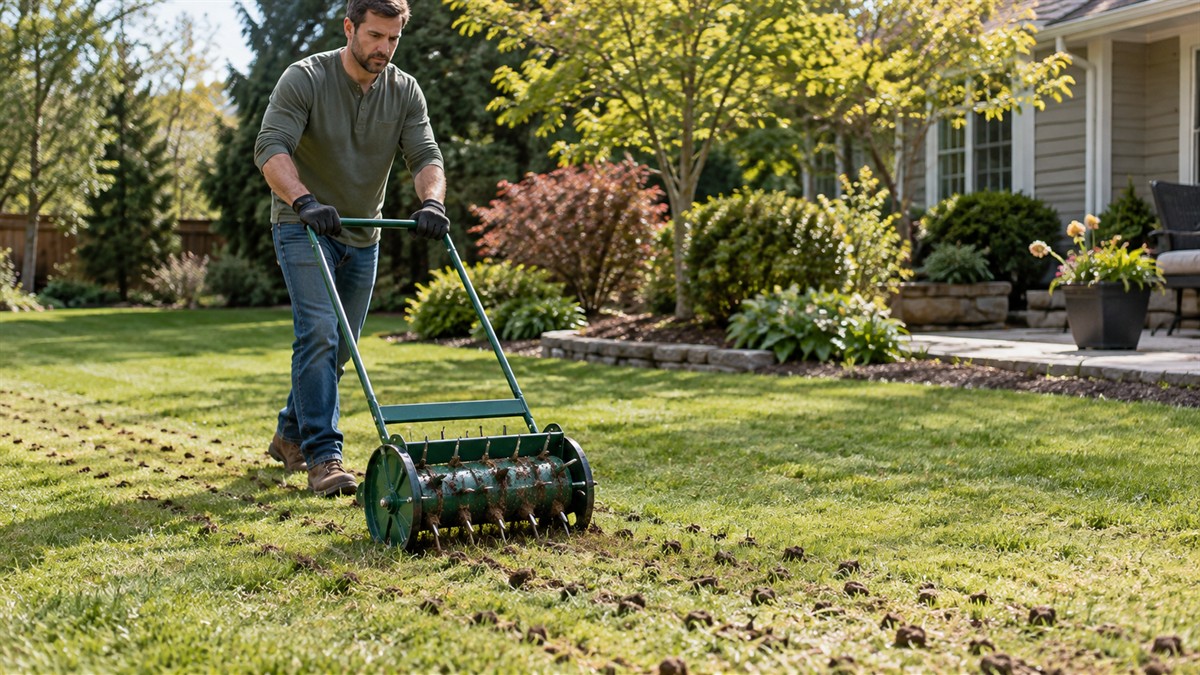
If you want to know how to aerate a lawn yourself, start with the tool and the timing. Use a hollow-tine core aerator, not spikes, and run it when the soil is moist and the cool-season grass is growing. The extension sources we opened name early to mid-fall as the ideal window, with spring as the other option. This guide covers the timing, the passes, the spacing figures the sources disagree on, and what to do with the cores. It does not name or review any aerator.
Quick answer
- Use a hollow-tine (core) aerator. The Illinois equipment page says solid tines or spikes are not an effective tool for reducing soil compaction.
- Aerate when the soil is moist, a few days after rain or watering, and not when it is dry or too wet.
- Early to mid-fall is the ideal window for cool-season lawns, and spring is the other option.
- Make two passes at right angles, aim for 15 to 20 cores per square foot, and leave the cores to break down on the surface.
Why aerate a lawn
The Illinois equipment page says hollow-tine core aeration is used to reduce soil compaction and thatch, improve surface drainage, increase soil oxygen, and improve conditions before overseeding. The Illinois five fall tips page gives the short version: aeration is a great way to relieve soil compaction and reduce thatch.
Penn State Extension makes the same point. It says aeration is used to alleviate soil compaction and can significantly reduce thatch. It also says aeration creates large pores that let moisture and nutrients move into the soil.
A quick check tells you whether your lawn needs it. Insert a screwdriver into the lawn when the soil is moist, and try several spots. The Illinois blog says that if it cannot be easily inserted, the lawn likely has compaction and would benefit from aeration.
Core versus spike aeration
The type of tine matters more than the brand of machine. The table compares what the pages we opened say about each type.
| Feature | Core (hollow-tine) aerator | Spike or solid-tine tool | Source |
|---|---|---|---|
| Removes soil | Removes plugs of soil | Does not remove cores, because it uses solid tines | Penn State Extension; Illinois Extension, Maintaining Lawn Equipment |
| Effect on compaction | Works best for relieving compaction | Can cause more compaction by pressing soil together around the holes | Illinois Extension, Lawn Aeration and Overseeding |
| Tine size | Usually 3 to 4 inches long and ¼ to ¾ inch wide | Not stated | Penn State Extension |
| Where it helps | Recommended for many lawns | Can be effective on sandy soils, where compaction is less critical | Illinois Extension, Maintaining Lawn Equipment |
If you rent a machine, check that it has hollow tines. The Illinois equipment page says machines can be rented, or a lawn service can do the work.
When to aerate
The season is the first decision. Penn State Extension says aeration should be done during cool weather, in early to mid-spring or late summer to early fall, so the grass can recover quickly. The Illinois equipment page says the work should be done when cool-season lawns are green and actively growing, and that early to mid-fall is an ideal time.
The Illinois blog goes further and calls fall the best time of year to aerate a lawn. The Ask Extension answer on aeration adds that cool-season grasses can be aerated any time the soil is soft enough to pull cores and the turf is not frozen. It also says aeration works best when the soil is moist.
The pages we opened do not give aeration timing for warm-season grass. Check your state extension office for that.
Step-by-step: aerating the lawn yourself
- Choose the window. For a cool-season lawn, aim for early to mid-fall. Spring also works, but Penn State warns that spring aeration can bring weed seeds to the surface.
- Wait for moist soil. The Illinois five fall tips page says to operate the core aerator a few days after rain, when the soil is still slightly damp. The Illinois equipment page says hollow-tine aerators operate best when the soil is moist. If the soil is hard and dry, the machine will not cut into it.
- Make the first pass. Run the aerator across the lawn. The Illinois equipment page suggests removing 15 to 20 cores per square foot, which usually takes more than one pass.
- Make the second pass at right angles. The Illinois equipment page says to make passes perpendicular to each other. The Ask Extension answer on spacing gives the same method: go over the lawn twice, once in one direction and then in a perpendicular direction.
- Leave the cores on the surface. The Illinois equipment page says cores should remain on the surface and be allowed to air dry. The Penn State page says to break the plugs apart once they have dried. The Illinois five fall tips page says to leave the cores to break down over the next few weeks.
- Topdress or overseed if you need to. The Illinois blog says overseeding after aerating is a great way to thicken a lawn and fill in bare spots. The Illinois equipment page adds that extra topdressing material can be added after aerating, which is especially important when overseeding.
If the lawn is wet after rain, the mowing side of that week is a separate question, covered in electric mowers for wet grass.
Spacing and passes: where the sources disagree
The spacing and pass figures do not match across the pages we opened. The table shows each figure with its source, and the text below explains why they differ.
| Topic | Figure stated | Source |
|---|---|---|
| Hole spacing | On average, 3 to 4 inches apart; the spacing varies with the machine | Illinois Extension, Maintaining Lawn Equipment |
| Hole spacing | Tines spaced between 2 and 3 inches | Ask Extension, Aeration core spacing |
| Penetration depth | 2 to 3 inches, depending on the manufacturer’s specifications | Ask Extension, Aeration core spacing |
| Cores per square foot | 15 to 20, usually more than one pass | Illinois Extension, Maintaining Lawn Equipment |
| Passes before overseeding | Six to eight passes | Penn State Extension, Lawn Management through the Seasons |
| Passes if seeding | Six to 10 passes | Ask Extension, Aeration core spacing |
The spacing gap is the largest. The Ask Extension answer says closer tine placement removes more soil and alleviates compaction better than wider spacing. The Illinois page says the spacing varies with the machine. The sources we opened do not reconcile a 2-to-3-inch spacing with a 3-to-4-inch spacing.
Penetration depth also varies. The Ask Extension answer says the depth depends on soil type, soil moisture, tine diameter, and the weight and power of the aerator. Penn State gives a tine length rather than a penetration depth, so it does not settle the question.
What to do with the cores
The cores are useful, not just debris. The Illinois equipment page says they act as topdressing, which helps degrade thatch. The Ask Extension answer says the cores can be left to break down with rainfall and traffic, and raked into the grass if their appearance bothers you.
The Illinois equipment page also says additional topdressing material can be added after aerating, and that it is especially important when overseeding.
Safety when aerating
The sources we opened give no safety steps for aerators. The Illinois equipment page says personal protective equipment is a necessary part of the lawn equipment list. It recommends impact-resistant safety glasses or sunglasses, because mowing throws debris at high speed from beneath the mower. That advice is written for mowing, and the sources do not say whether it carries over to aerating.
If thatch is the main problem rather than compaction, the question is a separate one. For dethatcher options, see electric dethatchers compared.
How we chose
We searched for extension pages and Ask Extension answers on aerating a lawn, opened the pages we could reach, and kept those that state a method, a timing rule, or a spacing figure. Three Illinois Extension pages, one Penn State Extension page, and two Ask Extension answers cover the points in this post. The two Ask Extension answers give figures that differ from the Illinois and Penn State pages, and the table shows both. We opened all six pages on 2026-10-22. We did not rank them.
What we could not verify
- The right spacing for your machine. The sources say spacing depends on the machine, and they do not give one figure that fits every aerator.
- The penetration depth of your aerator. The Ask Extension answer gives 2 to 3 inches and says it depends on the manufacturer’s specifications, so the manufacturer’s figure is the one to check.
- Your local timing. The sources give cool-season windows, but they do not give dates for any region.
What the sources do not say
The sources we opened do not give aeration timing or method for warm-season grass. They do not give prices for rental or service, and they say nothing about underground lines or irrigation, which this post does not cover. The sources also do not settle how many passes you need before overseeding, because the figures in the table differ.
FAQ
Is fall or spring better for aerating a lawn?
For cool-season lawns, the Illinois pages name early to mid-fall as the ideal window. Penn State Extension lists early to mid-spring and late summer to early fall as the cool-weather periods. Spring work can bring weed seeds to the surface, according to Penn State.
Do I need a core aerator, or will spikes do?
You need a core aerator for the job described here. Spikes and solid tines do not remove soil. The Illinois equipment page says they are not an effective tool for reducing compaction, although they can help on some sandy soils.
How do I know if my lawn needs aerating?
Insert a screwdriver into the lawn when the soil is moist, in several spots. The Illinois blog says that if it cannot be easily pushed in, the lawn likely has compaction and would benefit from aeration.
Can I aerate a dry lawn?
It is better to wait. The Ask Extension answer says aerating dry soil will not pull good plugs and can even stress the turf. The Illinois five fall tips page says core aerators cannot cut into hard, dry soil. Water the lawn or wait for rain first.
Do I need to overseed after aerating?
The Illinois blog calls overseeding after aerating a great way to thicken a lawn and fill in bare spots. Penn State says overseeding can be done following aeration in spring and early fall. The Illinois blog adds that cool-season grasses such as fescue, ryegrass, and bluegrass tend to do best when overseeding in the fall.
What happens to the soil cores?
Leave them on the surface to dry, then break them up or work them in. The Illinois equipment page says they act as topdressing, and the Illinois five fall tips page says they break down over the next few weeks.
Bottom line
Aerate with a hollow-tine machine when the soil is moist and the cool-season grass is growing, and make two passes at right angles.
Sources
- Penn State Extension: Lawn Management through the Seasons (opened 2026-10-22)
- Illinois Extension: Five fall tips for cool-season lawn care (opened 2026-10-22)
- Illinois Extension: Lawn Aeration and Overseeding (opened 2026-10-22)
- Ask Extension: Aeration (opened 2026-10-22)
- Illinois Extension: Maintaining Lawn Equipment (opened 2026-10-22)
- Ask Extension: Aeration core spacing (opened 2026-10-22)