The Last Mow of the Season
As an Amazon Associate we earn from qualifying purchases.
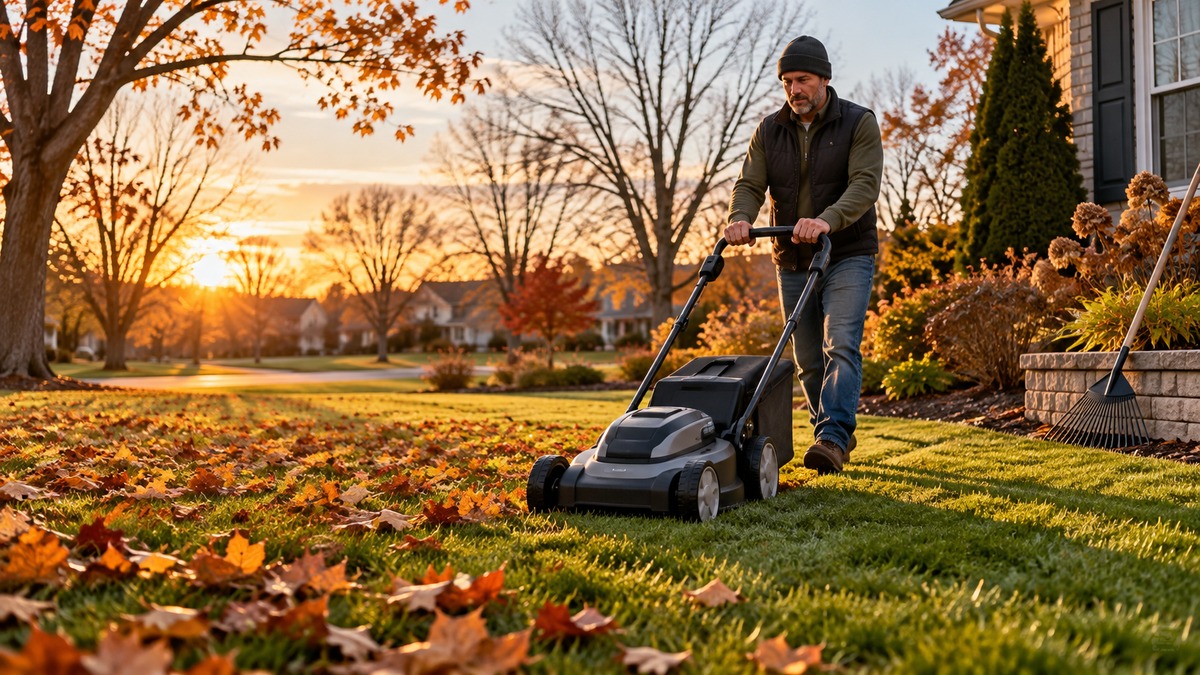
The last mow of the season is the final cut before the lawn goes dormant for winter. Keep mowing until growth stops, then cut at about two inches, the height the Illinois Extension winter page gives. The Michigan-area and Ask Extension answers we opened put the final height between two and three inches, so the figures differ. This guide shows each figure, the timing rule the sources share, and the mistakes to avoid. It covers the lawn only, not the mower.
Quick answer
- Keep mowing until the grass is completely dormant. Illinois Extension names continued mowing as a way to limit winter damage.
- Final height is about two inches (Illinois Extension), two to two and a half inches (a Michigan-area answer), or two to three inches with a drop to three if you have been cutting higher (an Ask Extension answer).
- Lower the cut by no more than one notch, about a half inch, and only once top growth has essentially stopped.
- Do not scalp the lawn. Cutting low going into winter is no longer advised, according to one Ask Extension answer.
Why the last cut matters
The final cut is mostly about what happens under snow. The Illinois Extension winter page names two problems that show up as the snow melts: vole damage and snow mold. It describes vole and snow mold damage as very destructive to lawns. The same page says to keep mowing until the grass is completely dormant, and to clear excess vegetation near the lawn, because that vegetation gives voles cover.
Michigan-area guidance ties the final height to the same two problems. The Ask Extension answer we opened says a height in its range can reduce the risk of snow mold, discourage voles, and help the grass tolerate cold. The wording matters: the answer says the height can reduce the risk. It does not say that any height prevents either problem.
The Illinois mowing page adds a warning in the other direction. It says that a lawn left excessively high at the end of fall encourages weed and disease problems. The goal is a middle height, not the tallest cut the mower can make.
How high to cut for the final mow
The sources do not agree on one figure, so the table below puts each figure next to its context. The Illinois winter page gives about two inches for the final height. The Michigan-area answer gives two to two and a half inches and allows only one notch of lowering from the season height. The Ask Extension fall answer says to keep a two-to-three-inch cut, or to lower to three inches if you have been cutting higher.
| Source | Height stated | What the source adds |
|---|---|---|
| Illinois Extension, Preventing Winter Damage to Lawns | About two inches | Keep mowing until the grass is completely dormant |
| Michigan-area Ask Extension answer | Two to two and a half inches | Lower no more than one notch (about a half inch) once top growth has essentially stopped |
| Ask Extension, Fall mowing | Keep two to three inches; lower to three inches if you have been cutting higher | Cutting low going into winter is no longer advised |
| Illinois Extension, Mowing Your Lawn | Two and a half to three inches for most lawns (season height) | The first and last mow may be slightly shorter, but do not scalp |
| Penn State Extension, Lawn Management through the Seasons | Two inches or above while the grass is growing | Mow on a regular basis as long as the grass is growing |
The table shows the gap clearly. The Illinois winter figure sits at the bottom of the Ask Extension range, and the Michigan-area range overlaps both. The sources we opened do not reconcile the two, so choose the figure that matches the height you have already been cutting.
Grass type changes the season height
The season height is not the same as the final cut, but it shows the range you step down from. The Illinois mowing page lists recommended mowing heights for common grass species. The figures below come from that page and describe the season, not the final cut.
| Grass | Recommended mowing height | Source |
|---|---|---|
| Bermudagrass | 1 to 2 inches | Illinois Extension, Mowing Your Lawn |
| Zoysiagrass | 1 to 3 inches | Illinois Extension, Mowing Your Lawn |
| Kentucky bluegrass | 2 to 3 inches | Illinois Extension, Mowing Your Lawn |
| Perennial ryegrass | 2 to 3 inches | Illinois Extension, Mowing Your Lawn |
| Tall fescue | 2½ to 3½ inches | Illinois Extension, Mowing Your Lawn |
The Illinois page does not give a separate final-cut height for each grass. The Illinois winter page gives one figure for lawns in general, about two inches. If your grass is a warm-season type, the season heights above are the only figures from the pages we opened.
Working out the step-down
The Michigan-area answer limits the final drop to one notch, typically about a half inch. You can count the steps between the season height and the final height with this formula:
Number of notches = (season height minus final height) divided by notch size
Worked example, using only figures from the sources: start at three inches, the top of the Ask Extension range, and aim for two inches, the Illinois winter figure. The calculation is (3 minus 2) divided by 0.5, which equals 2. That means two notches of about a half inch each. The Michigan-area answer describes one notch for the final mow, so the sources we opened do not say how to handle a two-notch drop in one mow.
When to make the final cut
The sources tie timing to growth, not to a date on the calendar. The Illinois mowing page says that lawns should be mowed according to the rate of grass growth, and that mowing as the lawn needs it is essential. The Michigan-area answer allows the lower cut only once top growth has essentially stopped for the season. The Illinois winter page says to keep mowing until the grass is completely dormant.
Drought changes the timing. The Penn State page says that during periods of drought your lawn may not need mowing until active growth resumes after rain. The Ask Extension fall answer adds that a lawn in drought dormancy should come out of dormancy for at least one cut before you lower it to three inches for fall.
Step-by-step: making the final cut
- Confirm growth is slowing. Keep mowing as the lawn needs it. Hold off on any drop in height until top growth has essentially stopped, as the Michigan-area answer describes.
- Note the height you have been cutting. If you have been cutting above three inches, the Ask Extension answer says to lower to three inches for the remaining fall cuts. If you have been cutting between two and three inches, keep that height.
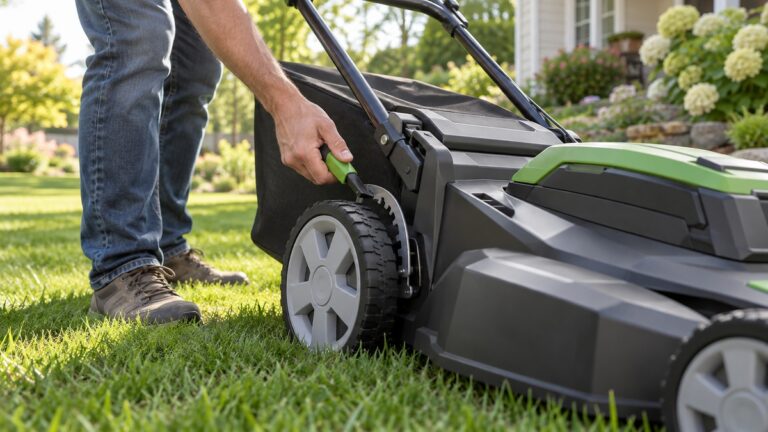
- Drop by one notch at most. For the final mow, lower the cut by no more than one notch, typically about a half inch, and only after top growth has essentially stopped.
- Cut dry grass only. The Illinois mowing page says it is never advisable to mow when the grass is wet. If the lawn is wet, wait for it to dry before the final mow.
- Follow the one-third rule. Do not remove more than one-third of the grass leaf in a single cutting. The Illinois page says mowing frequency should follow how fast the grass is growing, which is what keeps each cut within that limit.
- Decide what to do with the clippings. The Illinois mowing page says clippings need not be collected when the lawn is mowed as needed and the one-third rule is followed. It adds that clippings are about 75 to 80 percent water, break down quickly, and do not cause thatch.
- Clear the edges. Remove excess vegetation near the lawn, since it gives voles cover, according to the Illinois winter page.
- Keep the mower sharp. Penn State says all mowing equipment should be kept sharp and in proper adjustment. For blade types, see choosing a mower blade style.
Safety for the final mow
The sources we opened give safety points for mowing in general, not for the final cut in particular. The Illinois equipment page says personal protective equipment is a necessary part of the lawn equipment list. It recommends impact-resistant safety glasses or sunglasses, because mowing throws debris at high speed from beneath the mower.
OSHA’s landscaping hazards page says to keep clear of rotating mower and brush-cutting blades, and to wear gloves. The page is written for landscape work, but the instruction to keep clear of a spinning blade applies to any mower on the final cut.
The sources do not give blade-removal, deck-cleaning, or battery steps for a final mow, so this post gives none. If you need to work under the deck, use the guides that cover that work.
Common mistakes to avoid
- Scalping. The Illinois mowing page says not to cut so short that you scalp the lawn.
- Leaving the grass too tall at the end of fall. Illinois Extension says that excessively high grass at the end of fall encourages weed and disease problems.
- Dropping too far at once. The Michigan-area answer limits the final drop to one notch.
- Mowing wet grass. Illinois Extension says it is never advisable. For more on electric mowers in wet grass, see electric mowers for wet grass.
- Lowering the cut after drought without a recovery cut. The Ask Extension answer says to let the lawn come out of dormancy for one cut first.
How we chose
We searched for extension pages and Ask Extension answers on final mowing height and timing, then opened the pages we could reach. We kept the sources that state a height, a timing rule, or a safety point for mowing. Five cover the cutting advice: two Illinois Extension pages, a Penn State Extension page, and two Ask Extension answers, one of them Michigan-area. Two more cover safety: an Illinois Extension equipment page and an OSHA landscaping hazards page. The Illinois equipment page and the OSHA page are the only safety pages we opened for this post. We opened all seven on 2026-10-22. We did not rank these sources or compare any mowers.
What we could not verify
- Which final height fits your grass. The figures come from different regions and grass mixes, and the sources do not say which one matches your lawn.
- When your lawn goes dormant. Timing depends on local weather, and the sources we opened do not give dates for any region.
- Whether a two-notch drop in one mow is acceptable for the grass. The Michigan-area answer describes one notch only.
What the sources do not say
The sources we opened give no final-cut height for warm-season grass beyond the season heights in the table. They do not give a final cut date, do not name a mower model or a cut-height setting on any machine, and do not cover winter storage for the mower. For a comparison of electric mower types, see the pros and cons of electric mowers. The sources also do not say what to do once snow mold has already appeared in spring.
FAQ
When is the right time for the last mow of the season?
Keep mowing as the lawn needs it until the grass is completely dormant, according to the Illinois Extension winter page. The Michigan-area answer makes the final drop in height only once top growth has essentially stopped for the season.
What height should the final cut be?
The figures differ. Illinois Extension says about two inches. A Michigan-area answer says two to two and a half inches. An Ask Extension answer says to keep a cut between two and three inches, or to lower to three inches if you have been cutting higher.
If you have been cutting between two and three inches, the Ask Extension answer says to keep your current cut height.
Is it bad to cut the grass short for the last mow?
Yes, the sources warn against it. The Illinois mowing page names scalping as the risk. The Ask Extension answer says cutting low or scalping going into winter is no longer advised. The first and last mow may be slightly shorter, but only slightly.
Does the last mow prevent snow mold and voles?
No single mow prevents them. The Michigan-area answer says a height in its range can reduce the risk of snow mold and discourage voles. The Illinois winter page adds that clearing excess vegetation near the lawn removes cover that voles use.
The sources do not give a success rate for either approach.
Should I bag the clippings on the final mow?
Clippings can stay on the lawn if you mow as needed and keep to the one-third rule, according to the Illinois mowing page. The same page says clippings are about 75 to 80 percent water, break down quickly, and do not cause thatch.
What if my lawn was dry or in drought this fall?
Penn State says that during drought your lawn may not need mowing until active growth resumes after rainfall. The Ask Extension answer says that if your lawn is in drought dormancy after you were cutting higher than three inches, it should come out of dormancy for at least one cut before you lower it to three inches.
Bottom line
Once top growth has essentially stopped, drop the cut by no more than one notch, about a half inch, and never scalp the lawn going into winter.
Sources
- Illinois Extension: Preventing Winter Damage to Lawns (opened 2026-10-22)
- Illinois Extension: Mowing Your Lawn (opened 2026-10-22)
- Penn State Extension: Lawn Management through the Seasons (opened 2026-10-22)
- Ask Extension: Fall mowing (opened 2026-10-22)
- Ask Extension: How short should I cut my grass in the fall in Michigan (opened 2026-10-22)
- Illinois Extension: Maintaining Lawn Equipment (opened 2026-10-22)
- OSHA: Landscape and Horticultural Services – Hazards and Solutions (opened 2026-10-22)