Signs a Mower Blade Is Dull
As an Amazon Associate we earn from qualifying purchases.
The signs a mower blade is dull show up in the grass first. Brown or torn grass tips and a cut that looks uneven are the usual signs, according to the extension pages we opened. A dull blade tears the grass instead of cutting it. This guide covers what those signs look like, how to check the blade safely, and which other problems can look similar. It stops at recognising the signs and does not cover sharpening.
Quick answer
- Brown or torn grass tips are the main sign of a dull blade, according to the Ask Extension answer and the Illinois Extension mower maintenance page.
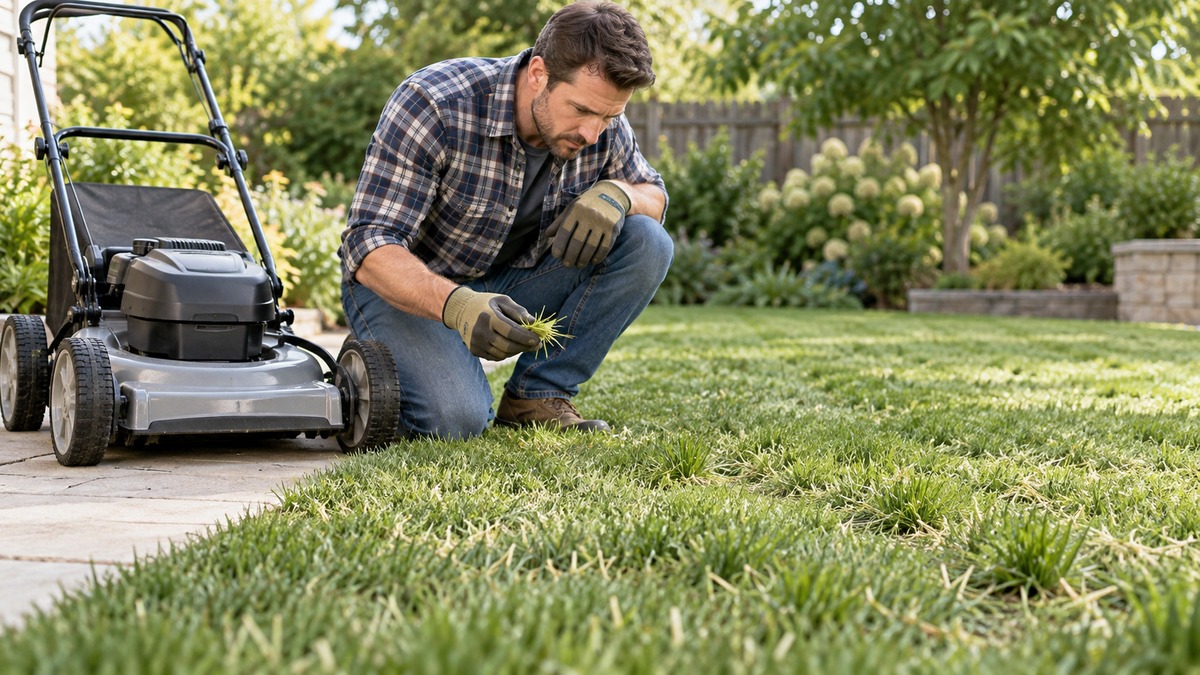
- Look closely at a few blades of grass. A dull blade leaves frayed ends instead of a clean cut.
- Check the blade itself only with the battery removed, and look for damage, cracks, or a blunt edge.
- Replace a damaged blade. The Husqvarna UK page says to always replace damaged cutting equipment.
What a dull blade does to the grass
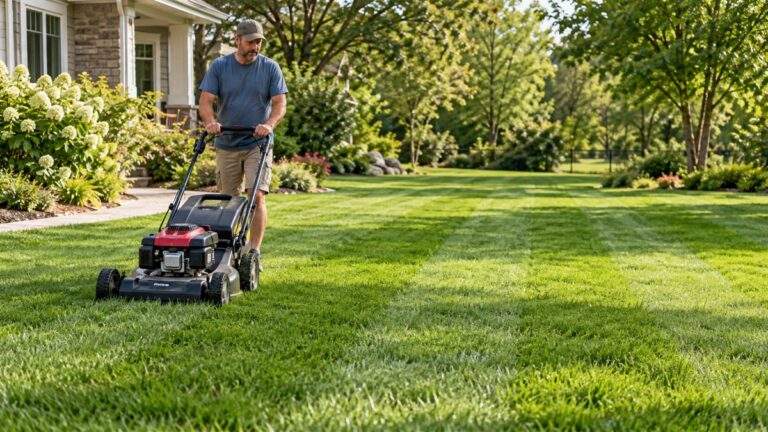
A mower blade is meant to slice the grass blade. The Illinois Extension mower maintenance page says that sharp mower blades are critical to the health of the lawn. It says that dull blades bludgeon, rip, and tear grass blades, leaving ragged wounds that are harder to heal.
The damage goes beyond looks. The same page says a lawn cut with a dull blade takes more energy to recover, and that it gives disease a longer opportunity to infect the exposed tissue.
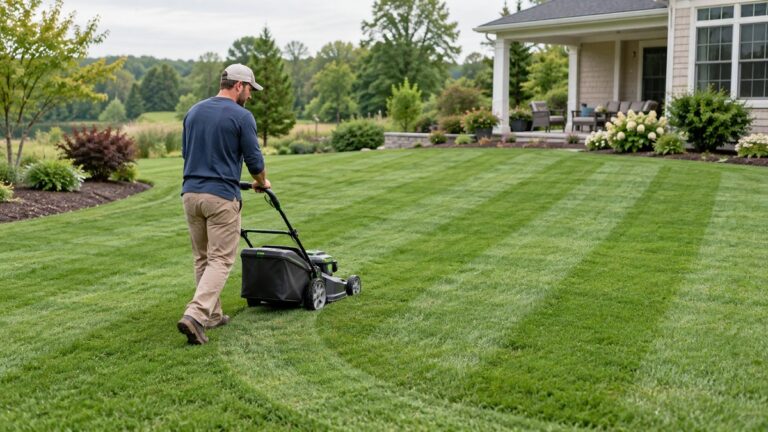
The Illinois mowing page makes the same point from the other side. A sharp blade cuts the grass blade cleanly, which gives the lawn an even appearance and reduces disease from damage caused by a dull blade. The page presents the even appearance and the lower disease risk as results of a clean cut.
Penn State Extension makes the same point in its mowing advice, where it says all mowing equipment should be kept sharp and in proper adjustment. That line sits with the advice on mowing height and frequency, so sharpness is part of routine mowing rather than a separate task.
The signs to look for
The table lists five signs that the pages we opened connect to a dull or damaged blade. Signs one to three show up in the grass. Signs four and five come from the blade and how it is fitted, so you need to stop the mower and check it before you can see them.
| Sign | What it looks like | What the source says | Source |
|---|---|---|---|
| Brown grass tips | Tips of the grass look brown | The tips will brown if your mower blade isn’t sharp enough. | Ask Extension, brown tip on grass blades |
| Ragged or torn leaf ends | Frayed ends when you look closely at a few blades | A dull mower blade tears the leaf instead of cutting it cleanly. | Ask Extension, brown tip on grass blades |
| Uneven, dull-looking cut | The lawn looks uneven rather than cleanly cut | A sharp mower blade will cut the grass blade cleanly, which gives the lawn an even appearance. | Illinois Extension, Mowing Your Lawn |
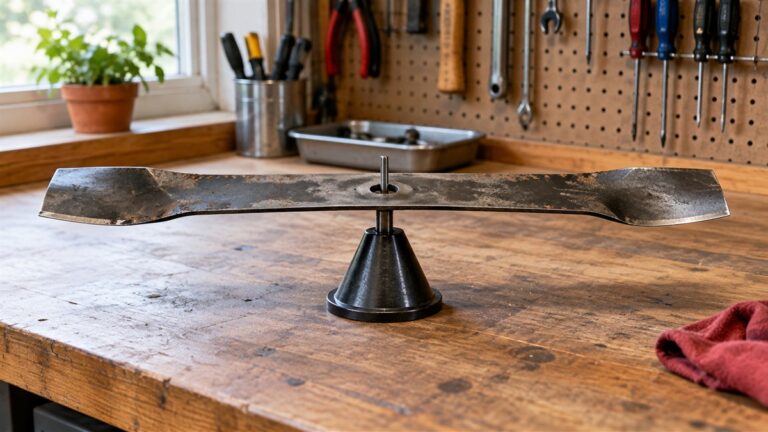
| Blunt or damaged blade | A blunt edge, cracks, or other damage on the blade | Look at the blade to check if it is damaged or blunt. | Husqvarna UK, How to check and replace a lawn mower blade |
| Vibration or a poor cut after fitting | The mower vibrates, or the cut is poor after the blade is refitted | If the blade is not correctly attached, this will cause vibration in the product or the cutting result will be unsatisfactory. | Husqvarna UK, How to check and replace a lawn mower blade |
Sign five is about how the blade is fitted, not how sharp it is. Check the fitting as well as the edge, since the Husqvarna UK page links a poor fit to vibration and a poor cut.
Check the blade safely
This check is for recognising the signs, not for sharpening. Work through the steps in order, and stop if anything looks wrong.
- Look at the grass first. Pick a few blades of grass from around the lawn and look at the cut ends. The Ask Extension answer says a dull blade tears the leaf instead of cutting it cleanly, so frayed ends point to the blade. This step needs no tools and does not touch the mower.
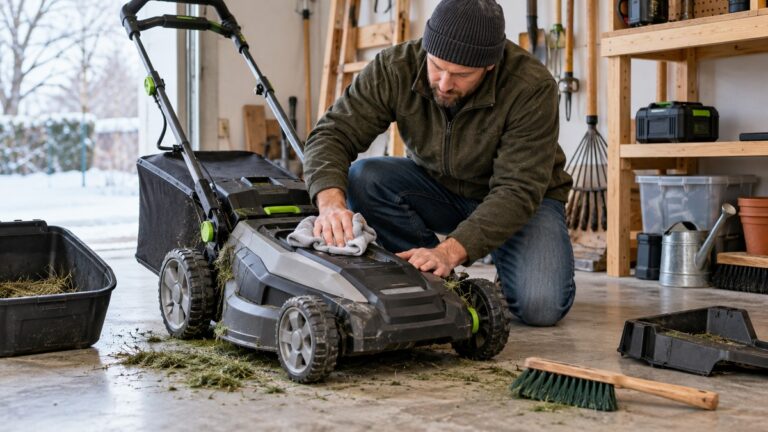
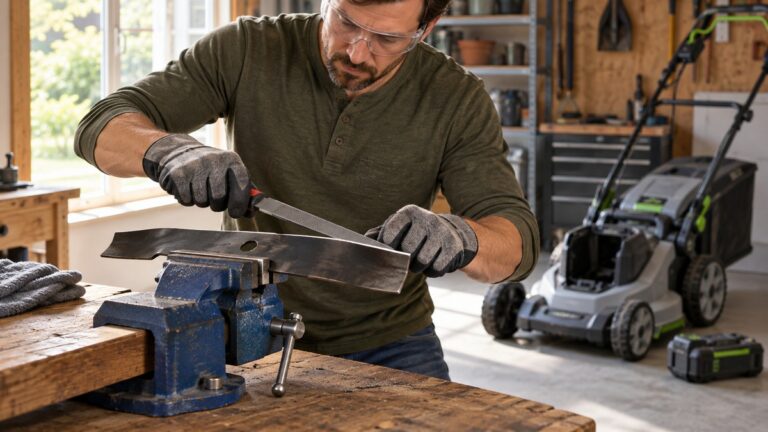
- Stop the mower and remove the battery. The Illinois page says that whenever your hand goes near the blades, an electric mower’s battery should be removed. The Husqvarna UK page gives the order for a battery-powered mower: turn the safety key to 0, remove the battery, and wait a minimum of 5 seconds. On a petrol mower, the Husqvarna Australian page says to remove the ignition cable from the spark plug to prevent an accidental start. If the battery itself is the problem, see lawn mower batteries that will not charge.
- Put on gloves. The Husqvarna Australian maintenance page says to use protective gloves when maintaining the cutting equipment. The Husqvarna UK page gives the same warning.
- Look at the blade for damage. Check the cutting equipment for damage or cracks, and look at the blade to see whether it is damaged or blunt. The Husqvarna UK page says to make sure you check the blades regularly.
- Replace a damaged blade. If the blade is cracked or damaged, replace it. The Husqvarna UK page says you must check the blade and replace it if it is damaged or broken. This post does not give sharpening or replacement steps.
Safety around the blade
The blade is the hazard in this check, so keep your hands clear of it while it can still turn. OSHA’s landscaping hazards page says to keep clear of rotating mower and brush-cutting blades. The Husqvarna UK page gives accidental starts as the reason for removing the battery before the check.
Gloves matter for the same reason. Two Husqvarna pages warn that the blade is very sharp and that cuts can easily occur, so wear gloves for every step that involves the blade, including a quick look at the edge.
OSHA also says to wear gloves when working around this equipment. The steps above do not cover any work under the deck.
Other causes that look similar
Brown tips do not always mean a dull blade. The Ask Extension answer says there are several things that can cause grass to brown. Insect activity is one of them, because browning can also indicate insect activity and grubs may feed on the roots of grass plants. Lift a bit of turf with a shovel and look at the roots. If they look damaged, dig around to see whether there are grubs in the soil.
A poorly fitted blade can also make the cut look wrong, as the table above shows. Check the fitting as well as the edge before you decide the blade is the cause.
How we chose
We searched for extension pages and manufacturer support pages that describe a dull blade and how to check one. We opened the pages we could reach and kept the ones that describe the signs, the battery step, or the glove warning. Two Illinois Extension pages and one Ask Extension answer describe the signs and what a dull blade does to grass. A Penn State Extension page adds the sharp-equipment line. Two Husqvarna pages support the battery and glove steps. We opened the Husqvarna pages from the Australian and UK sites because we did not find a US Husqvarna page that covers a blade check. OSHA covers the keep-clear rule for mower blades. We opened all seven pages on 2026-10-22.
What we could not verify
- How often a blade needs checking beyond the after-each-use schedule. The Husqvarna Australian page lists the check after each use, but the sources we opened give no measured interval, such as hours of use.
- Which cause applies to your lawn. The Ask Extension answer lists several causes and suggests checking the roots as a next step, but it does not give a way to rule causes in or out.
- How much wear a blade can take before it must be replaced. The sources we opened give no wear limit for any mower.
What the sources do not say
The sources we opened do not give sharpening steps, a sharpening angle, or replacement steps in this post. They do not say how sharp a blade must be to be acceptable, and they do not name a blade type for any mower. For replacement blades for one brand, see Black and Decker lawn mower blades. For the different blade designs, see blade styles for lawn mowers.
FAQ
How can I tell if my mower blade is dull?
Start with the grass. Brown tips and a cut that looks uneven point to a dull blade, according to the Illinois Extension and Ask Extension pages. Then check the blade itself with the battery removed, looking for a blunt edge, cracks, or other damage.
Do brown grass tips always mean a dull blade?
No. The Ask Extension answer says several things can cause grass to brown. Insect activity is one of them, and grubs may feed on the roots and cause browning. Lift a bit of turf and look at the roots before you decide the blade is the cause.
Is a dull blade really bad for the lawn?
The Illinois Extension mower maintenance page says a lawn cut with a dull blade takes more energy to recover and gives disease a longer chance to infect exposed tissue. The mowing page adds that a sharp blade reduces disease from damage caused by a dull one.
Can I check the blade with the battery still in?
No. The Illinois page says to remove the battery on an electric mower whenever your hand goes near the blades. The Husqvarna UK page gives the steps for a battery-powered mower: turn the safety key to 0, remove the battery, and wait a minimum of 5 seconds before you work on the blade.
What should I do if the blade is cracked or damaged?
Replace it. The Husqvarna UK page, which covers blade replacement, says a blade that is damaged or broken must be replaced. This post does not give replacement steps.
How often should I check the blade?
The Husqvarna Australian page lists checking the cutting equipment under maintenance after each use for battery-powered mowers. The UK page asks for regular blade checks. Neither page gives a measured interval, such as hours of running time, for the blade check itself. The signs in the table are the triggers this guide describes for checking.
Bottom line
If grass tips look brown or torn, stop, remove the battery, and check the blade; replace it if it is damaged.
Sources
- Illinois Extension: Mower Maintenance (opened 2026-10-22)
- Ask Extension: brown tip on grass blades (opened 2026-10-22)
- Illinois Extension: Mowing Your Lawn (opened 2026-10-22)
- Penn State Extension: Lawn Management through the Seasons (opened 2026-10-22)
- Husqvarna AU: Basic maintenance for lawn mowers (opened 2026-10-22)
- Husqvarna UK: How to check and replace a lawn mower blade (opened 2026-10-22)
- OSHA: Landscape and Horticultural Services – Hazards and Solutions (opened 2026-10-22)