Lawn Mower Safety Checklist for Homeowners
As an Amazon Associate we earn from qualifying purchases.
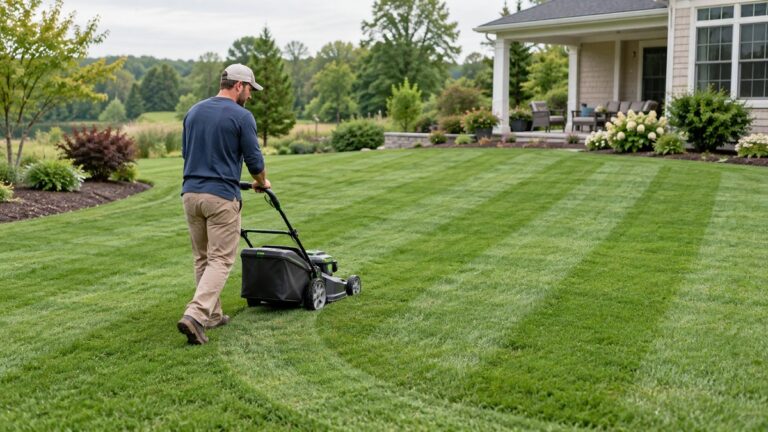
This lawn mower safety checklist for homeowners lists the checks to run before, during and after mowing, and the reason each one matters. Clear rocks, toys and debris from the mowing area, keep people and animals out of the path, keep the guards in place, and stop the blade before you touch it. Each item below is taken from an extension, OSHA or workplace safety page we opened.
Mowers differ by model, so the checklist shows what each source states and where the sources stop. Your owner’s manual decides any step that these sources do not cover.
Quick answer
- Walk the mowing area and clear rocks, toys, sticks and other debris before you start.
- Keep people and animals clear of the path, and keep all guards and shields in place.
- Before any blade work, disconnect the spark plug or remove the battery, and let the blade stop.
- Wear eye and ear protection and closed-toe shoes, and never use an electric mower on wet grass.
Safety before you start
A mower can throw objects and cause cuts. Oklahoma State University notes that “Mowers can kick up rocks and sticks,” and OSHA’s hazard list for landscape work says to “Keep clear of rotating mower and brush-cutting blades.” Ohio State adds that “A power lawn mower can be dangerous and cause serious injuries.” Read the manual first. Illinois Extension says to “Consult with your equipment’s user manual before performing maintenance or operating.”
Check the yard, and the people and animals nearby, before you pull the cord or press the start button. Penn State Extension recommends a walk of the land as well: “Know the lay of the land! Check for ditches, holes, and other landscape obstacles.”
The checklist at a glance
The table lists each check, what the source says in short form, and where it comes from. Cells that the source does not cover say “not stated”.
| Check | What the source says | Source |
|---|---|---|
| Clear debris before mowing | Remove debris from the lawn before you start | Ohio State, Ohioline |
| Walk the area first | Walk the area and remove rocks, tree limbs, trash and other debris | Oklahoma State |
| Check for hazards each time | Check the area for hazards before every mow | eXtension Ag Safety |
| Keep people and animals in the mowing area clear | Thrown objects can reach people and animals, so keep the area clear | Ohio State, Ohioline; Oklahoma State |
| Check behind before backing up | Check behind you for children and others before backing up | Penn State Extension |
| Point the discharge away | Do not point the discharge at people, pets, homes, streets or vehicles | eXtension Ag Safety |
| Keep guards in place | Guards and safety shields stay in place | Ohio State, Ohioline |
| Stop the blade before service | Disconnect the spark plug, or remove the battery on an electric mower, before blade work | Illinois Extension |
| No electric mower on wet grass | Do not use an electric mower on wet grass | Ohio State, Ohioline |
| Eye protection | Safety glasses or goggles | Penn State Extension |
| Ear protection | Ear protection when using power equipment | OSHA landscaping hazards |
| Footwear | Closed-toe shoes, not sandals or athletic shoes | Penn State Extension; Oklahoma State |
| Riders on a riding mower | Children under 14 should not operate a riding mower | Penn State Extension |
Oklahoma State gives 75 feet as a typical clear distance. Converting that with 0.3048 meters per foot gives 75 × 0.3048 = 22.9 meters. Penn State and eXtension give no distance, so the 75-foot figure comes from one source only.
Before each mow
Run these steps every time, in this order, and they take only a few minutes once they become routine.
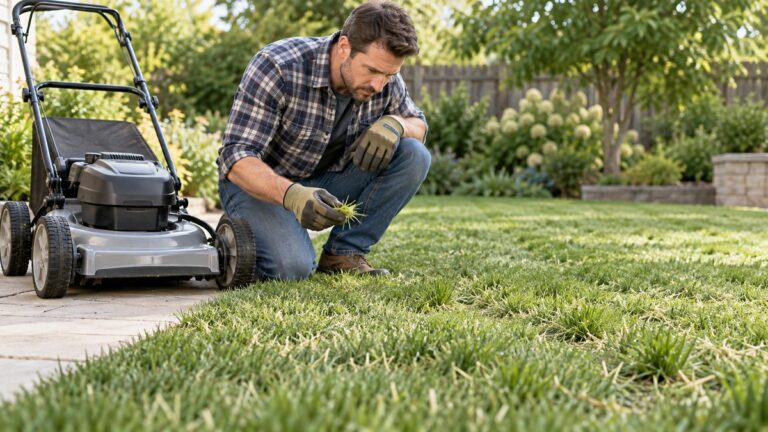
- Walk the area. Oklahoma State says to “Always walk the area to be mowed to remove rocks, tree limbs, trash or other debris before mowing.” Ohio State says “Before mowing remove debris from lawn.”
- Check for hazards. eXtension’s Ag Safety page says to “Check the area for hazards each time before you mow.” The same page says to look for “objects that could become projectiles.” Penn State adds that you should “Check for ditches, holes, and other landscape obstacles” as part of the walk.
- Clear the path. Ohio State says that “Foreign objects can fly from the mower, so make sure the mowing area is clear of people, animals, litter, and debris.” Oklahoma State adds that the mower should be run with no one within 75 feet.
- Check the discharge. Penn State says to “Make sure the discharge chute is in place – its purpose is to stop or slow objects coming out of the mower.” eXtension says to “Never point the mower discharge chute toward people, pets, homes, structures, streets, or vehicles.”
- Check the guards. Ohio State says to “Keep all guards and safety shields in place.”
- Dress for the job. The clothing items are in the next section.
Blades, guards and battery work
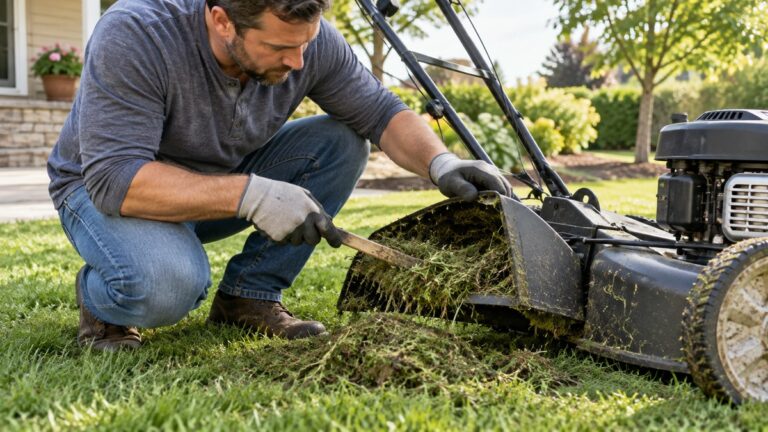
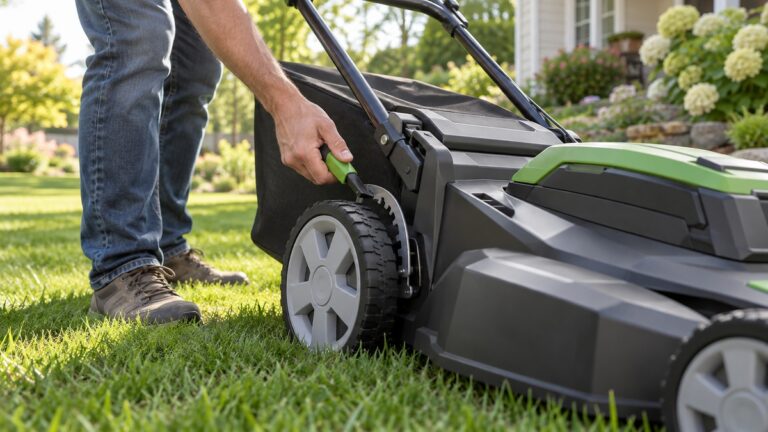
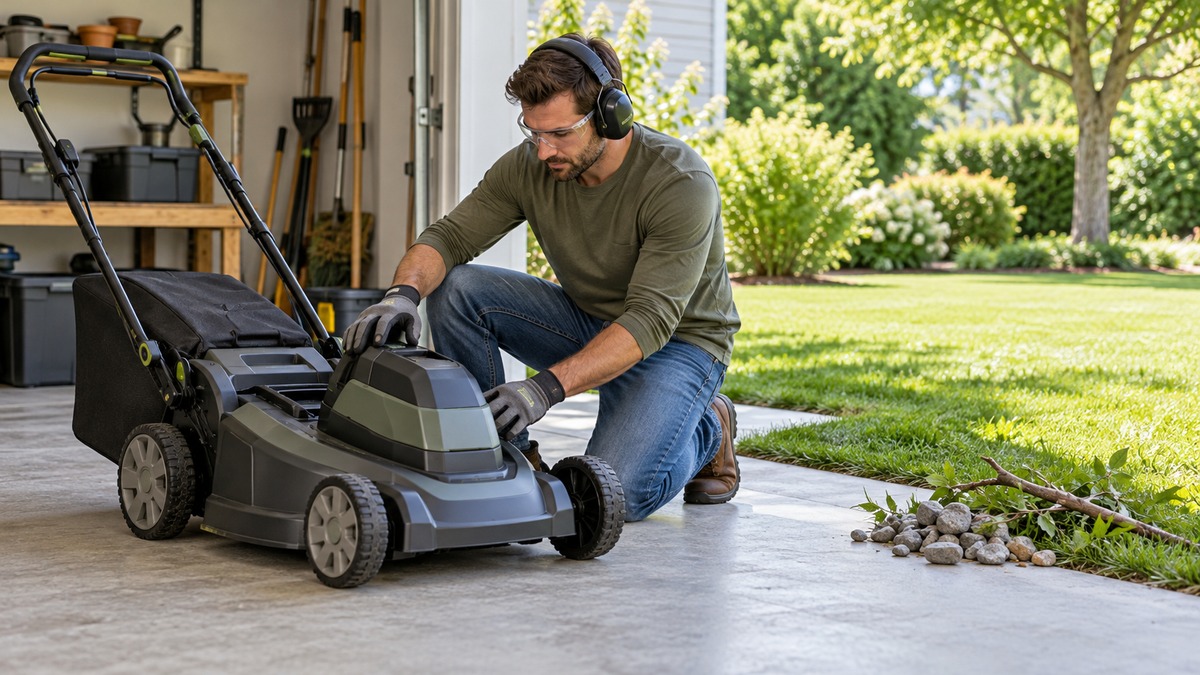
Stop the blade before you touch it. Illinois Extension says that “Before removing the blades of your mower be sure to disconnect the spark plug or for electric mowers remove the battery to prevent any accidental engagement of the blades.” Ohio State gives the same rule for repairs: “Disconnect the spark or electric plug before repairing mower.” Penn State says to “Make sure the blades have completely stopped before removing the grass catcher.”
Oklahoma State notes that “Mowers today come with a blade safety switch or device.” It also warns: “Never disengage the safety mechanism or tie a rope around the handle to bypass the safety feature.” If a blade needs replacing, the Black+Decker blade compatibility guide explains how to match a replacement blade to a model.
Clothing and protection
Ohio State says to “Wear protective, close-fitting clothing.” Oklahoma State recommends long sleeves and long pants, because mowers kick up rocks and sticks and trimmers fling burrs. For feet, Penn State says to “Wear sturdy close-toed shoes rather than athletic shoes or sandals,” and Oklahoma State recommends steel-toe boots for a lawn mower or string trimmer.
For eyes and ears, Penn State says to “Wear safety glasses or goggles,” and OSHA’s landscaping page says to “Wear ear protection when using power equipment.”
Electric, cordless and wet grass
Ohio State is direct: “Never use an electric mower on wet grass.” For guidance on damp conditions, see the electric lawn mower wet grass guide.
For cordless tools, Oklahoma State says: “For cordless electric mowers, trimmers and leaf blowers, always double-check that the battery is properly charged before using.” Corded mowers need a proper cord, and the extension cord guide for electric mowers covers how to choose one.
Riding and self-propelled mowers
Penn State says: “To keep everyone safe, children younger than 14 years of age should not operate riding lawnmowers.” Its rule for riders is short: “One seat. One rider. No exceptions!” Ohio State adds: “No extra riders on self-propelled mowers.” Penn State also says “When mowing, always check behind you for children and others before backing up.”
The same Penn State page gives a risk figure: “There are approximately 10,000 mower injuries to children/youth each year, and about 5% of those injuries result in an amputation.” Using those figures, 10,000 × 0.05 = 500, so about 500 of those injuries a year involve an amputation. The source gives the figures as approximate, so this is an approximate count.
Direction, light and visibility
Oklahoma State says: “Only push the mower forward when mowing. Do not pull the mower backwards or towards the operator.” The same page recommends mowing in daylight only: “Only mow during the daytime hours and do not mow at dawn, dusk or at night.” Its reason is short: “This will help ensure that you can see where you are mowing.”
eXtension’s Ag Safety page adds a rule for play areas. “Do not mow in an area where young children are playing because they may not understand the dangers of the mower and the operator may not be able to hear them approaching the machine.” The walk-around in the steps above is where you check for children and play equipment before the first pass.
How we chose
We opened six pages on 2026-10-22: OSHA’s landscaping hazards page, Ohio State’s Ohioline fact sheet on power lawn mowers, Penn State Extension’s riding lawnmower safety page, Oklahoma State’s lawn care safety page for teens, Illinois Extension’s mower maintenance page, and eXtension’s riding lawnmower safety page. Five are university or extension pages, and the OSHA page is written for workers, so it is cited only for its hazard items. The Penn State address that we first tried redirected to the same riding-mower page, and we cite the final address.
CPSC pages returned HTTP 403 when we opened them, so CPSC is not a source in this post. We did not rank the sources. Most checklist items come from two or more pages. The guard check comes from one page only.
What we could not verify
The sources we opened do not set a clearance distance for every mower type. The 75-foot figure from Oklahoma State is the only distance in the pages we opened, and it is described as typical. We could not verify a distance for riding mowers or robotic mowers.
The sources do not say how long a blade takes to stop on any model. Penn State asks you to make sure the blades have stopped, but it gives no time.
What the sources do not say
- None of the six sources gives a checklist for a specific brand or model, so your owner’s manual decides brand-specific steps.
- None of them gives a noise level, so this checklist does not compare noise.
- The sources we opened do not say which fuel or battery steps apply to every mower, so each step should be checked against your manual.
FAQ
How far away should people stand while I mow?
Oklahoma State says it is “typically recommended to make sure no one is within 75 feet while operating a mower.” That is about 22.9 meters. The same page advises that, “Before operating a lawn mower, be sure to put pets or little children inside,” so bring children and pets indoors before you start.
Can I mow wet grass with an electric mower?
Ohio State says “Never use an electric mower on wet grass.” For a closer look at the damp-grass decision, the wet grass guide linked above covers it.
Who can ride a riding mower?
Penn State says that “children younger than 14 years of age should not operate riding lawnmowers.” Its rule for riders is “One seat. One rider. No exceptions!” Ohio State says “No extra riders on self-propelled mowers.”
Do I need to remove the battery before I work on the blade?
For an electric mower, yes. Illinois Extension says that before removing the blades you should “disconnect the spark plug or for electric mowers remove the battery to prevent any accidental engagement of the blades.”
What should I wear when I mow?
Wear protective, close-fitting clothing, safety glasses or goggles, ear protection and closed-toe shoes. Oklahoma State recommends steel-toe boots for lawn mowers and string trimmers, and long sleeves and long pants, because mowers kick up rocks and sticks.
What should I do if the mower throws something?
Oklahoma State says “Remember that thrown objects can also ricochet and cause injury or damage.” Keep people and animals out of the area, check the discharge chute and the guards before you start again, and clear away whatever the mower threw.
Bottom line
Start the mower only when the area is clear of people, animals and debris, and keep everyone at least 75 feet away, as Oklahoma State recommends. Before any blade work, disconnect power and let the blade stop.
Sources
- OSHA: Landscape and Horticultural Services – Hazards and Solutions (opened 2026-10-22)
- Ohio State University Extension (Ohioline): Power Lawn Mowers (opened 2026-10-22)
- Penn State Extension: Riding Lawnmower Safety Practices (opened 2026-10-22)
- Oklahoma State University Extension: Lawn Care Safety and Basic Maintenance Tips for Teens (opened 2026-10-22)
- Illinois Extension: Mower Maintenance (opened 2026-10-22)
- eXtension Safety, Health and Wellness in Agriculture: Riding Lawnmower Safety (opened 2026-10-22)