Why String Trimmer Line Keeps Breaking
As an Amazon Associate we earn from qualifying purchases.
If you want to know how to stop string trimmer line from breaking, start with the causes the manufacturers list: hard surfaces, line that runs past the debris shield, heat from long high-speed runs, dry line, a worn head, and line wound with twist. Each cause has a fix in the support pages cited here. Those fixes are general, and the pages do not cover every model, so your operator’s manual sets the final details.
Quick answer
- Keep the debris shield installed, and keep the line from extending past the cutter blade on it.
- Reduce head speed near concrete, fences, curbs and rocks, and use the lowest effective engine speed for the conditions.
- Use the line type and diameter in your operator’s manual, and wind new line without holding the spool still.
- Replace a worn or damaged trimmer head. Burrs or rough edges inside the head can cut or fray the line.
The causes manufacturers list
Hard surfaces and high speed
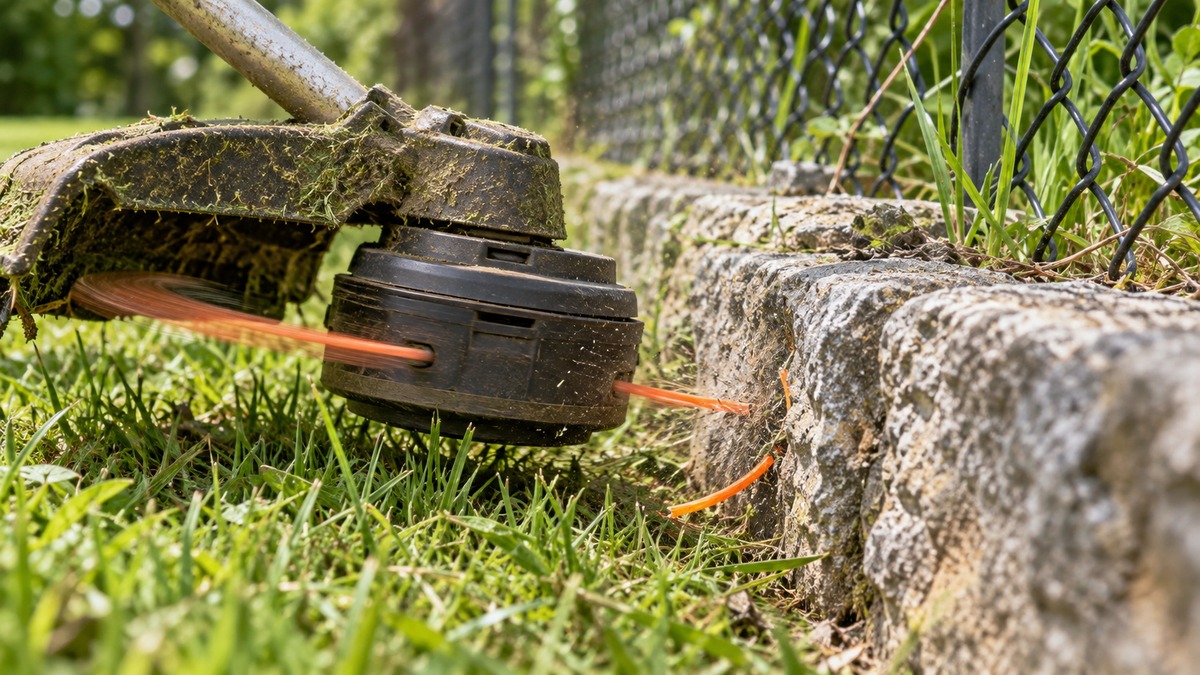
ECHO says striking concrete, fences, trees, rocks, or other hard objects can cause the trimmer line to break. Husqvarna’s US page on melting line says line can melt or fuse together when trimming continuously at high speed against hard surfaces such as fences, curbs, or walls. ECHO lists hard objects as a cause of breakage, and Husqvarna links melting to high-speed trimming against hard surfaces, so speed and contact together are the pattern to watch.
Line that runs past the debris shield
ECHO says that if the trimmer line extends beyond the cutter blade on the debris shield, it is more likely to break. The same article says to always operate the trimmer with the debris shield installed. ECHO names this as a separate cause from the shield itself, so check the line length even when the shield is on.
Heat from long high-speed runs
ECHO says operating the trimmer at high speed for extended periods can generate heat inside the trimmer head, which can cause the line to soften or melt. Its fix is to use the lowest effective engine speed for the cutting conditions to help reduce heat buildup.
Dry or brittle line
ECHO says trimmer line that has become dry, brittle, or has been exposed to excessive heat or sunlight may break more easily. It adds that soaking dry line in water overnight may help restore its flexibility. The page says “may,” so treat the soak as something to try rather than a guaranteed fix.
A worn or damaged trimmer head
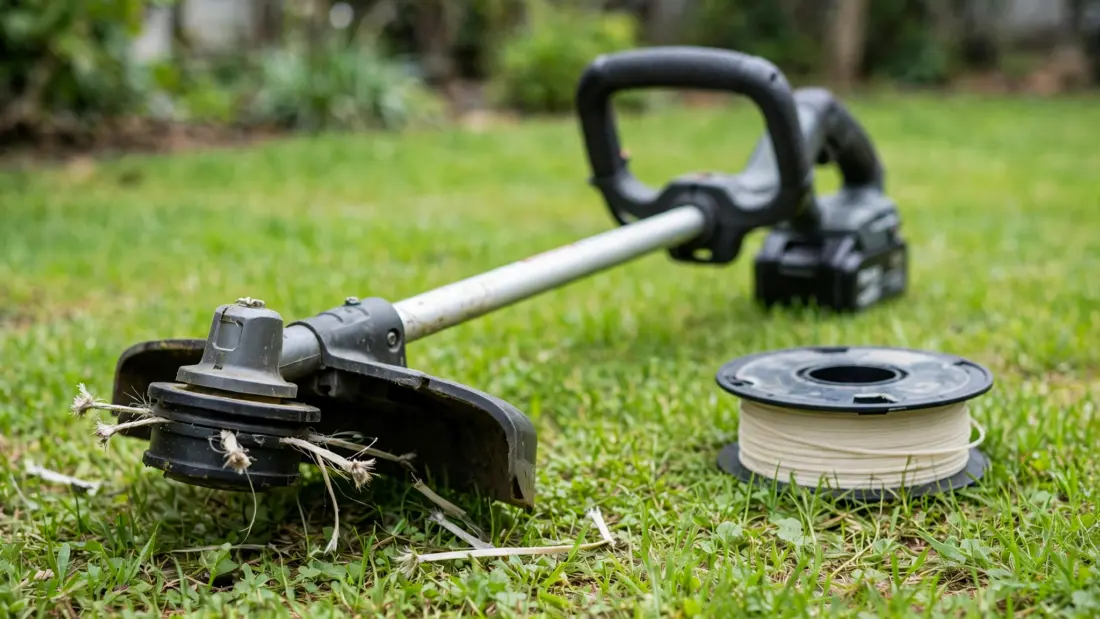
ECHO says burrs, rough edges, or damage inside the trimmer head can cut or fray the line. Its fix is to replace the trimmer head if it is worn or damaged. If line keeps breaking after the other steps, inspect the head before you change anything else.
Twisted line from loading
Husqvarna says line can also melt or fuse together when it is loaded onto the spool with excessive twist. The page warns that holding the spool stationary while winding can introduce twists that cause the line to bind and fuse together during operation. Its fix is to let the line hang freely and rotate the spool around the line as you wind.
Line type and diameter
Husqvarna’s US melting page says melting can happen with any type of line, but it is more prevalent with round line than with square or hexagonal line. ECHO says a diameter that is smaller or larger than recommended can cause excessive wear or poor performance. Both point to the operator’s manual as the reference. Choosing a line size is outside the scope of this post.
Safety when you check the head
Keep the debris shield installed while you trim. ECHO says to always operate the trimmer with the debris shield installed. The same article says that if line keeps breaking or melting after its recommendations, you should inspect the trimmer head for damage.
The cited pages do not say whether to stop the engine or remove the battery before you open the head or replace line. Check your operator’s manual before any head work, and do not assume the cited pages cover your model’s shutdown step.
Steps to stop the line from breaking
- Install the debris shield and keep the line from extending past the cutter blade. ECHO says to always operate the trimmer with the debris shield installed, and says line that extends beyond the cutter blade on the shield is more likely to break.
- Slow the head near hard surfaces. Husqvarna says to reduce the trimmer head speed when working near hard surfaces, and to vary throttle speed instead of operating continuously at full throttle.
- Use the lowest effective engine speed. ECHO says to use the lowest effective engine speed for the cutting conditions to help reduce heat buildup.
- Use the line type and diameter from your manual. Husqvarna says to install new trimmer line of the type and diameter specified in your trimmer’s operator’s manual. Its battery trimmer page says the recommended diameter depends on your product model and the type of trimmer head installed.
- Wind new line without holding the spool still. Husqvarna says to allow the line to hang freely and to rotate the spool around the line, and to avoid holding the spool stationary while winding.
- Check dry line before you use it. ECHO says dry or brittle line may break more easily, and that soaking it in water overnight may help restore its flexibility.
- Rewind a head that does not feed enough line. Husqvarna says the line might be twisted around the spool, and its fix is to remove the cutting line and rewind it.
- Inspect and replace a worn head. ECHO says to replace the trimmer head if it is worn or damaged, and to have the product inspected by an authorized dealer if the problem persists.
What the cited pages list, side by side
| Cause or symptom | What the cited pages say | Fix the pages list | Source |
|---|---|---|---|
| Hard surfaces | Concrete, fences, trees and rocks can break the line | Reduce head speed near hard surfaces | ECHO; Husqvarna US melting page |
| Line past the debris shield | More likely to break | Operate with the debris shield installed | ECHO |
| Heat from long high-speed runs | Can soften or melt the line | Use the lowest effective engine speed for the conditions | ECHO |
| Dry or brittle line | May break more easily | Soak overnight; may help restore flexibility. Effect: not stated | ECHO |
| Worn or damaged head | Burrs or rough edges cut or fray the line | Replace the trimmer head | ECHO |
| Twisted line from loading | Twist can make the line bind and fuse | Let the line hang freely; rotate the spool while winding | Husqvarna US melting page |
| Line type | Melting more prevalent with round line | Use the type in the operator’s manual | Husqvarna US melting page |
| Diameter | Wrong diameter causes wear or poor performance | Use the diameter in the operator’s manual | ECHO; Husqvarna US battery trimmer page |
| Line does not feed enough | Line might be twisted around the spool | Remove the line and rewind it | Husqvarna US feed page |
| Shutdown before head work | Not stated | Not stated | None of the cited pages |
How we chose
We limited this post to manufacturer support pages, from ECHO and from Husqvarna’s US help center, because they name causes and fixes for breakage directly. Five pages were opened on 2026-10-22. Three of the Husqvarna pages cover petrol-powered models and one covers a battery model, so the fixes are general and not tied to one product. Each claim was matched to the saved text of its page.
The search also returned EGO and Milwaukee manuals as PDF files, which this post could not open, and an EGO community thread, which is user advice rather than manufacturer guidance. None of those is cited.
What we could not verify
- Whether these causes account for breakage on your model. The pages are general, and the Husqvarna pages are written for particular product types.
- How much soaking dried line helps. ECHO says it may help, and the page gives no measure of the result.
- Whether one line type lasts longer than another. The Husqvarna page notes that round line melts more often, and it does not compare line types beyond that.
- Whether a worn head is the cause in your case. The pages list a worn head as a cause but do not describe how to check wear.
What the sources do not say
- Speed or throttle settings as numbers. The pages say lower or lowest, without a figure.
- How far past the cutter blade or shield the line may extend, in inches or any other measure.
- Whether to stop the engine or remove the battery before head work. The cited pages do not say.
- Any brand of line that resists breakage better than another. The pages point to the line in the operator’s manual.
- How long a line should last, in hours or minutes of use.
For the next question, the Ryobi One+ weed eater string guide covers one brand’s line. If you are replacing the string on a Ryobi 40V trimmer, the guide to changing the string on a Ryobi 40V trimmer covers that job.
FAQ
Why does string trimmer line break so fast?
The manufacturer pages cited here name several causes: striking concrete, fences, trees or rocks; line that extends past the debris shield; heat from long high-speed runs; dry or brittle line; and a worn head. Twisted line from loading can also cause the line to fuse and break.
Each cause has a different fix, so check which one matches your trimming before you change anything.
Should I run the trimmer at full throttle?
Husqvarna’s US melting page says to vary throttle speed instead of operating continuously at full throttle, and to reduce head speed when working near hard surfaces. ECHO says to use the lowest effective engine speed for the cutting conditions.
Does soaking trimmer line help?
ECHO says that if line has become dry, soaking it in water overnight may help restore its flexibility. The page says “may,” so the result is not guaranteed, and the cited pages do not say how much the soak helps.
Do I need the debris shield on?
According to ECHO, yes. The article says to always operate the trimmer with the debris shield installed, and it says line that extends beyond the cutter blade on the shield is more likely to break.
What if the line keeps breaking after these steps?
ECHO says to inspect the trimmer head for damage. If the problem persists, the article says to have the product inspected by an authorized dealer. Replace the head if it is worn or damaged.
Does melting line mean I bought the wrong line?
Not necessarily. Husqvarna says melting can happen with any type of line, and it is more prevalent with round line than with square or hexagonal line. The same page links melting to high-speed trimming against hard surfaces and to twist from loading.
Bottom line
Decision rule: if line breaks when you trim near hard surfaces, lower the head speed and keep the debris shield installed before you change anything else.
Sources
- ECHO Support: Trimmer Line Breaking or Melting : (opened 2026-10-22)
- Husqvarna US Help Center: Trimmer line is melting | Petrol-powered Trimmer support | Help Center US (opened 2026-10-22)
- Husqvarna US Help Center: Trimmer does not feed enough cutting line | Petrol-powered Trimmer support | Help Center US (opened 2026-10-22)
- Husqvarna US Help Center: The trimmer head is cutting the line | Petrol-powered Brushcutter support | Help Center US (opened 2026-10-22)
- Husqvarna US Help Center: Line often breaks | Battery-powered Trimmer/Brushcutter support | Help Center US (opened 2026-10-22)